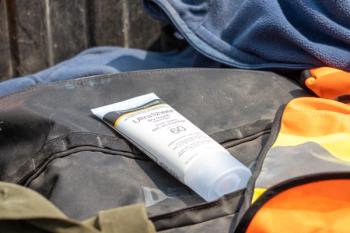
Two new Neutrogena facial sunscreens incorporate bemotrizinol, the first new sunscreen active ingredient added to the US OTC monograph in decades.
Real clinical case scenarios with progressive diagnostic clues challenge dermatology clinicians to think on their feet, sharpen their diagnostic reasoning, and apply practice-changing takeaways at the point of care.
A 30-year-old woman presented with a 1-year history of recurrent eczematous lesions affecting both hands and feet, accompanied by progressive nail changes. The disease course was chronic and relapsing, predominantly involving acral areas, with frequent flares that proved refractory to prior treatment. She carried prior diagnoses of eczema, tinea pedis, and onychomycosis. Her history was also notable for allergic rhinitis, suggesting an underlying atopic diathesis. Despite multiple treatment courses — including oral antihistamines, itraconazole, topical corticosteroids, and antifungal agents — she experienced only limited and unsustained improvement.1
On physical examination, extensive eczematous dermatitis of the hands and feet was observed, characterized by erythema, vesiculation, fissuring, and marked pruritus. Nail involvement was prominent, with onycholysis, plate thickening, and surface roughness affecting the left great toenail and the left middle and little fingernails. Laboratory evaluation revealed normal biochemical, thyroid, and autoimmune parameters. Fungal examinations returned negative. Serum total IgE was mildly elevated at 135.4 kIU/L. Dermoscopic examination of the involved fingernails, toenails, palms, and soles was consistent with an eczematous process. Baseline disease activity was high, with a SCORAD score of 47, a peak pruritus NRS score of 9, and a sleep disturbance score of 9.
Systemic targeted therapy was initiated given the chronic refractory course, inadequate response to conventional treatments, and acral distribution — an area known to respond poorly to topical therapy. The patient was started on oral abrocitinib 100 mg once daily. After 4 weeks without meaningful clinical improvement, the dose was escalated to 200 mg once daily. Approximately 2 weeks after escalation, she reported marked pruritus relief and substantial improvement in heel and plantar eczema. Nail changes, however, lagged — a pattern that would persist over the coming months before the full picture of treatment response came into view.
What was this patient's diagnosis, and what does her response to therapy reveal about treating this underrecognized AD phenotype?
Following dose escalation to abrocitinib 200 mg, the patient experienced progressive improvement in both cutaneous and nail manifestations. By month 4, hand and foot eczema had nearly resolved, and nail morphology was improving with reduced onycholysis and smoother nail surface. The dose was subsequently tapered to 100 mg for maintenance. At 12-month follow-up, complete remission of eczema was maintained, with marked structural recovery of both fingernails and toenails; only mild residual thickening of the left great toenail remained. No adverse events were observed throughout the treatment period. The temporal sequence — rapid cutaneous improvement followed by gradual nail recovery over months — reflects the slower regenerative kinetics of the nail unit and suggests that successful management of AD-associated nail dystrophy requires not only sustained suppression of periungual inflammation, but sufficient time for nail matrix regeneration. This case reinforces the importance of reconsidering the diagnosis in patients with nail dystrophy and an atopic background when fungal etiologies have been excluded, and highlights selective JAK1 inhibition with abrocitinib as a potentially valuable therapeutic option for this challenging and frequently overlooked AD phenotype.2
References