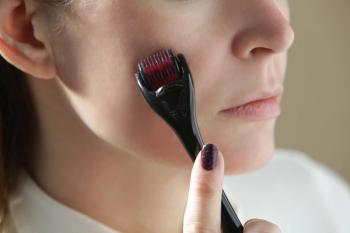
Can at-home dermarollers give the same results as in-office microneedling or is that just a myth? Read more about the latest social media trend and learn how to counsel your patients in the clinic.
Despite often being highly treatable, nonmelanoma skin cancers account for millions of biopsies, procedures, and follow-up visits annually, creating a substantial healthcare burden.
Skin cancer continues to top the charts as the most commonly diagnosed cancer in the US, according to the
Each year, roughly 5.4 million nonmelanoma skin cancers are diagnosed in the US.1 Because many are treatable, the risk can feel low, but that adds up quickly. Millions of diagnoses bring millions of biopsies, procedures, and follow-ups, which is proof that skin cancer affects far more people than most of us realize.
Melanoma cases continue to rise. In 2026, new diagnoses are projected to rise 10.6%, totaling 234,680 cases across the US. About half will be identified early, but 112,000 cases are expected to be invasive. Men continue to face a greater risk, with 65,400 invasive cases expected, compared with 46,600 in women. Over the past decade, invasive melanoma diagnoses have increased by 46.6%.1
Melanoma may account for fewer cases, but it carries the highest risk. In 2026, it is expected to claim 8510 lives in the US. More aggressive and more likely to spread, melanoma becomes especially dangerous when caught later. The threat is not how often it appears, but how quickly it can escalate once it does.1
The American Academy of Dermatology recommends broad-spectrum sun protection factor (SPF) 30 or higher, reapplied every 2 hours. Matthew Elias, DO, dermatologist and cofounder of Elias Dermatology in Fort Lauderdale, Florida, recommends UV protection factor 50 clothing, shade, and sunglasses as added layers of protection. These daily habits are essential: Over the past decade, melanoma death rates have fallen by about 3% per year in men and 2% per year in women, thanks to earlier detection and better treatments.
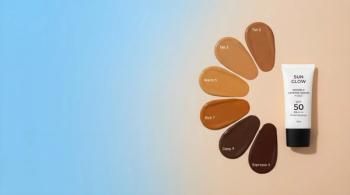
Finally, a newly FDA-approved UV filter is expected to arrive in the US by the end of the year. Here is what you should know ahead of its arrival.
“Bemotrizinol is a broad-spectrum chemical UV filter that’s been used in Europe and other international markets for more than 2 decades, often under the name Tinosorb,” said Daniel Schlessinger, MD, a dermatologist at Schlessinger MD Dermatology & Cosmetic Surgery in Omaha, Nebraska.
“Its FDA approval is monumental, given that the last time a new sunscreen was approved in the US was in 1999,” he continues. “In the time that we have finally had a new sunscreen ingredient, we have gone from block cell phones to smartphones and watches.”
Unlike many existing sunscreen filters in the US, bemotrizinol is photostable, meaning it doesn’t break down quickly in sunlight.2 “Bemotrizinol provides broad protection against deep-penetrating UV-A rays—the ones that are linked to signs of premature aging and skin cancer—and when combined with other organic and inorganic sunscreen filters, it can help broaden coverage against the damaging effects of UV radiation,” Elias said.
When bemotrizinol hits shelves, its formulation, active ingredient pairings, and overall texture will all factor into finding the right product. Nevertheless, Elias was excited: “The most exciting thing is that bemotrizonol actually gives us a new sunscreen ingredient, which we haven’t had in quite a while. Plus, it can be used with other sunscreens as well.”
[This article was originally published by our sister brand,
References