Now Playing
Omar Noor, MD, outlines the complex phenotypes, variable presentations, and functional burdens of chronic hand eczema and explains why a broader JAK-targeted strategy may offer therapeutic advantages.
In a recent Dermatology Times Expert Perspectives custom video series, Omar Noor, MD, a board-certified dermatologist and co-owner of Rao Dermatology in New York, discussed the complexity of chronic hand eczema (CHE), including its classic presentations compared with atopic dermatitis and how he addresses severity in CHE.
Noor first reviewed CHE as a multifactorial inflammatory condition that extends well beyond classic type 2-driven atopic dermatitis. Although atopic dermatitis remains rooted in IL-4, IL-13, and IL-31 signaling through JAK1/JAK3, he noted that CHE frequently reflects a merging of overlapping phenotypes, including irritant contact dermatitis, allergic contact dermatitis, hyperkeratotic subtypes, and dyshidrotic patterns. These phenotypes engage a broader inflammatory spectrum, incorporating type 1 and type 3 cytokines, barrier dysfunction, and environmental triggers, all of which signal through JAK-mediated pathways. This mechanistic diversity, he explained, supports a therapeutic strategy that targets the JAK pathway more globally rather than narrowing treatment to individual cytokines.
“When we look at chronic hand eczema, we take a step back and look more broadly at a JAK targeting approach, as opposed to the tunnel vision that we've had for so many years now, specifically targeting specific numbers or cytokines. Instead, you see how chronic hand eczema can benefit from a broader approach,” Noor said.
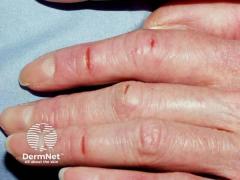
From a clinical presentation standpoint, Noor highlighted the variability of CHE compared with the more predictable patterns seen in atopic dermatitis. Patients may present with fissured fingertips, painful vesicles, hyperkeratosis of the palms, perionychial cracking, involvement of the volar wrist or dorsal hands, and even lichenification. He emphasized that asymmetry is not uncommon and that frequent flaring is a classic feature.
Assessing severity in CHE, he noted, requires a multidimensional approach. Beyond evaluating the degree of scaling, hyperkeratosis, fissuring depth, vesiculation, crusting, or secondary infection, clinicians must consider functional impairment. Occupational exposure and manual demands, such as work in cosmetology, mechanical trades, or any role requiring repetitive handwashing or tool use, substantially influence disease burden. Even everyday tasks, including typing or scrolling on a phone, may be limited. Prior treatment responses and chronicity further shape therapeutic decision-making. Collectively, these factors inform when escalation to more targeted anti-inflammatory therapy, including JAK inhibition, is appropriate for optimizing long-term control in patients with CHE.