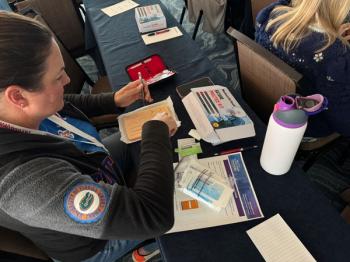
Faculty from the Cutaneous Oncology Workshop answer practical questions spanning skin cancer prevention, diagnosis, treatment, and follow-up.
State melanoma reporting data reveals a striking gap between one Arizon dermatologist's detection rates and his peers, and a possible explanation rooted in how dermoscopy is taught.
Each year, the Arizona Department of Health Services (AZDHS) circulates the previous calendar year’s melanoma reporting data to dermatology offices. This report provides valuable context of melanoma detection rates per clinicians who practice in the same state, in which they are required to report all melanoma diagnosed to AZDHS. Table 1 summarizes the previous 3 annual reports, how many clinicians reported melanoma to the state, the total number of melanomas identified, the mean melanoma count per clinician, and my findings.1-3
In the report published in 2024, reflecting the 2023 calendar year, Arizona listed 414 reporting clinicians with a total melanoma count of 6969. When averaged, that is a mean of 16.83 melanomas identified per reporting clinician. I found 215 melanomas. In the report published in 2023, reflecting calendar year 2022, I identified 168 melanomas, and the mean was 15.73 per clinician. In the report published in 2025, reflecting calendar year 2024, I identified 141 melanomas, with the mean of 16.08 melanomas per clinician. In these reporting years, I either found the most melanomas or was tied at the top (2025).1-3
Table 1. Arizona Physician-Office Melanoma Reports and My Reported Counts
Report year (calendar year)
Reporting clinicians
Statewide melanoma reports
Mean/melanoma found per clinician
My melanoma count
Multiple of mean
2023 (2022)
380
5979
15.73
168
10.7x
2024 (2023)
414
6969
16.83
215
12.8x
2025 (2024)
481
7733
16.08
141
8.8x
Source: Arizona Cancer Registry annual melanoma reporting reports.1-3 Statewide means were calculated from reported physician-office totals divided by listed reporting clinicians. Melanoma Counts are report-listed physician-office reports.
This gap between my findings and the state average is alarming. My patient population is the same as most general dermatologists in the state of Arizona. From Yuma, Phoenix, and Tucson where I practice, the UV index is very comparable. Additionally, my clinic is not comprised of only ultra-high-risk patients, compared to others, nor do I see exclusively high-risk patients who harbor familial melanoma. My melanoma count also does not come from seeing a high number of patients per day; I complete approximately 26 skin exams daily, 4 days per week, with roughly 4 weeks away from clinic per year. My clinic is busy, but not conceptually different from most general dermatologists in the state of Arizona, or elsewhere. I also do not use any other ancillary tools (confocal, full body digital photography, etc) currently, to aid in melanoma identification other than a handheld dermatoscope during skin exams. The only difference is the number of melanomas identified.
In my practice, more than 95% of melanomas identified through screening are not lesions that my patients scheduled their skin exam for, or recognized as concerning. This is largely different than most dermatologists’ experience. Multiple studies cited by the American Academy of Dermatology found that roughly half of melanomas are self-detected or patient-detected.4-8 A more recent population-based cohort from Australia reported that 47% of melanomas were patient-detected and 35% were detected during routine skin checks.9
Why, in my practice, are most patient melanomas not self-identified or patient-reported? Because every nevus, every lentigo, and every pink lesion was examined with a dermatoscope.
This is where I believe the current gap in melanoma detection originates, and it can be distilled down to dermoscopy. It is not simply that dermatologists do not use dermatoscopes. Some don’t, many do. One issue is the selective use of their dermatoscope. If dermoscopic assessment is reserved for lesions that already appear suspicious, the process has already failed, as most melanomas I identify only become concerning under dermoscopic examination. A dermatoscope used as a confirmatory tool is different from a dermatoscope used as part of the screening process on every pink and pigmented spot (ie, lentigo, nevus, pink lesions).
A complete dermoscopic examination requires deliberate use of nonpolarized and polarized light, contact technique when appropriate, liquid interface when scale or optical artifact interferes with interpretation, and dynamic dermoscopy to assess for shiny white structures in the dermis that may not be appreciated unless rotation is applied to the dermatoscope in the polarized mode. Technique with a dermatoscope changes what can be observed within the skin, and can be the difference between a benign appearing nevus and a melanoma that clinically looks normal.
Strong evidence supports utilization of dermoscopy improves melanoma diagnosis. A Cochrane systematic review, published in 2018 reviewed 104 studies, 103 study cohorts, with 42,788 lesions assessed dermoscopically, and concluded that dermoscopy supports visual inspection for melanoma detection.10 Other studies have demonstrated the utility of dermoscopy leads to identification of thinner melanomas, which is what I see in my own practice. Rademaker and Oakley found that melanomas detected through whole-body photography and sequential digital dermoscopy were more likely to be less than 0.75 mm Breslow thickness (69%) compared to only 52% of melanomas identified through traditional screening methods.11
The second reason for the discrepancy in the diagnosis of melanoma is the fundamental understanding of dermoscopy, and interpretation of the structures appreciated amongst dermatologists. Dermoscopy, as a non-invasive, in vivo technique, provides assessment of superficial cutaneous structures that are invisible to the naked eye. These structures provide fundamental and diagnostic information that aid in identifying melanoma.12 But, this information is not considered fundamental, or it would be taught differently.
I finished dermatology residency in 2019. I had a handful of lectures on dermoscopy during my residency, with a total of 2 dedicated lectures. In contrast with dermatopathology, a core discipline in our training, I had dedicated didactic lectures multiple times a week, round table teaching sessions with a dermatopathologist once a week, as well as dedicated monthly rotations in dermatopathology. Fifteen percent of the APPLIED exam is comprised of dermatopathology. Most dermatologists will not read their own dermatopathology independently after residency, but essentially all general dermatologists will perform skin cancer screening. And because of this, dermoscopy education should be heavily structured, taught, and tested during residency, upon board certification, and with continuing medical education. It should not be treated as ancillary; it should be foundational.
The literature supports my concern, as well as my experience in trying to educate dermatologists in dermoscopy. In 2017, Patel and colleagues found that only 35% of surveyed dermatology residents had dedicated dermoscopy training in residency, 27% had only bedside training, and 38% had no dermoscopy training in residency; and 91% wanted more dermoscopy training. Additionally, 91% of residents reported their attendings advocated the use of dermoscopy13. This shows that dermoscopy use was advocated for, desired by residents, but instruction and education were inadequate. This study was published in 2017, 29 years after the introduction of the handheld dermatoscope in 1989. Four years later, Fried and colleagues used a modified Delphi process to define foundational dermoscopy proficiency expectations for US dermatology residents, identifying 32 diagnoses and 116 specific dermoscopic features.14 But, has this change happened? Based on the data, it has not.
This is why I believe skin cancer screening recommendations based on population-level mortality data are incorrect, because it’s incomplete. The USPSTF concludes that evidence is insufficient to assess the balance of benefits and harms of full-body skin examination for screening asymptomatic adolescents and adults.15 Based on the discrepancies in identification of melanoma in my clinic, compared to the state average, this provides state-level public health data displaying a significant measurable gap between what the current standard is, and what high-quality dermoscopy-guided screening detects.
I believe we can change this, both the USPSTF conclusion and reduce the discrepancy in detection of melanoma, and in doing so, reduce melanoma mortality based on population-level screening. This occurs through changing the education and requirements of dermoscopy during skin exams. Dermoscopy instruction should at least match that of dermatopathology. At a minimum, the 116 specific dermoscopic features outlined for foundational dermoscopy proficiency need to be mastered. Training should include both repeated image-based and bedside assessment, in polarized, non-polarized, and UVFD when applicable, and proficiency should be tested on board examinations. A monumental shift needs to occur in how skin cancer screening examinations should be performed. Every skin exam should require dermoscopic assessment of every nevus, every lentigo, and every pink lesion, assessed with intent and focus.
Dermoscopy education should be required for clinicians who perform dermatologic skin cancer screening, including physicians and advanced practice clinicians. A post-residency curriculum needs to be deployed and required to be completed by dermatologists, as well as individuals providing dermatologic care who did not receive adequate education in this discipline.
Arizona melanoma reporting has provided our specialty with a mirror. I think we should look directly at it. The future of melanoma detection should reflect what a screening test is meant to be: a test that is sensitive at finding asymptomatic disease in the population being screened. And that means skin cancer screening examination should be built to find the melanoma the patient never saw, along with the obvious ones.
Michael Christopher, MD, is a board-certified dermatologist at Ironwood Dermatology & Aesthetics in Tucson, Arizona.
References
1. Arizona Cancer Registry. Melanoma Reporting in Arizona. No. 2023-1. Arizona Department of Health Services; June 2023. Accessed May 26, 2026.
2. Arizona Cancer Registry. Melanoma Reporting in Arizona. No. 2024-1. Arizona Department of Health Services; June 2024. Accessed May 26, 2026.
3. Arizona Cancer Registry. Melanoma Reporting in Arizona. No. 2025-1. Arizona Department of Health Services; May 2025. Accessed May 26, 2026.
4. Aviles-Izquierdo JA, Molina-Lopez I, Rodriguez-Lomba E, Marquez-Rodas I, Suarez-Fernandez R, Lazaro-Ochaita P. Who detects melanoma? impact of detection patterns on characteristics and prognosis of patients with melanoma. J Am Acad Dermatol. 2016;75(5):967-974. doi:10.1016/j.jaad.2016.07.009.
5. Cheng MY, Moreau JF, McGuire ST, Ho J, Ferris LK. Melanoma depth in patients with an established dermatologist. J Am Acad Dermatol. 2014;70(5):841-846. doi:10.1016/j.jaad.2013.10.060
6. Brady MS, Oliveria SA, Christos PJ, et al. Patterns of detection in patients with cutaneous melanoma. Cancer. 2000;89(2):342-347. doi:10.1002/1097-0142(20000715)89:2<342::aid-cncr19>3.0.co;2-p
7. Epstein DS, Lange JR, Gruber SB, Mofid M, Koch SE. Is physician detection associated with thinner melanomas? JAMA. 1999;281(7):640-643. doi:10.1001/jama.281.7.640
8. Koh HK, Miller DR, Geller AC, Clapp RW, Mercer MB, Lew RA. Who discovers melanoma? patterns from a population-based survey. J Am Acad Dermatol. 1992;26(6):914-919. doi:10.1016/0190-9622(92)70132-y
9. Watts CG, McLoughlin K, Goumas C, et al. Association between melanoma detected during routine skin checks and mortality. JAMA Dermatol. 2021;157(11):1425-1434. doi:10.1001/jamadermatol.2021.3884
10. Dinnes J, Deeks JJ, Chuchu N, et al; Cochrane Skin Cancer Diagnostic Test Accuracy Group. Dermoscopy, with and without visual inspection, for diagnosing melanoma in adults. Cochrane Database Syst Rev. 2018;12(12):CD011902. doi:10.1002/14651858.CD011902.pub2
11. Rademaker M, Oakley A. Digital monitoring by whole body photography and sequential digital dermoscopy detects thinner melanomas. J Prim Health Care. 2010;2(4):268-72
12. Williams NM, Rojas KD, Reynolds JM, et al. Assessment of diagnostic accuracy of dermoscopic structures and patterns used in melanoma detection: a systematic review and meta-analysis. JAMA Dermatol. 2021;157(9):1078-1088. doi:10.1001/jamadermatol.2021.2845
13. Patel P, Khanna S, McLellan B, Krishnamurthy K. The need for improved dermoscopy training in residency: a survey of US dermatology residents and program directors. Dermatol Pract Concept. 2017;7(2):17-22. doi:10.5826/dpc.0702a03
14. Fried LJ, Tan A, Berry EG, et al. Dermoscopy proficiency expectations for US dermatology resident physicians: results of a modified Delphi survey of pigmented lesion experts. JAMA Dermatol. 2021;157(2):189-197. doi:10.1001/jamadermatol.2020.5213
15. US Preventive Services Task Force. Screening for skin cancer: US Preventive Services Task Force recommendation statement. JAMA. 2023;329(15):1290-1295. doi:10.1001/jama.2023.4342