Takeda’s investigational oral TYK2 inhibitor is supported by phase 3 LATITUDE data demonstrating significant skin clearance versus placebo and apremilast.

The National Psoriasis Foundation (NPF) redefines psoriasis severity, emphasizing disease impact over extent, enhancing treatment access, and aligning clinical practice with patient needs.
Psoriasis severity classification plays a central role in treatment selection, insurance authorization, and clinical trial eligibility. For decades, severity has largely been defined by objective measures of skin involvement, most commonly body surface area (BSA). Although this approach offers simplicity and reproducibility, it has become increasingly clear that BSA alone does not adequately reflect disease burden in many patients.1 The recent position statement from the National Psoriasis Foundation (NPF) Medical Board addresses these limitations and proposes a clarified framework intended to better align disease severity assessment with clinical reality.2
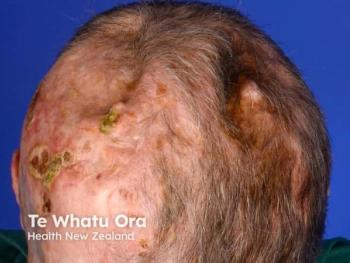
Traditional severity categories—mild, moderate, and severe—have historically relied on the visible extent of disease. However, clinical experience and emerging data demonstrate that limited BSA involvement can still result in substantial functional impairment, psychosocial distress, and reduced quality of life when psoriasis affects certain anatomic sites. Involvement of the scalp, face, palms, soles, intertriginous areas, genitals, or nails often interferes disproportionately with daily activities, work, and social interactions. Additionally, patients who experience treatment failure with appropriate topical therapy may continue to experience active disease despite low overall BSA.
These scenarios are not uncommon in practice and can lead to undertreatment when severity definitions are applied rigidly. Patients may be classified as having “mild” disease and be denied access to systemic therapies despite ongoing symptoms and meaningful disease impact. The NPF Medical Board position statement seeks to address this gap by refining how severity is defined and operationalized.
The NPF framework builds on the International Psoriasis Council (IPC) severity reclassification published in 2020. The IPC proposed shifting away from a 3-tier severity model toward a treatment-based approach, categorizing patients as candidates for topical therapy or systemic therapy. Under the IPC definition, candidacy for systemic therapy is established by any 1 of 3 criteria: BSA greater than 10%, involvement of special areas, or failure of topical therapy.
Since its introduction, the IPC framework has gained broad international acceptance and has been incorporated into several national and regional guidelines. The NPF Medical Board endorses this approach while introducing minor modifications aimed at clarity, consistency, and practical use in US clinical settings.
The NPF Medical Board recommends classifying psoriasis as either mild or moderate to severe across all clinical subtypes. Mild psoriasis is defined as disease in patients who are appropriate candidates for topical therapy alone. Moderate to severe psoriasis is defined as disease in patients who are candidates for systemic therapy and meet at least 1 of the following criteria: BSA involvement of 10% or more, involvement of high-impact sites, or failure of topical therapy.
Two distinctions from the IPC framework are worth noting. First, the NPF retains the commonly used terms “mild” and “moderate to severe.” Although the IPC intentionally moved away from these labels, the NPF argues that they remain deeply embedded in clinical practice, regulatory language, and patient understanding. Second, the NPF adopts the term “high-impact sites” rather than “special areas,” emphasizing the functional and quality-of-life consequences of psoriasis in these locations rather than their anatomic uniqueness.
Failure of topical therapy is defined consistently with recent IPC clarification: inability to achieve clear or nearly clear skin after 2 consecutive 4-week courses of appropriate topical treatment. This definition provides a practical benchmark that can be applied consistently in routine care.
The NPF severity definition reinforces the principle that disease impact, not just disease extent, should guide treatment decisions. By formally recognizing high-impact site involvement and inadequate response to topical therapy as markers of moderate to severe disease, the framework supports earlier escalation to systemic treatment when clinically appropriate. This has the potential to reduce prolonged symptom burden and improve patient outcomes.
The position statement may also help address payer-related access barriers by providing a consensus-backed rationale for systemic therapy in patients with limited BSA but significant disease impact. Clear, standardized definitions can support documentation and prior authorization processes that more accurately reflect patient needs.
The NPF Medical Board recommends incorporating this severity definition into clinical trial inclusion criteria. Doing so may expand access to investigational therapies for patients who have historically been excluded due to low BSA thresholds despite meaningful disease burden. This shift could improve the external validity of trial populations and better align research outcomes with real-world practice.
The NPF Medical Board position statement represents an incremental but important refinement in psoriasis severity classification. By integrating disease extent, lesion location, and treatment response into a unified framework, the proposed definition addresses known shortcomings of BSA-based assessment alone. For clinicians, this approach offers a more clinically relevant method for evaluating disease severity, supporting treatment decisions, and advocating for appropriate patient access to care.
References