


News|Articles|January 13, 2026
Next-Generation IL-4Rα Targeting and Potential Dermatologic Implications
Fact checked by: Yasmeen Qahwash
Listen
0:00 / 0:00
Key Takeaways
- Rademikibart targets IL-4Rα, inhibiting IL-4/IL-13 signaling with enhanced binding and receptor internalization compared to dupilumab.
- Preclinical studies show rademikibart reverses IL-4/IL-13-induced hyporesponsiveness in airway models, suggesting broader tissue-level effects.
Connect Biopharma reveals innovative data on rademikibart's mechanism of action, highlighting its potential impact on atopic dermatitis and future clinical priorities.
Advertisement
IL-4 and IL-13 are central drivers of type 2 inflammation across multiple diseases, including atopic dermatitis (AD), asthma, and chronic obstructive pulmonary disease (COPD).1 Rademikibart, a fully human monoclonal antibody targeting the IL-4 receptor α (IL-4Rα), is under clinical development as a next-generation inhibitor of this pathway. Recently published mechanism-of-action (MOA) data and clinical updates from Connect Biopharma provide new insights into how rademikibart interacts with IL-4Rα and how these interactions may translate into differentiated pharmacologic effects compared with existing therapies.2 Although the most recent data focus primarily on airway disease, the shared biology of type 2 inflammation makes these findings relevant to dermatologists managing AD.
IL-4/IL-13 Signaling in AD
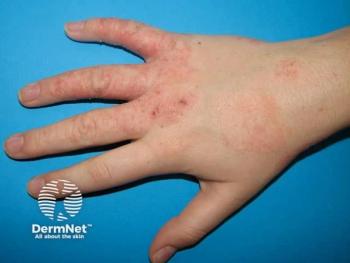
AD is characterized by epidermal barrier dysfunction, immune dysregulation, and chronic inflammation dominated by Th2 cytokines, particularly IL-4 and IL-13. These cytokines contribute to impaired barrier protein expression, pruritus, IgE class switching, and eosinophil recruitment. Therapeutic inhibition of IL-4Rα has already demonstrated substantial clinical benefit in AD, validating this pathway as a cornerstone target in dermatologic disease.3
Given the chronic nature of AD and the need for long-term disease control, continued investigation into the nuances of IL-4Rα signaling, receptor binding, and downstream effects remains clinically relevant.
Rademikibart: MOA and Differentiation
Rademikibart is a fully human monoclonal antibody designed to bind IL-4Rα, thereby inhibiting signaling from both IL-4 and IL-13. According to newly released MOA data, rademikibart demonstrates enhanced binding affinity to IL-4Rα compared with dupilumab, resulting in a more stable receptor-antibody complex.2
Importantly, structural and epitope-mapping analyses indicate that rademikibart binds regions of IL-4Rα that more closely overlap with the conserved binding interface naturally utilized by IL-4 and IL-13. This overlap appears to promote greater receptor internalization, a mechanistic feature not observed to the same extent with dupilumab. From a biological standpoint, increased internalization may lead to more complete or sustained suppression of IL-4/IL-13 signaling, although the clinical implications of this distinction in AD remain to be fully established.
Preclinical and Translational Findings
The newly presented in vitro studies were conducted primarily in human airway smooth muscle cells and human precision-cut lung slices (hPCLS). In these models, IL-4 and IL-13 induced hyporesponsiveness to β-agonists, a phenomenon relevant to asthma pathophysiology. Treatment with rademikibart substantially reversed this hyporesponsiveness, whereas dupilumab did not demonstrate a comparable rescue effect in hPCLS experiments.
Although these findings are specific to airway physiology, they highlight the broader concept that IL-4/IL-13 signaling may induce tissue-level functional impairment that is not limited to immune activation alone. In AD, analogous cytokine-driven effects include reduced filaggrin expression, altered keratinocyte differentiation, and impaired barrier recovery. Whether enhanced receptor internalization observed with rademikibart translates into more rapid or complete reversal of these epidermal abnormalities remains an open question requiring direct dermatologic investigation.
Clinical Development and Relevance to Dermatology
To date, much of rademikibart’s clinical development has focused on asthma and COPD, including a completed phase 2b chronic asthma study and ongoing phase 1b intravenous dosing and phase 2 acute exacerbation trials. The company has reported rapid and pronounced improvements in forced expiratory volume in 1 second, which are hypothesized to be linked to the MOA findings described above.
From a dermatology perspective, these data do not yet provide direct clinical evidence in AD. However, the shared IL-4/IL-13 biology across organ systems supports cautious interest in whether a differentiated IL-4Rα binding profile could influence the onset of action, depth of response, or safety signals relevant to skin disease, including eosinophilia or conjunctivitis.
Conclusions and Future Directions
The recently published MOA data for rademikibart add to the growing understanding of how different IL-4Rα–targeting antibodies may vary in receptor engagement and downstream effects. Although current evidence is largely derived from airway models and asthma trials, the mechanistic insights are biologically relevant to AD, a disease similarly driven by IL-4 and IL-13 signaling.
Rademikibart should be considered an investigational therapy with potential applicability in AD rather than an established dermatologic treatment. Dedicated clinical trials in patients with AD will be essential to determine whether the observed mechanistic differences translate into meaningful clinical advantages in skin disease. Until such data are available, rademikibart remains a promising but unproven addition to the evolving landscape of targeted therapies for type 2 inflammatory disorders.
References
- Bao K, Reinhardt RL. The differential expression of IL-4 and IL-13 and its impact on type-2 immunity. Cytokine. 2015;75(1):25-37. doi:10.1016/j.cyto.2015.05.008
- Connect Biopharma highlights new mechanism of action data for rademikibart and outlines priorities for 2026. News release. Connect Biopharma. January 12, 2026. Accessed January 13, 2026.
https://www.globenewswire.com//news-release/2026/01/12/3216800/0/en/connect-biopharma-highlights-new-mechanism-of-action-data-for-rademikibart-and-outlines-priorities-for-2026.html - Beck LA, Cork MJ, Amagai M, et al. Type 2 inflammation contributes to skin barrier dysfunction in atopic dermatitis. JID Innov. 2022;2(5):100131. doi:10.1016/j.xjidi.2022.100131
Advertisement
Related Content
Advertisement




Advertisement
Advertisement
Trending on Dermatology Times
1
FDA Grants Priority Review to Zasocitinib for Moderate-to-Severe Plaque Psoriasis
2
Genetic Study Links Higher BMI to Perceived Facial Aging, but Causality Remains Unproven
3
FDA Accepts Bezuclastinib NDA for Advanced Systemic Mastocytosis
4
FDA Approves Ameluz Red Light PDT for Superficial Basal Cell Carcinoma
5