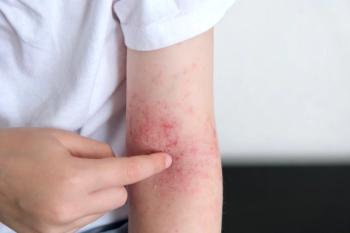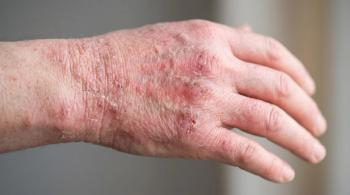
SYX-5219 improved disease severity and itch in a Phase 1b trial of adults with moderate to severe atopic dermatitis.
Dupilumab demonstrates significant efficacy and safety in treating severe atopic dermatitis in children aged 6 months to 5 years, improving quality of life.
Severe atopic dermatitis (AD) in early childhood is a chronic inflammatory condition marked by persistent pruritus, widespread skin lesions, and frequent disease flares. In young children, these symptoms are associated with sleep disruption, irritability, behavioral difficulties, and impaired psychosocial development. The burden of disease extends beyond the patient, placing substantial physical, emotional, and social strain on caregivers due to the demands of daily disease management and the chronic nature of symptoms. These early-life impacts may contribute to long-term psychological and quality-of-life consequences.1
Management of moderate to severe pediatric AD remains challenging. Limitations include the absence of universally applicable diagnostic tools, a lack of reliable biomarkers to predict disease course or treatment response, and historically limited systemic treatment options suitable for very young children. Although advances have been made in clinical practice, national data from France have highlighted ongoing variability in treatment approaches and the need for greater standardization to optimize outcomes.2
Dupilumab, a fully human monoclonal antibody that inhibits IL-4 and IL-13 signaling pathways central to type 2 inflammation, was approved by the European Commission in March 2023 for the treatment of severe AD in children aged 6 months to 5 years requiring systemic therapy. Prior to full reimbursement and commercial availability in France, dupilumab was made accessible through the French Early Access Program (EAP). This program allows patients with significant unmet medical needs to receive therapies either before or shortly after regulatory approval, providing an opportunity to generate real-world evidence outside the constraints of randomized controlled trials.
A recent study presented aggregated real-world data from the French EAP, examining the effectiveness and safety of dupilumab in children aged 6 months to 5 years with severe AD in routine clinical practice.2
Between January and December 2023, 108 physicians across 65 health care sites in France enrolled children with severe AD into the EAP. The majority of participating centers were public university hospitals, reflecting specialist-led prescribing. Eligible patients had a clinical diagnosis of AD requiring systemic treatment and had failed, were intolerant to, or had contraindications to topical corticosteroids.
A total of 198 children were enrolled, with confirmed dupilumab administration in 133 patients. The mean age was 3.7 years, with 13.6% of patients younger than 2 years. Most patients had long-standing disease, with an average duration of nearly 30 months since diagnosis, and the majority had received prior or concomitant AD treatments.
Dupilumab was administered every 4 weeks based on body weight, as per protocol recommendations.
Clinical effectiveness was assessed using validated outcome measures, including the Investigator’s Global Assessment (IGA), Eczema Area and Severity Index (EASI), Pruritus Numerical Rating Scale (P-NRS), and age-appropriate quality-of-life instruments.
Among patients with available follow-up data, 71.8% achieved an IGA score of 0 or 1 (clear or almost clear skin) during the follow-up period, increasing to 83.7% at 6 months. All evaluable patients younger than 2 years achieved IGA 0/1 at 6 months.
Improvements in disease severity were also reflected in EASI responses. Overall, 67% of patients achieved EASI 75, and 33% achieved EASI 90 during follow-up. Mean EASI scores declined substantially from baseline, and improvements were observed as early as 1 month, with sustained benefit through 6 months.
Pruritus severity improved in parallel. More than 70% of patients experienced a clinically meaningful reduction in itch intensity (≥ 4-point improvement in P-NRS), with mean scores decreasing by more than 4 points from baseline by 6 months.
Marked improvements in quality of life were observed in both age groups. Children younger than 4 years demonstrated substantial reductions in Infants’ Dermatitis Quality of Life Index scores, whereas children 4 years and older showed similar improvements on the Children’s Dermatology Life Quality Index. These findings suggest meaningful benefits extending beyond clinical skin clearance to daily functioning and well-being.
Safety data were collected through pharmacovigilance reporting. Drug-related adverse events were reported in a minority of patients, with most events being mild to moderate. Serious adverse events were rare, and no fatal outcomes were reported. The overall safety profile was consistent with previously published clinical trial data, with low rates of treatment discontinuation due to adverse events.
The findings from this EAP are broadly consistent with results from the pivotal LIBERTY AD PRESCHOOL trial (NCT03346434), with some effectiveness outcomes appearing numerically higher in the real-world setting. Differences may reflect variations in baseline disease severity, concomitant treatments, and real-world prescribing practices.
As an observational program, the EAP has inherent limitations, including missing data, variability in follow-up schedules, and the absence of a control group. Nonetheless, the data provide valuable insight into the use of dupilumab in routine clinical practice and extend observations beyond the typical duration of randomized trials.
Real-world evidence from the French EAP supports the effectiveness and safety of dupilumab in children aged 6 months to 5 years with severe AD. Improvements were observed across disease severity, pruritus, and quality of life, with a safety profile consistent with clinical trial experience. These findings complement existing randomized data and support the use of dupilumab as a systemic treatment option for very young children with severe AD while highlighting the need for continued long-term follow-up.
References