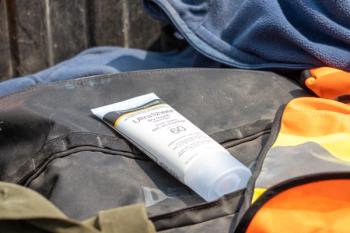
Two new Neutrogena facial sunscreens incorporate bemotrizinol, the first new sunscreen active ingredient added to the US OTC monograph in decades.
This review of the latest dermatologic studies includes insights on the "fear of overfilling," sexual adverse events from oral finasteride, post-laser, fibronectin-based skin care regimens, and more.
A pharmacovigilance study evaluated reports of sexual adverse events associated with oral finasteride 1 mg using the US FDA Adverse Event Reporting System (FAERS) from 2006 to 2024, with dutasteride 0.5 mg serving as a comparator. Eight sexual adverse events linked to post-finasteride syndrome—including erectile dysfunction, reduced libido, and sexual dysfunction—were analyzed using disproportionality methods. Statistically significant reporting signals were detected for both drugs; however, finasteride generated substantially more reports than dutasteride, despite the latter being a more potent 5-α-reductase inhibitor. Reporting of sexual adverse events increased sharply after 2012, coinciding with heightened public awareness of post-finasteride syndrome, and remained disproportionately higher for finasteride thereafter. The authors interpret this pattern as consistent with a strong nocebo effect rather than a clear pharmacologic risk.1
This prospective comparative case series evaluated the safety, efficacy, and delivery of the hyaluronic acid skin booster CPM-HA20G using 3 injection modalities: serial puncture, blunt cannula, and a multiple-needle injector, with ultrasound used to confirm product placement. Fifteen patients received 3 full-face treatments at 4-week intervals, and an additional patient underwent a split-face comparison of serial puncture versus cannula. All 3 techniques produced comparable improvements in skin hydration, tone, surface evenness, and elasticity over 12 weeks, with high patient satisfaction and no serious adverse events. Ultrasound confirmed consistent placement of CPM-HA20G in the immediate subdermal plane with both needle and cannula delivery. Pain scores, however, were significantly lower with blunt cannula injections compared with serial puncture or injector devices, and bruising was less frequent.2
This 28-day split-face study evaluated a fibronectin-containing topical regimen for post–intense pulsed light (IPL) skin recovery in 32 women. Following IPL, participants applied fibronectin serum to one side of the face and a control serum to the other. IPL induced transient barrier disruption, with increased erythema and transepidermal water loss (TEWL) on both sides. From day 3 onward, the fibronectin-treated side showed significantly greater improvements in stratum corneum hydration and significantly lower TEWL, indicating faster barrier restoration. Objective erythema parameters normalized more rapidly on the fibronectin side, particularly by days 3 and 7. Skin gloss and radiance were also superior on the treated side at days 7 and 28. Investigator and patient assessments confirmed reduced redness, dryness, and desquamation. The regimen was well tolerated, with no adverse events.3
A phase 3 randomized, double-blind, placebo-controlled trial is evaluating TM5614, a plasminogen activator inhibitor-1 (PAI-1) inhibitor, in combination with nivolumab for patients with unresectable, anti-PD-1–refractory malignant melanoma. Resistance to immune checkpoint inhibitors remains a major clinical challenge, and prior phase 2 data suggested that TM5614 may restore sensitivity to nivolumab by modulating tumor-associated PAI-1 signaling. The study will enroll 124 patients across 18 Japanese centers and randomize them to receive TM5614 plus nivolumab or placebo plus nivolumab for up to 48 weeks. The primary endpoint is overall survival, with secondary endpoints including objective response rate, progression-free survival, disease control rate, and treatment-related adverse events. Efficacy will be assessed using Kaplan–Meier survival analysis and Cox proportional hazards modeling. This trial aims to determine whether PAI-1 inhibition can improve outcomes in patients with immunotherapy-resistant melanoma.4
This clinical commentary introduces the Fear of Overfilling (FOF) as a psychologically and culturally mediated response to modern digital aesthetics rather than a formal psychiatric diagnosis. FOF reflects a rational fear of losing one’s facial identity through hyaluronic acid (HA) filler overcorrection, distinct from body dysmorphic disorder or general procedural anxiety. The author links FOF to widespread exposure to exaggerated, algorithm-driven facial images on social media, which simultaneously normalize distortion and heighten patient anxiety about looking “overdone.” Clinically, FOF contributes to treatment avoidance, heightened demand for filler dissolution, and increasing concern about migration and chronic HA accumulation. Recognizing FOF is therefore critical to contemporary aesthetic practice. The authors advocate an identity-preservation framework emphasizing anatomical precision, dynamic facial assessment, age-related structural restoration, and the use of bioregenerative, volume-neutral modalities. Dermatologic ultrasound is highlighted as a key tool to visualize filler placement and reduce patient anxiety. By addressing FOF directly, dermatologists can improve communication, adherence, and aesthetic outcomes.5
References
1. Gupta AK, Talukder M, Williams G, Bamimore MA. Oral finasteride use and sexual adverse events: signal detection from disproportionality analyses of data from the United States Food and Drug Administration Adverse Event Reporting System. J Dermatolog Treat. 2026;37(1):2611703. doi:10.1080/09546634.2025.2611703
2. Booysen K, Lin F. Facial Skin Revitalization With CPM-HA20G (Hyaluronic Acid + Glycerol): A Comparative Case Series Using Three Delivery Techniques With Ultrasound Confirmation. J Cosmet Dermatol. 2026;25(1):e70660. doi:10.1111/jocd.70660
3. Feng H, Ge L, Shi G, et al. Fibronectin-Based Skin Care Regimens for Skin Recovery After Intense Pulsed Light Therapy: A Split-Face Study. Clin Cosmet Investig Dermatol. doi:10.2147/CCID.S564788
4. Fujimura T, Yoshino K, Kato H, et al. Phase III Study Investigating the Safety and Efficacy of TM5614 in Combination With Nivolumab for the Treatment of Unresectable Malignant Melanoma: Protocol. Exp Dermatol. 2026;35(1):e70202. doi:10.1111/exd.70202
5. Oliveira RRC. The Fear of Overfilling (FOF): A Clinically Significant Response to Digital Aesthetics and the Dermatologist's Imperative to Preserve Facial Identity. J Cosmet Dermatol. 2026;25(1):e70652. doi:10.1111/jocd.70652