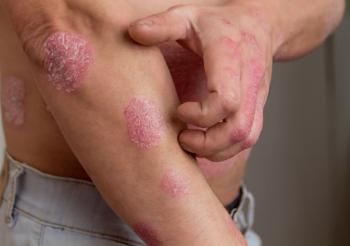
Tina Bhutani-Jacques, MD, explored how disease location, prior treatment response, and patient preference shape topical treatment decisions across 3 plaque psoriasis cases.
Discover how trifarotene could enhance acne treatment in Malaysia, addressing both facial and truncal acne while improving hyperpigmentation and scarring.
Trifarotene, a fourth-generation topical retinoid with selective retinoic acid receptor-γ activity, has demonstrated efficacy for both facial and truncal acne. Yet, its role was only briefly addressed in Malaysia’s 2022 Clinical Practice Guidelines (CPGs) due to its unavailability at the time.1 An expert advisory paper sought to bridge that gap by synthesizing current evidence and expert consensus to provide practical guidance on incorporating trifarotene into routine acne care in Malaysia.2
A targeted literature review was conducted from May to August to evaluate trifarotene’s efficacy, safety, pharmacokinetics, and clinical positioning, with particular emphasis on truncal acne and acne-related sequelae such as hyperpigmentation and atrophic scarring. This evidence, sourced from PubMed, Cochrane Library, and Google Scholar databases, was reviewed by a panel of 10 Malaysian dermatologists representing public, private, and academic practices. Using structured surveys and consensus meetings, the panel developed and unanimously endorsed 10 advisory statements. Additionally, 3 illustrative case studies were included to demonstrate real-world application across varying acne severities and patient profiles.
The advisory panel positioned trifarotene alongside established first-line topical agents for mild to moderate facial and truncal acne. The panel presented clinical trials, including the PERFECT, DUAL, START, and LEAP studies, that consistently demonstrated significant reductions in inflammatory and noninflammatory lesions on both the face and trunk, with sustained efficacy up to 52 weeks.
Beyond lesion clearance, emerging evidence supports trifarotene’s role in improving acne-induced hyperpigmentation and atrophic scarring. These outcomes are particularly relevant in Asian populations and patients with darker skin phototypes. Improvements in scarring were observed as early as 2 weeks in clinical trials, whereas reductions in postacne hyperpigmentation were documented by weeks 12 to 24. The panel emphasized that these benefits occur in the context of active acne treatment rather than as a stand-alone therapy for established scars.
Patient selection recommendations focused on adolescents 12 years and older and adults with mild to moderate disease, including those at higher risk for hyperpigmentation or scarring. Trifarotene was not recommended as monotherapy for nodulocystic acne, which typically requires systemic therapy. Combination regimens, particularly with oral antibiotics, were also endorsed. Furthermore, the panel addressed combination use with other topical agents such as benzoyl peroxide or azelaic acid, recommending staggered application schedules to minimize irritation and preserve stability.
Practical guidance on dosing and tolerability was a central component of the advisory. Trifarotene should be applied once nightly to clean, dry skin, extending beyond visible lesions, with a minimum treatment duration of 12 weeks. Incremental initiation strategies, including alternate-day or brief-contact application, were strongly recommended to mitigate early retinoid dermatitis. The panel endorsed the “Cleanse–Treat–Moisturize–Photoprotect” regimen as a foundational approach to improve tolerability and adherence. Clinical trial data indicate that local irritation typically peaks in the first 1 to 4 weeks and diminishes with continued treatment.
Special populations were also addressed in these advisory statements. Trifarotene demonstrated favorable safety and efficacy in adolescents, whereas its use during pregnancy and lactation remains contraindicated due to limited safety data. The panel highlighted the importance of tailored initiation strategies for patients with sensitive skin or those prone to postinflammatory hyperpigmentation.
Overall, this expert advisory paper provides timely, evidence-based guidance on the integration of trifarotene into acne management in Malaysia, particularly in areas insufficiently addressed by current CPGs. As additional real-world and comparative data emerge, the panel predicts that trifarotene is likely to assume an increasingly important role in comprehensive acne care, especially for truncal disease and acne-induced sequelae.
References
1. Clinical Practice Guidelines: Management of Acne Vulgaris. 2nd ed. Ministry of Health Malaysia; 2022.
2. Mohd Affandi A, Ch'ng PWB, Teoh BTY, et al. Bridging gaps in Malaysian acne vulgaris guidelines: advisory statements on trifarotene for facial and truncal acne. J Cosmet Dermatol. 2026;25(1):e70625. doi:10.1111/jocd.70625