Put your dermatology expertise to the test with Dermatology Times’ interactive quiz series.
The RWEAL study uncovers real-world management of chronic hand eczema (CHE), highlighting treatment gaps and the need for standardized assessment in clinical practice.
Despite the prevalence and profound impact on patient quality of life and occupational productivity, data regarding how chronic hand eczema (CHE) is managed in real-world clinical settings remain limited. Discrepancies often exist between consensus guidelines and actual bedside practice, particularly concerning the use of standardized severity scores and the navigation of complex etiologies.
The Real-World trEatment and mAnagement of chronic hand eczema in cLinical practice (RWEAL) study was designed to address a gap in real-world data by characterizing patients with moderate to severe CHE treated in routine dermatology care across 6 countries.1 By analyzing the diagnostic patterns, phenotypic diversity, and comorbidity profiles of nearly 2000 patients, this study provides a comprehensive snapshot of current practice and highlights the unmet needs in the management of this heterogeneous disease.
The multinational retrospective chart review was conducted between June and November 2023 in Canada, France, Germany, Italy, Spain, and the United Kingdom. A total of 292 physicians—primarily dermatologists, with general practitioners specializing in dermatology included in Canada and the UK—contributed data on 1939 adult patients with moderate to severe CHE. Participating clinicians had at least 3 years of experience and managed a minimum of 15 patients with CHE annually, ensuring the cohort reflected established real-world practice. Data were collected over a 12-month retrospective period using structured census and detailed focus case report forms.
The patient population was slightly predominantly women (53.6%) and had a mean disease duration of 6 years. Only 7% had been diagnosed within the prior year, indicating that most patients were living with long-standing disease. Over the 12-month observation period, 56.8% of patients had moderate CHE and 43.2% had severe disease. Although sex distribution was similar between severity groups, severe CHE was more common among older patients, with 60% aged 40 years and older compared with 51% of those with moderate disease.
The assessment of disease severity in routine practice was largely subjective. Nearly 75% of physicians relied primarily on clinical judgment, whereas only a quarter used formal scoring instruments such as the Hand Eczema Severity Index or Investigator Global Assessment. Psychosocial burden, work impairment, and prior treatment history were also frequently considered.
Etiologically, CHE was highly heterogeneous. Irritant contact dermatitis was the most common subtype, affecting 40% of patients, followed by atopic hand eczema (33%) and allergic contact dermatitis (27.5%). Protein contact dermatitis or contact urticaria was rare (3%). Notably, less than a quarter of patients had purely atopic CHE.
Mixed etiologies were present in 14% of patients, most commonly combinations of irritant and allergic contact dermatitis or irritant dermatitis with atopic disease. Allergic contact dermatitis was modestly but significantly more frequent in severe CHE, suggesting that allergic sensitization may contribute to greater disease burden. Nearly one-third of CHE cases (29%) were considered occupationally related, but specific careers were not recorded.
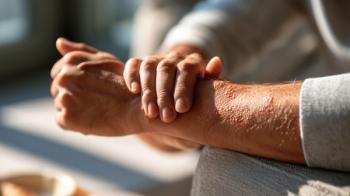
Palms were the most frequently affected site (56.6%), followed by fingertips, backs of the hands, interdigital spaces, and wrists. Patients had an average of 2 anatomical sites involved, and those with severe CHE were more likely to have dorsal hand involvement. Signs and symptoms were similarly diverse. Erythema, pruritus, and scaling affected approximately 60% of patients; fissures, lichenification, hyperkeratosis, vesicles, edema, and pain were also common. Nearly three-quarters of patients exhibited 3 or more signs or symptoms, with a higher overall burden in those with severe disease.
The comorbidity analysis revealed a substantial atopic background. A history of atopic dermatitis was documented in 44% of patients, far exceeding the general population prevalence.2 Other atopic conditions, including asthma, allergic rhinitis, and food allergy, were also frequent. However, almost one-third of patients had no other atopic or dermatologic diagnoses, again supporting CHE as a distinct disease entity.
Psoriasis was present in 3.9% of patients and was more common in severe CHE. Emotional or mental health disorders were recorded in 14%, likely an underestimate given the known psychosocial impact of CHE. Cardiovascular, respiratory, and metabolic conditions were also common, with important implications for systemic treatment selection. Family history further supported a genetic predisposition, with 42% reporting atopic conditions in relatives and higher rates of hand eczema and psoriasis in families of patients with severe disease.
The RWEAL findings reveal a patient population dominated by long-standing disease, frequent multisite involvement, and a significant reliance on subjective clinical judgment rather than formal scoring tools. As we move forward, the authors emphasize that these insights advocate for a more standardized approach to severity assessment and a multidisciplinary management strategy that addresses both the physical manifestations and the systemic, psychosocial burdens of the disease.
References
1. Fargnoli MC, Molin S, Bewley A, et al. Moderate to severe chronic hand eczema in clinical practice: etiological subtypes, clinical signs and symptoms, and comorbidities-results from the RWEAL study. J Dermatolog Treat. 2026;37(1):2603121. doi:10.1080/09546634.2025.2603121
2. Zhang J, Loman L, Voorberg AN, Schuttelaar MLA. Prevalence of adult atopic dermatitis in the general population, with a focus on moderate-to-severe disease: results from the Lifelines Cohort Study. J Eur Acad Dermatol Venereol. 2021;35(11):e787-e790. doi:10.1111/jdv.17471