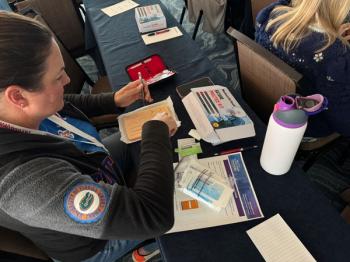
Faculty from the Cutaneous Oncology Workshop answer practical questions spanning skin cancer prevention, diagnosis, treatment, and follow-up.
An Evolving Paradigms event led by Darrell S. Rigel, MD, MS, compared PD-1/PD-L1 immunotherapies for advanced cutaneous squamous cell carcinoma, with referral guidance and toxicity alerts.
Rigel, a clinical professor of dermatology at NYU Grossman School of Medicine and adjunct professor of dermatology at UT Southwestern Medical School, opened by reviewing the 3 PD-(L)1 inhibitors currently approved for advanced CSCC: cemiplimab (Libtayo; Regeneron), pembrolizumab (Keytruda; Merck), and cosibelimab (Unloxcyt; Sun Pharma). He noted a mechanistic distinction that sets cosibelimab apart. As a PD-L1 inhibitor, it operates at the level of the tumor cell and also engages natural killer cells through a secondary pathway, compared with the PD-1 mechanism shared by cemiplimab and pembrolizumab. When asked whether this difference influenced their drug selection, attendees were largely unmoved.
"I'm hearing a lot of negative shaking here," Rigel said. "So really, you care about efficacy primarily, and adverse events."
The attendees then reviewed data from the 3 pivotal trials: CK-301-101 for cosibelimab (
Efficacy outcomes were broadly comparable across agents, with overall response rates in the metastatic setting of 50% for cosibelimab, 50.8% for cemiplimab at the Q2W dose, and 35.2% for pembrolizumab. Duration of response data at 24 months showed similar results across all 3, though cosibelimab lacked a 36-month follow-up given its more recent approval. The safety data drew more attention. Grade 3 or higher immune-related adverse events occurred in 3.6% of patients receiving cosibelimab, compared with 8.8% for pembrolizumab and 15.0% for cemiplimab in groups 1 through 3 of the EMPOWER trial.
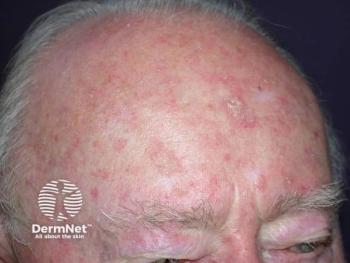
Rigel presented a case representative of high-risk, locally advanced disease: a 72-year-old male with no prior skin cancer history who presented with an atrophic plaque and erythematous papulonodules on the scalp. CT imaging identified a left parotid-region lymph node of concern; fine needle aspiration confirmed metastatic squamous cell carcinoma. The patient underwent Mohs surgery with a final defect of 4.3 by 4.1 cm, left parotidectomy with 1 of 18 lymph nodes positive for metastatic disease, and adjuvant radiation at 5500 cGy over 20 fractions. Pathology showed poorly differentiated histology, a depth of 5.7 mm, and extensive perineural invasion.
Rigel asked attendees whether they would refer this patient for additional systemic therapy, and the answer was consistent across both the dermatology and oncology sides of the table.
"Being in the community, there is the bigger hospital system which would work up with imaging and have a tumor board, which I don't have in private practice," an attendee said. "I was the one who referred them for management, which would definitely include systemic therapy, at least historically."
Every dermatologist in the room indicated they would refer patients with advanced disease rather than initiate systemic therapy themselves, though several emphasized continuing to counsel patients before the handoff. Rigel stressed the dermatologist's ongoing role even after referral—following patients for subsequent lesions and ensuring they return for skin checks, a step attendees acknowledged can be difficult to maintain once patients enter the oncology system.
"Sometimes when they are referred to medical oncology, it's hard for them to come back," an attendee noted. "They don't come back for their skin checks. They feel like they got treated and they're done."
When oncologists described how they select among the available agents, cemiplimab emerged as the most commonly used drug in current practice, with interest in cosibelimab growing but largely untested at this time.
"It comes down to effectiveness, the side effect profile, and then from the patient perspective, the logistics—how often they have to come in," one attendee said. "They have to come every 2 weeks, every 3 weeks, or once a month. Those are the things that come into discussion whenever we initiate that."
Discussion of adverse event management revealed a graded, context-dependent approach. Attendees drew clear distinctions between toxicities they consider manageable without interrupting therapy—such as thyroid abnormalities—and those requiring prompt intervention and drug discontinuation, including colitis and pneumonitis.
"If they're having colitis, for example, that's more serious, and that's when I would stop the drug and start steroids," an attendee said. Another attendee added that even low-grade pneumonitis warrants immediate action: "We take it very seriously and initiate treatment, initiate the steroid, stop the immunotherapy, and involve the concerned consultant, a pulmonologist in that case."
Underlying autoimmune disease surfaced as a key factor that could prevent the initiation of immunotherapy entirely. Attendees disagreed modestly on the threshold. One described working closely with rheumatology to stabilize underlying conditions before proceeding. Another was more cautious.
"Even if they're under control, I would say it's a concern, because you can activate their immune system and cause exacerbation of that disorder," an attendee said.
Rigel closed by noting cosibelimab's favorable adverse event profile as potentially meaningful for this population, while acknowledging the 2-year follow-up limitation. He suggested the group had surfaced a practical need on the dermatology side: a concise reference tool summarizing which patient features—staging, genomic risk markers, pathologic characteristics—should prompt referral for systemic therapy consideration.
"That's a really good idea," Rigel said. "That should come out of this."
This event recap has been produced independently by Dermatology Times and supported through an educational grant by Sun Pharmaceuticals.
For more upcoming