New dermatology research explores hidden steroids in OTC products, infant eczema, melanoma prevention, cutaneous lymphoma, and pediatric AD.
Hormonal shifts shape psoriasis and atopic dermatitis through puberty, pregnancy, postpartum, and menopause, guiding safer treatment choices and protecting pregnancy outcomes.
Hormonal changes across a woman’s lifespan can substantially influence the course of psoriasis and atopic dermatitis (AD), creating unique treatment challenges during puberty, pregnancy, postpartum, and menopause, according to a recent review.1 The authors highlighted the importance of individualized management strategies that balance disease control with maternal and fetal safety, particularly during pregnancy.
Inflammatory skin diseases disproportionately affect women during their reproductive years, making an understanding of hormonal influences essential for dermatology clinicians, including nurse practitioners and physician associates involved in long-term disease management.2
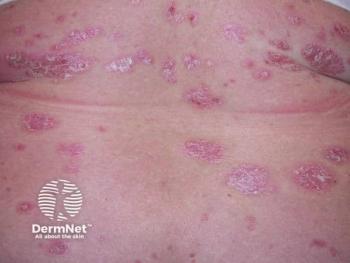
Psoriasis is primarily driven by T helper (Th)1 and Th17 immune pathways. During pregnancy, rising estrogen levels suppress Th1 and Th17 activity while promoting Th2 responses, leading to improvement in many patients. However, disease often worsens after delivery as hormone levels rapidly decline.
AD follows a different pattern because it is largely driven by Th2-mediated inflammation. Pregnancy naturally shifts immunity toward a Th2-dominant state to support fetal tolerance, which can exacerbate AD symptoms. In addition, hormonal changes may impair epidermal barrier function, increase transepidermal water loss, and contribute to increased skin dryness and itch.
The authors note that hormonal fluctuations associated with puberty, menstruation, menopause, and assisted reproductive technologies can also influence disease severity in both conditions.
Beyond maternal symptoms, the review authors emphasized that poorly controlled inflammatory skin disease may affect pregnancy outcomes. They stress that maintaining disease control before and during pregnancy is important for both maternal health and fetal outcomes.
For psoriasis, severe disease has been associated with increased risks of gestational diabetes, hypertension, preeclampsia, cesarean delivery, preterm birth, low birth weight, and miscarriage. Chronic systemic inflammation may contribute to these complications through placental dysfunction and vascular changes.
Women with AD may also experience increased rates of adverse pregnancy outcomes, including preterm birth, fetal growth restriction, and hypertensive disorders. Severe maternal pruritus can impair sleep, increase stress, and negatively affect quality of life throughout pregnancy.
Treatment selection during pregnancy requires balancing disease severity against potential fetal risks. For psoriasis, topical corticosteroids remain first-line therapy. Low- to medium-potency agents are generally preferred, while prolonged use of very potent corticosteroids should be approached cautiously. Narrowband ultraviolet B phototherapy is presented as a preferred option for patients requiring more extensive treatment because of its favorable safety profile during pregnancy.
Systemic therapies require greater caution. Methotrexate and acitretin remain contraindicated because of their known teratogenic effects. Cyclosporine may be considered in selected patients with severe disease when benefits outweigh potential risks. Among biologics, the review notes that tumor necrosis factor (TNF)-α inhibitors have accumulated the largest body of pregnancy safety data. Certolizumab pegol is highlighted because its minimal placental transfer distinguishes it from other TNF inhibitors. For newer biologics targeting interleukin (IL)-17 or IL-23 pathways, available pregnancy data remain limited, and treatment decisions should be individualized.
Management recommendations for AD follow a similar stepwise approach. Liberal use of moisturizers and emollients forms the foundation of therapy, with topical corticosteroids used for inflammatory flares. Topical calcineurin inhibitors may be appropriate for selected patients, although available pregnancy safety data remain limited.
Phototherapy can also be considered for AD when topical therapy alone is insufficient. Systemic corticosteroids may be reserved for severe flares requiring short-term control. The review notes that evidence supporting the use of biologic therapies during pregnancy for AD remains relatively limited. Dupilumab has emerging pregnancy experience, but additional long-term safety data are still needed.
Disease activity frequently changes again after delivery. Many women with psoriasis experience postpartum flares as pregnancy-related hormonal and immunologic adaptations resolve. Women with AD may similarly experience worsening disease while simultaneously managing newborn care and disrupted sleep. Breastfeeding introduces additional treatment considerations, as clinicians must evaluate medication transfer into breast milk while maintaining adequate disease control.
Menopause represents another period of changing disease activity. Declining estrogen levels may worsen skin barrier dysfunction, reduce collagen production, and increase dryness, potentially affecting both psoriasis and AD severity.
The authors conclude that successful management requires collaboration among dermatologists, obstetricians, primary care clinicians, and other specialists involved in all stages of maternal care.
“By focusing on effective treatments, preventive strategies, and tailored therapeutic plans, healthcare providers can support both maternal health and favorable outcomes for the child,” the study authors wrote.
They also emphasize the need for additional research evaluating the safety of newer biologic therapies during pregnancy and lactation, as well as studies examining how hormonal changes throughout a woman's life influence inflammatory skin disease progression and treatment response.
References
1. Qin G, Xu X Meng Z, Yao J, Zou Y. The Intersection of Inflammatory Skin Diseases and Women’s Reproductive Health: Challenges in Managing Psoriasis and Atopic Dermatitis During Pregnancy and Hormonal Fluctuations. Dermatologic Therapy, 2026, 9050616, 11 pages, 2026. doi:10.1155/dth/9050616
2. Danesh M, Murase JE. The immunologic effects of estrogen on psoriasis: A comprehensive review. Int J Womens Dermatol. 2015;1(2):104-107. Published 2015 May 14. doi:10.1016/j.ijwd.2015.03.001