The FDA approval, based on 36-week data from the phase 3 BRAVE-AA-PEDS trial, extends baricitinib access to patients as young as 12 years old with severe alopecia areata.
Weekly microneedling combined with daily topical 5% minoxidil produced statistically significant hair density gains in 40 women with female pattern hair loss.
A
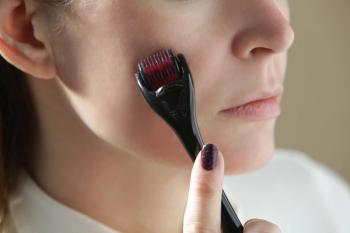
The study enrolled 40 women aged 20 to 57 years with FPHL confirmed by dermoscopy. Patients received weekly microneedling sessions using a 0.5-mm needle device followed by immediate topical application of 1 mL of 5% minoxidil solution, which patients were also instructed to apply independently once daily throughout the 12-week treatment period. Hair density was assessed using dermoscopic imaging at a fixed 1.2 cm² scalp region, with global photographic evaluations conducted by 3 blinded, board-certified dermatologists using a standardized 7-point scale.
At 12 weeks, mean hair count increased from 76.7 ± 18.26 hairs/cm² at baseline to 98.67 ± 10.85 hairs/cm², a statistically significant improvement (p < 0.001). Global photographic assessment found that 90% of patients showed measurable improvement — 32.5% demonstrated marked improvement, 42.5% moderate improvement, and 15% mild improvement. No patient experienced worsening.
Subgroup analysis by disease severity produced a notable finding: patients with more severe FPHL at baseline showed the greatest absolute gains in hair density. Posttreatment hair counts in the severe group rose from 57.65 ± 7.8 to 80.98 ± 9.42 hairs/cm², compared to gains from 93.55 ± 10.21 to 109.35 ± 9.77 in the mild group — with statistically significant differences between groups (p < 0.05). The investigators note, however, that regression to the mean may partly account for this pattern, and prospective studies with control groups are needed to confirm the finding.
When patients were stratified by age — spanning 4 groups from the 20s through 50s — significant improvements were observed within every age cohort, though no statistically significant differences emerged between groups, suggesting age alone does not substantially influence response to this regimen.
The combination was generally well-tolerated. Mean pain scores during microneedling sessions averaged 2.35 ± 0.57 on a 0–10 numerical rating scale, with a range of 1 to 3; investigators noted that pain perception appeared to decrease with repeated treatments. Seven patients (17.5%) experienced mild hypertrichosis affecting the face or upper limbs, consistent with the known adverse effect profile of topical minoxidil, though none discontinued treatment. Three patients developed scalp pruritus, managed successfully with the addition of topical halcinonide solution. No serious adverse events or systemic reactions were reported.
The rationale for combining microneedling with minoxidil is mechanistically grounded. Beyond its established role in enhancing topical drug penetration via microchannels, microneedling is thought to activate follicular stem cells, upregulate growth-promoting factors including VEGF and β-catenin, and stimulate follicular sulfotransferase activity — an enzyme implicated in minoxidil's local conversion to its active sulfated form.
While these results are encouraging, the study carries important caveats. The retrospective, single-arm design lacks a minoxidil-only comparator, making it difficult to isolate the specific contribution of microneedling. The 12-week follow-up window, while consistent with some prior FPHL studies, falls short of the longer durations needed to assess durability — existing literature suggests outcomes at 24 weeks may surpass those at 12. The relatively small sample size also limits generalizability.
The authors acknowledge these constraints and call for randomized controlled trials with larger cohorts, active comparator arms, and follow-up extending to at least 1 year. Still, the findings add to a growing body of evidence supporting adjunctive microneedling as a feasible, well-tolerated option in FPHL management — and notably expand the literature on its use in women, where data have historically lagged behind those in men.
References