Prospective data suggest DecisionDx-Melanoma may help refine SLNB decisions and identify recurrence risk beyond conventional staging.
Brian Berman, MD, PhD, explains actinic keratosis-to-SCC risk and newer PDT/field therapies that improve clearance with less pain.
In his session at
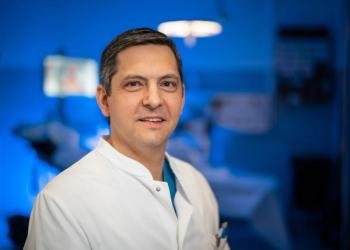
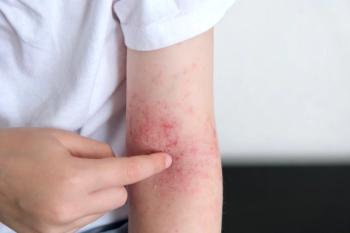
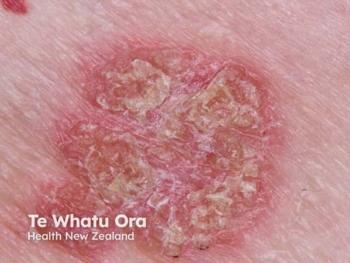
Berman, co-director of the Center for Clinical and Cosmetic Research in Aventura, Florida, and professor emeritus of dermatology and dermatologic surgery at The University of Miami Miller School of Medicine, began by reframing AK as part of a clinical continuum; from photodamage to AK to squamous cell carcinoma (SCC) in situ and ultimately, invasive cutaneous SCC. He cited large retrospective data involving nearly 250,000 patients demonstrating that individuals with AK carry approximately a threefold increased 10-year cumulative incidence of cutaneous SCC compared to those without AK (about 17% vs <6%). In regions such as South Florida, SCC now exceeds basal cell carcinoma as the most common nonmelanoma skin cancer, reinforcing the importance of early and effective AK management.
A key concept Berman emphasized was “field cancerization.” Even clinically normal-appearing skin adjacent to visible AKs frequently harbors subclinical disease; biopsy studies show that up to 75% of normal-appearing perilesional skin may already contain histologic AK. Despite this, US treatment patterns remain heavily lesion-directed. In an analysis representing nearly 60 million visits, cryotherapy was used in roughly half of encounters, while field therapies were underutilized.
Berman reviewed FDA-approved field therapies, focusing particularly on tirbanibulin ointment. Unlike older topical regimens requiring prolonged or burdensome application schedules, tirbanibulin is applied once daily for just 5 days. Mechanistically, it inhibits tubulin polymerization and disrupts kinase signaling, promoting apoptosis in AK cells. Updated American Academy of Dermatology guidelines give tirbanibulin the strongest recommendation among topical therapies, with the highest certainty of evidence.
He also discussed practical advances, including the availability of larger 350 mg sachets, allowing treatment of expanded areas (up to 100 cm²) with efficacy comparable to the original 25 cm² approval area—approximately 77 to 78% clearance rates. Local skin reactions peak around day 8 and typically resolve by day 30. Cost, although once a barrier, has decreased substantially.
Alternative approaches were also examined. Potassium hydroxide (KOH) solution applied daily for 1 month demonstrated somewhat higher clinical clearance than 5-fluorouracil (5-FU) in a split-face/scalp study, though adverse events were more frequent. Berman cautioned against extrapolating older combination studies of 5-FU mixed with petrolatum, noting that petrolatum significantly impairs 5-FU penetration—potentially confounding efficacy comparisons.
Transitioning to photodynamic therapy, Berman reviewed the mechanism of 5-aminolevulinic acid (ALA), which is metabolized in rapidly dividing cells to protoporphyrin IX. Upon activation by blue, red, or yellow light, reactive oxygen species are generated, selectively destroying dysplastic cells.
Two ALA formulations are available in the US: 20% solution (traditionally used with blue light) and 10% gel (approved with red light). Emerging data suggest flexibility in light source selection. In a split-face/scalp study, ALA gel activated with blue light achieved clearance rates comparable to traditional protocols (95 to 97% AK reduction), with improved tolerability including less erythema, scaling, and discomfort. The gel formulation has also shown strong efficacy on extremities and trunk, with lesion clearance rates exceeding 80%.
More technological updates include new LED-based blue and red light panels delivering appropriate energy doses in shorter or optimized treatment times. Regulatory changes now permit use of up to 3 gel tubes per session, though appropriate coding (using units rather than “tubes”) is essential for reimbursement compliance.
Pain mitigation strategies were another focus. A “simultaneous illumination” protocol—applying ALA and immediately initiating blue light without incubation—significantly reduced pain (0.5 vs 3.5 on a 10-point scale) while maintaining comparable efficacy. Vitamin D supplementation may modestly enhance AK clearance.
Finally, Berman addressed PDT for squamous cell carcinoma in situ (SCCis). Studies using occluded ALA with blue light or gel with red light demonstrated complete clinical and histologic clearance in selected facial SCCis cases, suggesting PDT may serve as a noninvasive option in carefully chosen patients.
Reference
1. Berman B. What’s New in Actinic Keratosis and PDT. Presented at: 2026 Winter Clinical Miami Dermatology Conference; February 27-March 1, 2026; Aventura, FL.