The merger, backed by an oversubscribed $180 million private placement, will fund development of NOR-101, an IL-13 x IL-18 bispecific antibody entering phase 1 trials in atopic dermatitis in early 2027.
CHE has gained attention in 2025 with an FDA-approved treatment and new insights, addressing its significant impact on patients' lives and work.
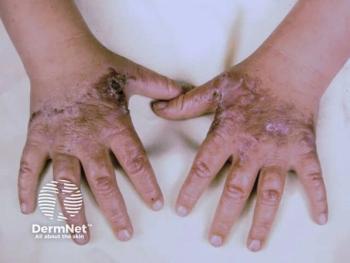
Throughout 2025, chronic hand eczema (CHE) emerged as a major focus in dermatology, reflecting growing recognition of the condition’s clinical complexity, occupational impact, and long-standing lack of targeted treatment options. Frequently underdiagnosed and challenging to manage, CHE continues to place a substantial burden on patients’ quality of life, daily functioning, and work productivity.
Over the past year, Dermatology Times covered pivotal developments shaping the CHE landscape, including the first FDA-approved topical therapy specifically indicated for moderate to severe disease, alongside new clinical trial data, real-world surveys, and expert perspectives
The FDA approval of delgocitinib (Anzupgo; LEO Pharma) was a major advancement in the treatment of CHE this year, marking a turning point for a condition long characterized by limited approved options. Our reporting spanned pivotal trial data, adolescent studies, real-world quality-of-life outcomes, and pharmacokinetic findings demonstrating minimal systemic exposure, offering further perspective on how topical JAK inhibition may reshape long-term CHE management globally.
The phase 3 clinical trial investigating delgocitinib cream for adolescents with moderate to severe CHE met its primary and key secondary endpoints.
Participants from the parent DELTA 1 and 2 studies maintained their disease control and observed a decrease in pain and itch over 52 weeks of treatment.
Patients with CHE saw higher treatment success and a favorable safety profile with delgocitinib 20-30 mg/g.
Delgocitinib cream significantly enhances health-related quality of life for patients with CHE, addressing both symptoms and psychosocial impacts.
The approval makes delgocitinib cream the first and only approved therapy in the US for CHE in adults.
Delgocitinib cream recently became the first FDA-approved treatment for CHE. Robert Spurr of LEO Pharma shares insights into what it means for providers and patients.
Clinical trials DELTA 1, 2, 3, and DELTA FORCE demonstrated significant improvements in CHE severity and patient-reported outcomes with delgocitinib.
Our expert interviews and clinical guidance throughout the year emphasized the importance of recognition, classification, and stepwise management in CHE. Together, these perspectives reinforced the need for individualized, evidence-based approaches to managing a condition that significantly impacts patients’ daily function and occupational health.
At the 2025 AAD Annual Meeting, Gooderham shared data on the negligible systemic exposure of delgocitinib cream for CHE.
At the 2025 Revolutionizing Atopic Dermatitis Conference, JiaDe “Jeff” Yu, MD, MS, discussed the multifactorial nature of CHE, highlighting its distinction from atopic dermatitis.
Adam Friedman, MD, FAAD, outlines a stepwise approach to treating CHE, from vehicle selection to systemic therapies and future innovations.
New findings from LEO Pharma reveal CHE affects 1 in 10 adults, highlighting the need for improved recognition and management in dermatology.
Beyond delgocitinib, 2025 coverage underscored the persistent diagnostic and therapeutic gaps facing patients with CHE. Surveys and observational studies revealed inconsistencies in severity assessment, delays in diagnosis, and the substantial quality-of-life burden experienced by patients. At the same time, emerging data on biologics such as dupilumab and tralokinumab highlighted the evolving role of systemic therapies.
A new survey reveals widespread misunderstanding and lack of effective treatments in CHE.
A survey by LEO Pharma indicates widespread misunderstandings about CHE, revealing significant emotional and occupational challenges for patients.
A national Delphi survey reveals critical insights into CHE management in France, highlighting the need for standardized assessment and guidelines.
Explore the emotional and physical challenges of CHE through a patient's journey and expert insights on empathetic care and innovative treatments
Patients reported the face, neck, and inner arms as the most affected body regions before treatment.
LEO Pharma reveals promising interim results for tralokinumab in treating moderate to severe atopic dermatitis on hands, enhancing patient quality of life.