New dermatology research explores hidden steroids in OTC products, infant eczema, melanoma prevention, cutaneous lymphoma, and pediatric AD.
Every week, we cut through the noise to bring clinicians the trial results, approvals, and emerging therapies that are actually moving the needle.
You’re busy. Between patients, prior authorizations, inbox messages, and everything else on your plate, keeping up with the literature is the first thing that slips.
The FDA has accepted Arcutis' supplemental New Drug Application for roflumilast cream 0.05% (Zoryve), seeking to extend the approved indication for mild to moderate atopic dermatitis down from age 2 years to infants as young as 3 months. The agency has set a PDUFA target action date of February 23, 2027. The filing is supported by a phase 1 pharmacokinetic study and the phase 2 open-label INTEGUMENT-INFANT trial, both evaluating once-daily use over 4 weeks in infants aged 3 months to younger than 24 months.1
This is an acceptance for review, not an approval. The label change is not yet in effect, and the supporting data are open-label rather than placebo-controlled. Still, the unmet need is real: an estimated 1 million children younger than age 2 are currently treated topically for atopic dermatitis in the US, and options for this age group remain sparse and steroid-heavy.1 If cleared, roflumilast 0.05% would become just the second FDA-approved topical nonsteroidal anti-inflammatory therapy available for infants.1
This sNDA acceptance underscores the gap in approved treatments for very young children with atopic dermatitis.— Frank Watanabe, President and CEO, Arcutis
▶ Why it matters: Expect questions from caregivers now — start flagging this pending indication so families know a steroid-free option may be coming, not yet available.
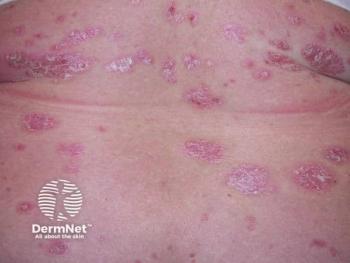
Takeda's zasocitinib, a highly selective oral TYK2 inhibitor, showed statistical superiority over deucravacitinib across all primary and key secondary end points in a head-to-head phase 3 study in moderate to severe plaque psoriasis, with skin clearing separating between the 2 drugs by week 8.2 By week 16, 35% of zasocitinib patients reached complete clearance (PASI 100), roughly 2.5 times the rate seen with deucravacitinib.2
This follows an earlier placebo- and apremilast-controlled phase 3 readout in which zasocitinib met all 44 ranked secondary end points, including PASI 90 and sPGA 0.2 The most common adverse events were upper respiratory infection, nasopharyngitis, and acne, with no new safety signals reported. Takeda plans to submit a New Drug Application starting in its current fiscal year.2
We saw separation of zasocitinib from deucravacitinib as early as week 8.— Linda Stein Gold, MD
▶ Why it matters: If approved, this becomes a genuine oral competitor to injectable biologics for patients who want to avoid needles. It's worth watching for the NDA filing.
Turn Therapeutics has completed an interim analysis of its adaptive phase 2 trial of GX-03, a non-systemic topical under investigation for atopic dermatitis, and is expanding enrollment to cover the full baseline EASI severity spectrum rather than moderate to severe disease alone.3 Stage 1 enrolled patients by Investigator's Global Assessment of moderate-to-severe disease, but analysis found efficacy signals, including vIGA-AD success and complete clearance at weeks 4 and 8 versus vehicle, in the subgroup with EASI scores of 1.1 to 7.0, a range that typically reflects mild to moderate disease.4
This is phase 2 interim data with a small pilot-scale subgroup finding, not a confirmed indication. The final Stage 2 design will formally test 4 end points using the Hochberg procedure rather than a single primary outcome. Baseline pruritus severity was also flagged as a possible biomarker of response, which will inform how Stage 2 patients are enrolled.3
▶ Why it matters: A non-systemic option effective across mild-to-severe AD, not just severe disease, would fill a real gap in the topical armamentarium. However, this needs a controlled Stage 2 readout before it changes practice.
Can-Fite BioPharma has completed enrollment of the first 247 patients in its pivotal phase 3 trial of piclidenoson, an oral A3 adenosine receptor agonist, in moderate to severe plaque psoriasis, triggering a prespecified interim analysis under an FDA- and EMA-agreed protocol.4 Results from that interim analysis are expected in the fourth quarter of 2026 or first quarter of 2027.4
This is an enrollment milestone, not an efficacy readout. The actual data are still pending. Piclidenoson has previously shown a favorable safety profile across more than 1,500 treated subjects and met its primary end point in an earlier phase 3 study (COMFORT-1) against placebo and apremilast.4
▶ Why it matters: Nothing to act on yet, but this is a pipeline oral option to watch for patients who haven't tolerated or responded to apremilast.
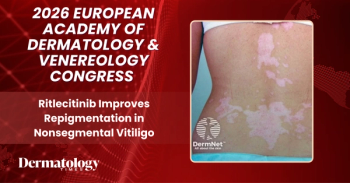
Teva plans to advance TEV-'408, an investigational anti-IL-15 monoclonal antibody dosed quarterly, into a phase 2b study in non-segmental vitiligo in the fourth quarter of 2026, following encouraging interim results from an ongoing open-label phase 1b trial.5 At week 24, nearly 75% of evaluable patients reported improvement in facial vitiligo, with half describing themselves as much or very much improved; 42% achieved F-VASI50 and 21% reached F-VASI75.5
This is small, open-label phase 1b data with no placebo comparator, and no safety signals have been reported so far. However, it's a notable signal in a disease where only 1 topical therapy is currently approved, and that therapy is restricted to limited body surface area.5 IL-15 is thought to help maintain the tissue-resident memory T cells that drive vitiligo's tendency to recur after treatment stops.5
▶ Why it matters: A quarterly subcutaneous option could be a meaningful convenience upgrade over daily topical therapy for patients with more extensive disease. It's worth tracking as phase 2b begins enrolling.
The FDA has cleared the SkinStylus SteriLock MicroSystem, a Class II microneedling device, for improvement of periorbital wrinkles, including crow's feet, in adults aged 22 years and older across all Fitzpatrick skin types I through VI.13 The device now carries 3 FDA-cleared indications: periorbital wrinkles, facial acne scars in Fitzpatrick skin types I through III, and surgical or traumatic hypertrophic abdominal scars.13
It's now the only microneedling device cleared for all 3 of those indications and the only one cleared for periorbital wrinkles across the full Fitzpatrick range. A prior device holding that indication was limited to Fitzpatrick skin types I through IV.13
▶ Why it matters: If periorbital microneedling is part of your practice, this widens the population you can treat on-label, including patients with deeper skin tones who were previously outside the cleared indication.
References
Dermatology Times NP/PA Connect | The Breakout Bulletin