


Join Dermatology Times in celebrating the women who make this field shine through their patient interactions, clinical insights, and research.
Join Dermatology Times in celebrating the women who make this field shine through their patient interactions, clinical insights, and research.

Catch up on dermatology news, highlights, and insights from the past 24 hours.

Explore a comprehensive roundup of the most important AAD late breakers, all in one place – key insights from the latest dermatology research.

Patients observed a 56% reduction in lesions after 56 days of treatment with only mild adverse events.

Experts stressed the importance of dermatologists engaging in climate advocacy and adopting sustainable practices, as their actions may inspire others to follow suit.

Tomassian noted unrealistic beauty standards fueled by social media filters and edited images have led to distorted expectations.
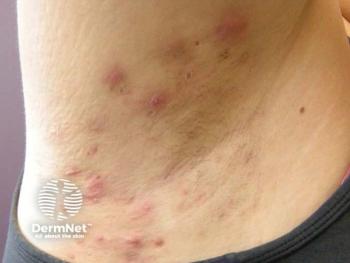
Incyte’s phase 3 STOP-HS trials demonstrated significant efficacy and safety of povorcitinib in moderate to severe hidradenitis suppurativa.

Cryo-EM reveals molecular mechanisms of clindamycin resistance in Cutibacterium acnes, highlighting key mutations affecting antibiotic binding.
Explore the top headlines of the week including insights on L'Oréal’s voluntary recall of benzoyl peroxide products, the impact of GLP-1 medications on skin health, and more 2025 conferences.

Test your knowledge of key words and terms associated with dermatology news from the previous week.

In case you missed it, this week we had news about the FDA voluntary benzoyl peroxide recalls, the National Eczema Association's strategic efforts, recaps of this week’s AAD Annual Meeting, and more.

This week, we feature top articles from our sister publications on FDA updates, Medicaid pricing, and more.

Catch up on dermatology news, highlights, and insights from the past 24 hours.

Catch up on all coverage from the 2025 American Academy of Dermatology Annual Meeting held in Orlando, Florida, March 7-11.

Christopher Bunick, MD, PhD, shares concluding remarks with colleagues at AAD 2025.

Amid limited access to pediatric dermatologists nationwide, pediatric patients of color with atopic dermatitis are particularly affected by social determinants of health, further impacting their outcomes.
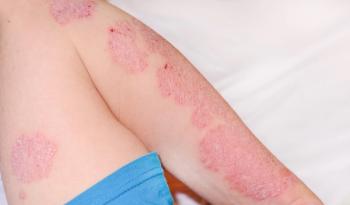
The LITE study found home-based narrowband UV-B phototherapy is as effective as office-based treatment for psoriasis, with higher adherence and lower costs.

Karl Yen of Sanofi discussed the role of amlitelimab in AD following sustained results and a promising safety profile presented in data at AAD.

Red meat, chocolate, milk, and foods with a high glycemic index may impact the presence of acne in patients.

Novartis highlighted key findings at AAD and AAAAI, showcasing Cosentyx's flexible dosing for hidradenitis suppurativa and remibrutinib’s efficacy for chronic spontaneous urticaria.

A study analyzed TikTok’s top 50 videos on hyperpigmentation in skin of color, revealing a discrepancy between engagement and medical accuracy.

By staying authentic and leveraging real patient experiences, Tomassian ensures his content remains valuable and trustworthy.

Catch up on dermatology news, highlights, and insights from the past 24 hours.

99% of posts on the platform were of poor quality, according to the DISCERN instrument.

Elizabeth Berry, MD, FAAD, reviewed dysplastic nevi as risk markers and highlighted the need for more data on severe cases at AAD 2025.

Li discusses microneedling innovations, global techniques, safety, and future trends in dermatology, including integration with RF and PRP.

An analysis of 70 studies shows that MMS reduces local recurrence to 5.0% compared to 17.7% for WLE in anogenital SCC cases.

Wendy Smith Begolka, MBS, and Renata Block, MMS, PA-C discuss the NEA's expanded eczema visual guide and upcoming Chicago event to support diverse patient communities.

A majority of patients noticed improvement in hyperpigmentation spots, skin texture and evenness after 12 weeks of use.

EltaMD’s Derm Difference campaign honors dermatologists’ expertise in skin health, cancer prevention, and confidence-boosting care.