


Acne mechanica usually occurs when skin is pressed against heavy clothing or bulky protective gear, but dermatologists recently discovered a case of the condition caused by friction between the inner thighs of an obese teenager.

Acne mechanica usually occurs when skin is pressed against heavy clothing or bulky protective gear, but dermatologists recently discovered a case of the condition caused by friction between the inner thighs of an obese teenager.

Key developments among new and emerging treatments for acne and rosacea include a novel oral agent and a novel topical agent, as well as new formulations of existing products, says Diane S. Berson, M.D. in her presentation at AAD.

Curbing use of antibiotics to treat acne has been challenging despite updated guidelines supporting limited use and the growing problem of bacterial resistance. But things seem to be changing for the better, says Diane M. Thiboutot, M.D.

Scars caused by acne can be both physical and emotional. Helping patients get the care they need starts with recognizing and addressing psychosocial issues that can be caused by acne, says Jonette E. Keri, M.D., Ph.D.

Oral contraceptive pills and antiandrogen therapies may rival antibiotics for women with acne, according to research presented by Rachel V. Reynolds, M.D. at AAD earlier this month.
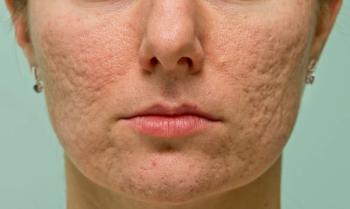
Deep phenol-croton oil peels still have a place among resurfacing techniques. However, more studies are needed to better define the clinical and the histologic outcomes of deep peels relative to other approaches.

A better understanding of the association between systemic antibiotics and the populations of bacteria in the skin microbiota may help clinicians better address related comorbidities.
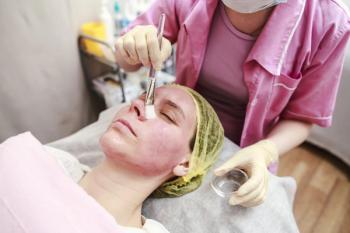
Superficial and medium depth peels could be effective treatment options for patients with mild to moderate acne, says a recent review.
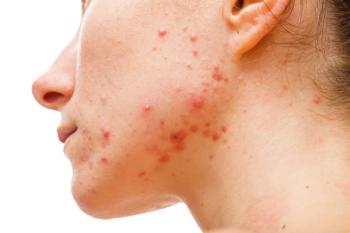
Patients with hidradenitis suppurativa have a high prevalence of acne vulgaris, according to the latest research.

Vyome Therapeutics Inc. announced in January that it secured $22 million in financing to, in part, support the development of its lead molecule, VB 1953, through phase two clinical trials for moderate to severe acne.
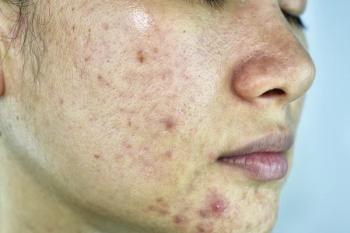
Combined plant-based therapy is more effective for treating mild-to-moderate acne than a synthetic antibiotic

Role of retinoids in acne set to be cemented further with advent of first fourth generation product.

Before 2018 comes to a close, we wanted to say thank you to our readers from everyone here at Dermatology Times. As a thank you, we have compiled a list of the topics and issues you found most compelling throughout the year. Enjoy this slideshow - and see you in 2019!
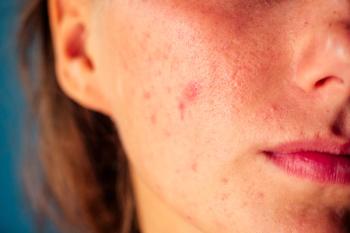
Oral and topical statins can be an effective addition to treatment for acne vulgaris when combined with standard treatment, suggests the results of a study published online in Current Clinical Pharmacology.
Small study shows that this topical solution could be as effective for treating post acne scarring as microneedling.

The U.S. Food and Drug Administration has approved clearance for a new acne treatment that selectively targets sebaceous glands, according to a news release.

The Food and Drug Administration (FDA) approved sarecycline (Seysara, Almirall, S.A.) in October for the treatment of non-nodular moderate-to-severe acne vulgaris in patients 9 years of age and older, according to a company news release.

Pilot study suggests topical gel effective as monotherapy for acne vulgaris of the trunk.
Study shows novel minocycline foam appears to be effective in moderate to severe acne vulgaris and is well-tolerated in phase three trials.

Long lauded for its ability to reduce the appearance of wrinkles, botulinum toxin is now being considered for reducing scarring.
Approximately 40% of acne patients have scars - and scarring can occur in any severity of acne. Watch Dr. Joshua Zeichner discuss his approach to the treatment of acne for teens and young adults.

Intense pulsed light therapy is an effective treatment for severe acne in dark-skinned women, say researchers writing in the Journal of Clinical and Aesthetic Dermatology.

Combining metformin and oral contraceptives to treat polycystic ovarian syndrome has little impact on quality of life measures including acne, a study shows.

The FDA has approved Ortho Dermatologic’s new drug application for Altreno (tretinoin 0.05 percent) lotion for the treatment of acne vulgaris.

Kleresca's new biophotonic technology received CE mark of approval, which will allow it to expand in the U.S., Canada, Australia and throughout Europe.