Articles by Lisette Hilton

An 8-year-old girl who had a blistering rash on one foot for three years finally came to see Dermatologist Matthew J. Zirwas, M.D. after seeing a number of dermatologists and other specialists. The child’s foot pain was so bad that she slept in bed with her parents for three years. The pain kept her from walking, so she rode to where she had to go in a wagon. The foot rash ruined her parents’ lives and the girl’s childhood. He imparts his lessons learned after finally diagnosing and treating the patient. Now, three years later, she plays in the park and attends school full time. Participate in this forum.

Malformations are as a result of treatment with low-dose bleomycin injections, study shows.

Understanding the immune system and its dysregulation in immune related diseases helps providers understand better what they are clinically seeing in practice as well as how different targeted therapies might block those actions. Participate in this forum.

What many nurse practitioners and physician assistants might not realize is their advanced training opens doors to an abundance of career opportunities outside of traditional healthcare. Participate in this forum.

While claims don’t always lead to court cases, they can lead to stress, says Stephen E. Wolverton, M.D., a dermatologist with Indiana University Health in Bloomington, Ind. Learn more about managing the stress associated with malpractice claims.
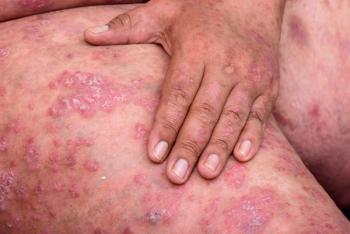
As dermatologists become increasingly aware of comorbidities associated with psoriasis, questions of associated malignancy risk remain. Dr. Megan Noe emphasizes the need for skin cancer checks.

A summary of treatments for atopic dermatitis in children.
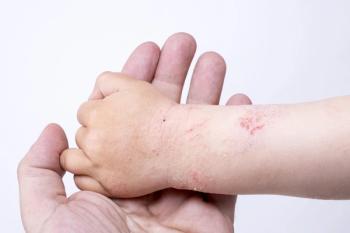
Physicians spell out knowns and unknowns associated with treating pediatric atopic dermatitis.

Only 20% of mobile dermatology apps designed for patients may be worthwhile, shows an analysis published in February in the online journal Cutis. Learn more in this slideshow.

FDA approves early, pre-approval trials for pediatric cases

Study shows how primary care and dermatology practices can collaborate to serve underserved populations.

Adalimumab may be effective for plaque psoriasis, but not heart disease and other inflammatory conditions associated with the condition. This study confirms that the inflammatory process is unique and that one treatment may not apply to other inflammatory conditions.

Review highlights the need to accurately diagnose this common bacterial infection.

The AMA’s chief information officer talks digital health technology with Dermatology Times.
There are two important reasons why physicians should consider the role of diet in triggering psoriasis flares, says a leading expert.
Oral propranolol may be safe for infants with uncomplicated hemangiomas, but for those with underlying health conditions, it may not always be the treatment of choice.
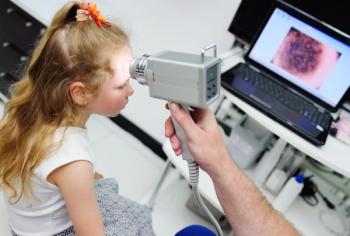
Pediatric melanomas are often misdiagnosed by physicians. Adolescents have a more aggressive disease course than children and are treated with adult protocols leading to chronic morbidity.

Observational study shows high heart disease risk in severe and predominantly active atopic eczema.
Skin biopsies from infants with atopic dermatitis feature important differences compared to adults with atopic dermatitis. These differences could change atopic dermatitis treatment for infants and toddlers with the disease, a study shows.
The fixed combination of halobetasol and tazarotene topicals significantly reduced the severity of localized disease with a favorable safety profile, shows a study published in the Journal of the American Academy of Dermatology.
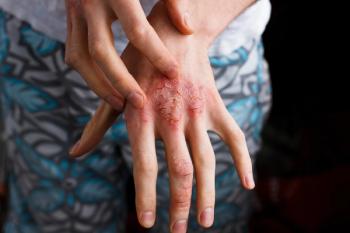
Three patients achieve 80-100 percent clearance of moderate-to-severe dyshidrosis of the hands and palms after treatment with dupilumab.

Symptomatic relief remains out of reach for many who suffer chronic pruritis. Without drugs specifically approved to treat chronic itch, providers and patients rely on therapies with limited efficacy. Here’s an update of two important clinical trials.
Spanish researchers have developed a scoring system to assess the severity of frontal fibrosing alopecia, a scarring form of alopecia marked by hairline recession and eyebrow loss primarily affecting postmenopausal women.
Physicians may want to reconsider goals for the treatment of plaque psoriasis. In this study, physicians describe utilizing treat-to-target with a patient-centered approach to care for symptom relief.
As the list of treatments for plaque psoriasis grows, so does the list of adverse events associated with biologic treatment. In this article, we summarize adverse events associated with common treatments for plaque psoriasis.
Immune system modulators are changing the ways in which dermatologists treat inflammatory skin diseases. But how best to use these medications and for which skin diseases isn’t always clear.

Pediatric dermatologist Alanna Bree, M.D., left a secure position with a well-respected hospital to embark on a faith-filled professional journey. In this profile, Dr. Bree shares her story of practice, discovery and renewal.
"Plaque psoriasis is increasingly recognized as a multisystemic disease whose most common comorbidities include psoriatic arthritis, cardiovascular disease, metabolic syndrome, overweight/obesity, inflammatory bowel disease, and depression. The presence of such comorbidities affects the therapeutic choices for clinicians," researchers write in Seminars in Cutaneous Medicine and Surgery.
