


Creating an effective treatment regimen for adult females with acne requires a holistic approach that considers the physical and psychological aspects of the world’s most common skin condition.
John Jesitus is a medical writer based in Westminster, CO.
Creating an effective treatment regimen for adult females with acne requires a holistic approach that considers the physical and psychological aspects of the world’s most common skin condition.

Dermatologists are divided over concerns of spironolactone being underused in women and patients taking isotretinoin being overmonitored.

Thanks to targeted drugs in early-stage development, patients with generalized pustular psoriasis (GPP) will one day likely have FDA-approved treatments for the disease, according to one expert.

Telemedicine flourished among dermatology practices in the wake of COVID-19. But as the world tentatively reopens, questions about connectivity, regulations, and payment will have to be addressed before physicians decide what role virtual visits will play in their practices.
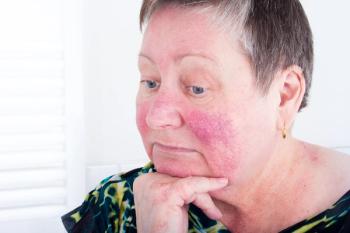
In treatments addressing muscular contraction, botulinum toxin inhibits nerves that innervate blood vessels from releasing acetylcholine, which triggers vasodilation. Its impact on the innate immune system suggests that botulinum toxin may also help reduce recalcitrant rosacea-related papules and pustules.

Findings from a recent study indirectly support therapeutic approaches aimed at restoring the dermal matrix.

Recent observations highlight new treatment efficacy in women and skin of color patients with truncal acne.

According to one expert at the 29th EADV Virtual Congress, trichoscopy not only helps diagnose hair disorders and monitor treatment but also predicts treatment efficacy.

With up to 30% of pediatric health care visits involving skin complaints and fewer than 400 board-certified pediatric dermatologists in the United States, teledermatology offers a valuable tool for increasing access and cutting wait times.

This is the first overhaul in a quarter century that simplifies evaluation and management and increases flexibility.

According to one expert at the 29th European Academy of Dermatology and Venereology Virtual Congress, trichoscopy (a dermoscopy-based diagnostic method) not only helps diagnose hair disorders and monitor treatment but also predicts treatment efficacy.

Several universal gaps in diagnosis and treatment of atopic dermatitis (AD) as well as real-world interventions for improvement are the focus of a ground-breaking report.

Topical probiotics show promise in treating various skin diseases including acne, but more research is needed.
A recent study shows an association between finasteride use and psychological adverse events (AEs) including suicidality. Dermatologists should weigh benefits and risks carefully when considering finasteride for certain patients with hair loss, according to one expert.
A vast majority of patients with atopic dermatitis (AD) are satisfied with dupilumab (Dupixent, Sanofi and Regeneron) treatment, according to research presented at the European Academy of Dermatology and Venereology (EADV) Virtual Congress.

A new innovative report identifies gaps and offers solutions for improving quality of care in atopic dermatitis (AD).
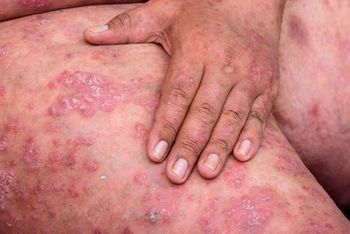
Highlighting the relationship between long-term safety and drug survival, a recent review may help address physician reluctance in prescribing conventional systemic psoriasis treatments.

Half of patients are satisfied with their atopic dermatitis treatment and more than half of patients worry about topical steroid side effects, addiction and withdrawal, according to a recent study.

Read how some experts are balancing both their own health as well as the health of their patients during the COVID-19 pandemic.
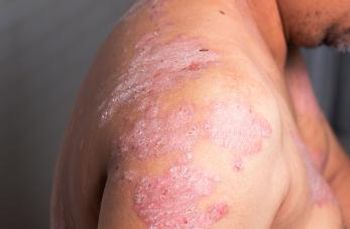
Genetic polymorphisms may increase psoriasis susceptibility, according to a study that found patients who have the G allele in the JAK1 gene have twice the risk of developing psoriasis, and for those with the JAK3 allele, the risk rises nearly 2-fold.
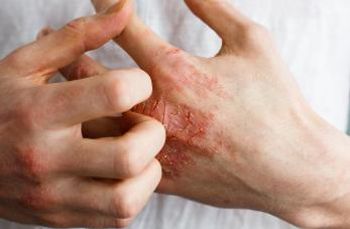
New study data shows that in adults with atopic dermatitis, dupilumab has performed as expected, with continued efficacy and no new safety signals.

A variety of new vehicles designed to improve tolerability and cosmetic acceptability are providing rosacea patients with multiple viable treatment options.
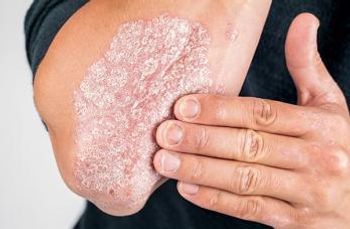
In a recent study, psoriasis drugs showed widely variable drug survival rates, owing to differences in safety, efficacy, patient satisfaction and other factors. However, concerns linger over potential to cause long-term cumulative organ toxicity.
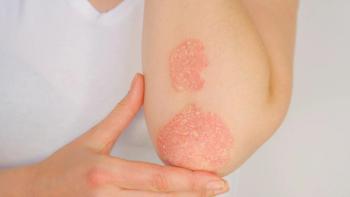
Comorbidities, co-medication, organ impairment, functional deterioration and frailty make treatment plans challenging for older psoriasis patients. However, these patients should not be precluded but will require more extensive evaluation and assessment, according to a recent study.
Joel Schlessinger, M.D., and Adam Friedman, M.D., detail how they have adapted to teledermatology since the start of the COVID-19 pandemic.
A phase 3b study investigating the efficacy and safety of risankizumab compared to secukinumab showed positive results, with risankizumab demonstrating noninferiority to secukinumab at week 16, and superiority at week 52.
In a recent phase 3 trial, dupilumab (Dupixent, Sanofi and Regeneron) demonstrated positive results in itch reduction, skin clearance and quality-of-life. Indicating the biologic as a viable treatment option for severe atopic dermatitis in younger children.
A recent review reveals older adults are underrepresented in trials investigating systemic immunomodulators as a treatment for atopic dermatitis.

A recent study underscores the need for a consistent scale to grade risk levels of cutaneous squamous cell carcinoma (SCC), particularly poorly differentiated tumors, according to study authors who presented at the 2020 virtual American Society for Dermatologic Surgery (ASDS) meeting.

Performing reflectance confocal microscopy (RCM) with a mosaic technique before surgery can improve margin mapping in melanoma in situ (MIS), according to a recent study presented at 2020 ASDS Virtual Annual Meeting.