
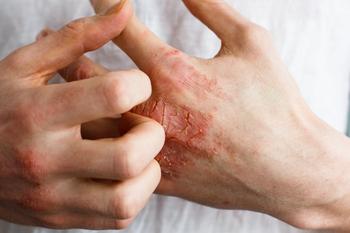
Adults with atopic dermatitis (AD) stay on dupilumab (Dupixent, Sanofi and Regeneron) significantly longer than on cyclosporine, according to a recent study.
John Jesitus is a medical writer based in Westminster, CO.
Adults with atopic dermatitis (AD) stay on dupilumab (Dupixent, Sanofi and Regeneron) significantly longer than on cyclosporine, according to a recent study.

A recent survey shows that many consumers are confused about sunscreen labeling claims regarding sun protection factor (SPF), allergenicity and other features.

Across all doses, lebrikizumab showed significant dose-dependent improvement in primary study endpoints for improvements in atopic dermatitis, according to data from phase 2b trials.

Using a novel autoantigen array, researchers have shown that the IgG4 anti-gliadin autoantibody might provide useful information for diagnosis and prognosis of psoriasis.

Studies offer further insight into risks associated with biologic therapy. One study suggests it’s not necessary to stop biologic therapy preoperatively to limit post-operative infections. Another systematic review does not rule out melanoma risk.
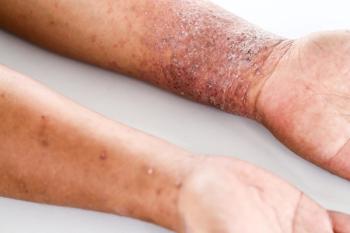
Researchers of a recent systematic review and meta-analysis examine how dupilumab compares to older systemic treatments for atopic dermatitis, including methotrexate, cyclosporine and azathioprine.

Phase 3 data announced at the American Academy of Dermatology (AAD) Virtual Meeting Experience (VMX) 2020 demonstrate that the second-generation IL-17 inhibitor may offer long-lasting, safe treatment for patients with psoriasis.

In the last three to five years, there has been a tremendous increase in interest in prescription treatments for acne and rosacea, resulting in many promising products entering the marketplace for these conditions.

Women are the majority who undergo aesthetic procedures, and key to reaching them, according to Dr. Gina Barreca, is knowing what they want.

The latest American Academy of Dermatology-National Psoriasis Foundation phototherapy guidelines incorporate several advances in efficacy, safety and patient convenience that were unavailable a decade ago.

When it comes to biologic drugs, the latest joint American Academy of Dermatology-National Psoriasis Foundation guidelines are less prescriptive than descriptive, offering a comprehensive discussion on the facts of each biologic to inform physicians’ selections.

A recent meta-analysis confirms cyclosporine as the most effective atopic dermatitis (AD) treatment at the molecular level, although dupilumab achieves broad cutaneous changes beyond those expected with specific Th2 inhibition.
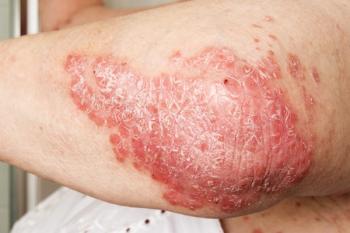
Current joint psoriasis guidelines from the American Academy of Dermatology and the National Psoriasis Foundation emphasize the need to help patients understand the relationship between psoriasis and comorbid conditions and the importance of seeking appropriate interventions as needed.

In combatting the pandemic, dermatologists must take critical steps to adapt operations while still providing essential patient care and preventing exposure in o ffice settings, experts say.

Dermatologists often combine multiple topical agents on their own, and have been doing so for many years. However, extemporaneous compounding of psoriasis topical agents may not necessarily yield what dermatologists anticipate.
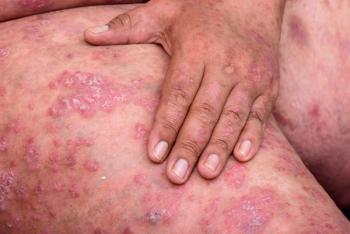

Removing blood and contaminants during fat processing removes a significant volume before arriving at pure fat, but it's absolutely crucial for optimal results.

Despite issues with processing and predictability with fat grafting, Kamakshi Zeidler, M.D., believes long-term results and near-future technologies secure its place in aesthetics.

Thanks to the phase 3 study that led to dupilumab's approval in adolescent atopic dermatitis (AD), patients can now avoid off-label treatments that may pose a risk of significant long-term toxicity.
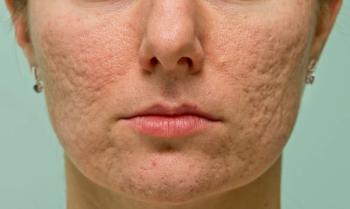
Although the fractional ablative CO2 laser is a first-line treatment for acne scarring, the potential for side effects from repetitive treatments leaves room for improvement with additive therapies, according to a recent review.

The 595 nm pulsed dye laser (PDL) may provide an e ffective option for nonvascular conditions, such as scars, acne and molluscum contagiosum, according to a recent review.

From neck and jawline definition to bra line and breast laxity, radio frequency energy has a solid place in one surgeon's office for nonsurgical skin tightening.

Maximizing results and safety of aggressive resurfacing procedures requires painstaking postprocedural care, says Dallas-based plastic and reconstructive surgeon A. Jay Burns, M.D.

According to Dr. Gregory Buford, blending RF into the aesthetic surgical practice helps to meet the rising demand for nonsurgical body contouring treatments.

A recent chart review found that eczematous eruptions occurred in 5.8% of patients using interleukin (IL)-17 inhibitors for psoriasis. Its authors believe that additional research could help identify which patients may be most at risk.

A phase 2 study shows that the oral Janus kinase (JAK) 1 inhibitor abrocitinib quickly improved atopic dermatitis (AD) severity and symptoms versus placebo with some measures achieving statistically significant separation in days.
New topical treatments for psoriasis increasingly prove that vehicles matter, says an expert who spoke at the South Beach Symposium.

With extended remissions, high safety and favorable dosing schedules, interleukin (IL)-23 inhibitors are well-suited for a variety of patients with psoriasis, says an expert who spoke at the South Beach Symposium

Susan C. Taylor, M.D., shares distinguishing characteristics of differential diagnoses to keep in mind when examining skin of color patients for rosacea.

It's thought that rosacea affects about 10% of the population, but this estimation may not be completely accurate as the condition is often underdiagnosed – especially in individuals with darker skin types.