A retrospective claims analysis of 2897 matched pairs found hazard ratios of 0.48 to 0.67 for new atopic disease with dupilumab vs systemic corticosteroids in children.
At the Horizons in Advanced Practice meeting, Omar Noor, MD, led NP and PA attendees through 3 complex cases of atopic dermatitis, prurigo nodularis, and chronic spontaneous urticaria.
At the recent
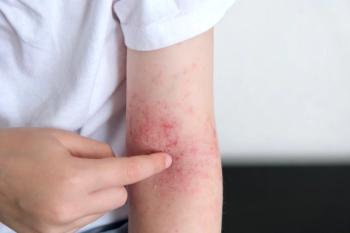
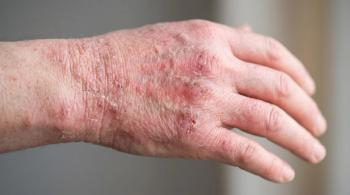
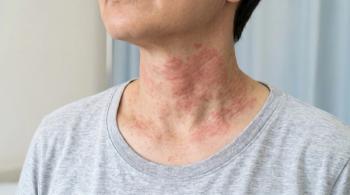
Noor, a board-certified dermatologist and co-owner of Rao Dermatology in New York and a Dermatology Times editorial advisory board member, first presented “Case-Based Conversations on Type 2 Inflammation in Dermatology.” During the session, Noor presented 3 patient cases: moderate to severe atopic dermatitis, prurigo nodularis, and chronic spontaneous urticaria.
Stay tuned to Dermatology Times for a deep dive into each chair’s sessions, as well as more interviews with Aldredge and DiRuggiero.
Q: Can you provide an overview of your first Horizons in Advanced Practice breakout session on type 2 inflammation?
Noor: We had a great discussion talking about type 2 inflammation for our dermatology patients. Without pigeon-holing a specific disease type, we looked at what's happening below the skin and how we're really looking at patients through a different lens and a different perspective. There was a lot of great discussion around how patients come in with a rash, maybe they have eczema, but what could be driving that underneath? And if they do have eczema and this more type 2 inflammatory response that's driven by IL-4 and IL-13, would they potentially have coexisting type 2 conditions like asthma or allergic rhinitis? And then, therefore, should we evaluate and treat our patients by more than just looking at the surface?
It was a great back-and-forth discussion and a great way of saying, “How are we going to talk to patients?” What are the questions we're going to ask to help elucidate those answers? Then, how best to communicate with patients when we are choosing a treatment type for them to understand that we're treating the rash on their skin, but we're really treating the inflammation in the body, and how that could be contributing to other issues that they might be dealing with, like asthma.
Q: What were some of the key discussion points from attendees?
Noor: The attendees talked about how when they see these atopic patients, a lot of them see the concomitant medications their patients are on. Maybe they're on inhalers, nebulizers, or something else for other conditions. Sometimes the attendees shy away, or they try to avoid asking, and they dive right into their patient’s eczema complaint. Although others take that opportunity to dive deeper into that patient's past medical history and help identify and talk about all of these inflammatory perspectives.
Q: As the chair of Horizons, what is the value of the meeting to you?
Noor: As the chair of the Horizons meeting, it is a wonderful opportunity for everyone to talk, bring minds together, and see where we are clinically from so many different perspectives, while at the same time learning from each other, identifying different patient cases, and identifying where we can do better.
Keep up with upcoming Dermatology Times events