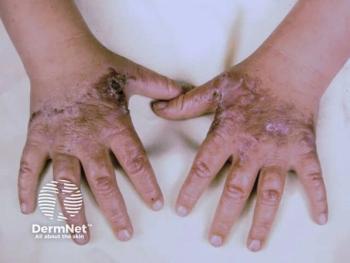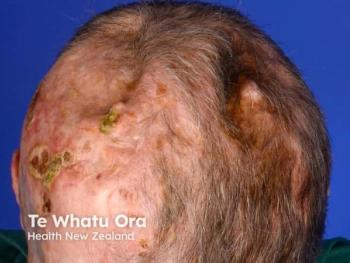
The designation marks the first FDA Fast Track status granted to a therapy for peeling skin syndrome, which currently has no approved treatment.
Review the latest FDA pediatric dermatology updates, including dupilumab for childhood CSU, secukinumab for teen HS, and new CHE and infant eczema topical filings.
CSU is driven in part by type 2 inflammation involving IL-4 and IL-13 signaling, the same pathway that dupilumab blocks. Because standard antihistamines address symptoms without targeting the underlying inflammatory mechanism, the approval introduces a mechanistically distinct approach for children who do not respond adequately to first-line therapy.
The FDA's decision is supported by data from the LIBERTY-CUPID phase 3 program, which includes 4 studies. Dupilumab significantly reduced itch, reduced urticaria activity, and increased the proportion of patients achieving well-controlled disease or complete response compared to placebo.
For the 2-to-11 age group specifically, the single-arm CUPIDKids trial assessed pharmacokinetics, safety, and efficacy in children with antihistamine-refractory CSU using age- and weight-based dosing. The trial's primary endpoint was pharmacokinetic—measuring serum dupilumab concentrations at weeks 12 and 24—with efficacy in this age group extrapolated from the adult and adolescent data. Across all 4 LIBERTY-CUPID trials, the safety profile was consistent with dupilumab's established record; injection site reactions were the most commonly reported adverse event at a higher rate than placebo, and no new safety signals were identified in the 2-to-11 group.
This topical pan-JAK inhibitor is already the only FDA-approved therapy specifically for CHE in adults, but no FDA-approved, disease-specific treatments currently exist for adolescents. Delgocitinib inhibits the JAK-STAT signaling pathway, offering a non-steroidal topical approach that may be particularly relevant in this age group, given the long-term safety considerations associated with topical corticosteroid use in pediatric patients.
“Currently, there are no approved therapies, neither EMA nor FDA, for adolescents with chronic hand eczema," Alexander Egeberg, MD, PhD, professor of dermatology and the global head of medical affairs at LEO Pharma, said in aprevious interview with Dermatology Times . "As a clinician, I can tell you that this population does have a high unmet need. If approved, this will really be a promising option."
The application is supported by data from the pivotal phase 3 DELTA TEEN trial, a 16-week multicenter study that enrolled 98 patients aged 12 to 17 with moderate to severe CHE that was inadequately controlled with, or inappropriate for, topical corticosteroids. The trial met its primary endpoint: treatment success on the Investigator's Global Assessment for CHE (IGA-CHE), defined as clear or almost clear skin with at least a two-grade improvement from baseline at week 16. Key secondary endpoints, including ≥90% improvement in the Hand Eczema Severity Index (HECSI-90) and improvements in Hand Eczema Symptom Diary scores, were also met.
Because conducting full placebo-controlled trials in adolescent HS is ethically complex and practically challenging given the small eligible patient pool, the FDA accepted a package built on pharmacokinetic modeling extrapolated from the adult HS trials (SUNSHINE and SUNRISE), alongside PK data from pediatric psoriasis and enthesitis-related arthritis studies in which secukinumab is already approved in younger patients. The dosing analysis predicted that weight-adjusted dosing in adolescents can reproduce drug exposure levels comparable to those achieved in adults, the population in whom clinical benefit was established.
The approval also expands therapeutic sequencing options for patients who have failed or are intolerant of TNF inhibitors, providing an alternative biologic that does not share the same target. More than half of HS patients develop their first symptoms during adolescence, yet the approved treatment landscape had not kept pace. Diagnostic latency in HS averages close to a decade, meaning that adolescent patients presenting with active disease face both delayed recognition and limited treatment options during developmentally formative years.
The submission is supported by the INTEGUMENT-INFANT trial, which enrolled 101 infants aged 3 months to younger than 24 months. Among infants completing the study, 34.4% achieved vIGA-AD success (clear or almost clear skin with at least a two-grade improvement from baseline), and 49% achieved clear or almost clear skin by week 4, with responses evident as early as week 2. More than half achieved EASI-75 by week 4, with approximately one-third reaching this threshold as early as week 2. Among infants with scalp involvement at baseline, two-thirds achieved vIGA-scalp success at week 4.
Caregiver-reported assessments indicated rapid itch improvement, with responses in some infants seen as early as 10 minutes based on Dynamic Pruritus Scale measures. By week 4, nearly three-quarters of evaluable patients achieved Worst Scratch Itch Numeric Rating Scale success. The safety profile was consistent with prior pediatric studies in older children.A phase 1 pharmacokinetic study in 19 infants provided additional reassurance, with systemic exposure, safety, and efficacy findings aligned with prior pediatric experience.
The 0.05% formulation was specifically designed for younger children, with attention to age-related skin barrier characteristics and the need for a vehicle tolerable for use on sensitive areas, including the face and skin folds. Roflumilast was approved in October 2025 for AD in children aged 2 to 5 years.
Want more pediatric dermatology updates? Listen to Dermatology Times’ new podcast in collaboration with the
References
1. Sanofi and Regeneron’s Dupixent approved in the US as the first biologic medicine for young children with uncontrolled chronic spontaneous urticaria. News release. Sanofi. Published April 22, 2026. Accessed May 1, 2026.
2. LEO Pharma announces FDA Acceptance of supplemental NDA for ANZUPGO® (delgocitinib) cream for the treatment of Chronic Hand Eczema in children aged 12-17. News release. LEO Pharma Inc. Published April 15, 2026. Accessed May 1, 2026.
3. Novartis Cosentyx® receives FDA approval for pediatric patients aged 12+ with moderate to severe hidradenitis suppurativa. News release. Novartis. Published March 13, 2026. Accessed May 1, 2026.
4. Arcutis Submits Supplemental New Drug Application to the FDA for ZORYVE® (roflumilast) Cream 0.05% to Expand Indication for Treatment of Atopic Dermatitis to Infants Down to 3 Months. News release. Arcutis. April 27, 2026. Accessed May 1, 2026.