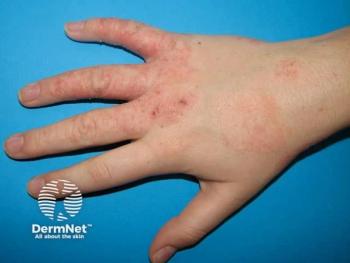
The merger, backed by an oversubscribed $180 million private placement, will fund development of NOR-101, an IL-13 x IL-18 bispecific antibody entering phase 1 trials in atopic dermatitis in early 2027.
Most AD referrals were low urgency, contributing to prolonged wait times exceeding 30 weeks on average.
Atopic dermatitis (AD) remains the most common chronic inflammatory dermatosis of childhood, accounting for a substantial proportion of referrals to pediatric dermatology services.1 Despite the fact that most cases are mild and manageable in primary care settings, referral patterns suggest ongoing uncertainty in frontline management. A recent quality improvement study conducted at British Columbia Children’s Hospital (BCCH) provides insight into these patterns, highlighting opportunities to optimize care delivery and reduce unnecessary specialty consultations.2
In this retrospective review, investigators analyzed 909 referrals to a tertiary pediatric dermatology clinic, including both newly submitted and waitlisted cases. Among these, AD was the leading diagnosis, representing 23.9% of all referrals (n = 217). The mean age of referred patients was 5.4 years, with a slight predominance of boys (57.6%). Referrals were predominantly initiated by family physicians (69.6%), followed by pediatricians and nurse practitioners, reflecting the central role of primary care in early AD management.
A key finding was that although diagnostic accuracy was high—89% of referred cases were confirmed as AD by pediatric dermatologists—treatment adequacy was markedly lower. Only 16.5% of cases with a correct diagnosis had treatment plans concordant with specialist recommendations. This discrepancy underscores a critical gap not in recognition of AD but in its therapeutic management.
Notably, only 52.5% of referrals met the criteria outlined in the draft BCCH Pediatric Atopic Dermatitis Care Pathway. Among those deemed inappropriate, the most common issue was insufficient documentation of prior treatment (49.5%). Additionally, 34% of referrals involved the use of topical corticosteroids (TCS) that were considered inadequate in potency, and 11.7% reported no TCS use at all. These findings suggest that undertreatment—rather than diagnostic uncertainty—is a primary driver of referral.
Treatment adjustments made during specialist consultations further support this interpretation. In more than half of cases requiring modification, pediatric dermatologists escalated TCS potency. Another 41.8% involved the addition of a second topical agent, such as a calcineurin inhibitor, while complete regimen changes were relatively uncommon (7.6%). This pattern indicates that many patients could potentially have been managed effectively in primary care with more aggressive or guideline-concordant topical therapy.
Wait times for consultation averaged 31.5 weeks, with significant variation based on triage urgency. Low-priority cases experienced the longest delays (mean, 38.4 weeks), whereas high-priority cases were seen almost immediately. Given that the majority of referrals were classified as low urgency (65.4%), the data suggest that a substantial proportion of patients may be enduring prolonged symptoms despite conditions that could be managed earlier in the care pathway.
An additional observation was that more than 70% of referring providers submitted only a single referral during the study period. This may indicate that many clinicians encounter pediatric dermatologic conditions infrequently, potentially limiting their confidence in management decisions. It also raises the possibility that targeted, accessible educational tools—rather than broad-based training programs—could have a meaningful impact.
Misdiagnosis was relatively uncommon but clinically relevant. Among cases ultimately diagnosed as AD by dermatologists, 18.2% had not been referred with that diagnosis. The most frequent alternative diagnoses included psoriasis and superficial fungal infections. Although this rate is modest, it highlights the importance of maintaining diagnostic vigilance, particularly in atypical presentations.
The study’s findings point toward a clear opportunity to improve primary care management of pediatric AD. Specifically, there appears to be a need for enhanced guidance on appropriate TCS selection and escalation, as well as clearer communication of prior treatment efforts in referral documentation. The authors suggest that point-of-care tools, such as clinical pathways and decision aids, may be more effective than traditional continuing education in addressing these gaps.
Limitations of the study include a predominance of low-urgency, waitlisted cases, which may not fully represent the spectrum of referral acuity. Nonetheless, the data provide a valuable snapshot of real-world practice patterns in a tertiary care setting.
Although primary care providers demonstrate strong diagnostic capability in identifying pediatric AD, researchers found that suboptimal treatment strategies contribute to a high volume of potentially avoidable referrals. Addressing these therapeutic gaps through targeted, practical resources may improve patient outcomes and reduce strain on specialized dermatology services.
References