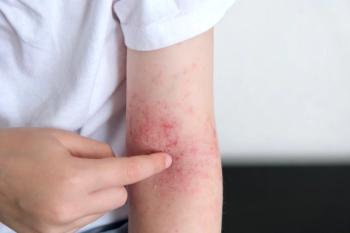
In a survey of 301 employed adults, overall work impairment attributable to CHE was 31.8%, and quality of life worsened in step with self-reported disease severity.
Lakshi Aldredge, MSN, ANP-BC, DCNP, discussed key symptoms of CHE, the function of the JAK-STAT pathway, and key data from the DELTA trials evaluating delgocitinib cream at the Horizons in Advanced Practice meeting.
At the recent
Aldredge, an adult nurse practitioner at the VA Portland Healthcare System in the Dermatology Service and the director of the Primary Care NP Residency Program in Portland, Oregon, first presented “Hands-On Solutions: Advancing Care in Chronic Hand Eczema.” During the session, Aldredge discussed key symptoms of CHE, the function of the JAK-STAT pathway, and key data from the DELTA trials evaluating delgocitinib cream (Anzupgo; LEO Pharma).
Stay tuned to Dermatology Times for a deep dive into each chair’s sessions, as well as more interviews with Noor and DiRuggiero.
Q: What did you review in your first breakout session on CHE?
Aldredge: The chronic hand eczema session at Horizons was exciting for me. First, because chronic hand eczema has been an issue in our practices, it's one of the most complex diseases. It can also be one of the hardest for our patients because of the impact on quality of life. So, we spent a lot of time in our session talking about the impact of the disease on quality of life, on patients' ability to function in their everyday lives, and the impact it has on their relationships with individuals.
We were very excited to spend some time talking about delgocitinib, which is the only FDA-approved treatment for chronic hand eczema. This is an elegant cream with a great efficacy profile as well as safety profile, and patients reported improvement in both itch and pain as early as the first and second application. Before, we treated this disease with topical corticosteroids, occasionally, when it got worse, we would give them systemic courses of steroids or perhaps an oral retinoid. We don't love either of those treatments because of the potential side effects. To have something that is efficacious, safe, and makes such an impact on patients’ quality of life is really exciting. We spent quite a bit of time talking about that, which was a lovely exchange between the more seasoned practitioners who've had a chance to use it and some of the novice practitioners who haven't yet had a chance.
Q: What were some of the key discussion points from attendees?
Aldredge: One of the takeaways that I took from the hand eczema session was that the attendees had questions about how to get this drug. It's relatively new, and even though it's a topical preparation, sometimes those can be challenging to access, especially for our patients who are underinsured or not insured. The real key takeaway, though, is that this treatment provides an alternative to topical corticosteroids. Every practitioner needs to know about this option and offer it to their patients with chronic hand eczema, and become familiar with its use. I think it's really going to change our practice.
Q: As a chair of Horizons, what is the value of the meeting to you?
Aldredge: What I love about Horizons is that it gives us several things: First, excellent evidence-based up-to-date education about the toughest and most challenging dermatologic conditions that we treat, so they are really reaching out to the experts to provide us with this information that transforms our patients' lives.
Second, Horizons gives us an opportunity to network with our peers and colleagues. It's so wonderful to be in a room with our NP and PA colleagues; it gives us a sense of comfort in asking some of those hard questions that we may not feel comfortable asking in a much larger congress or in a room with other providers, say our physician colleagues. So, for some of our novice practitioners, it gives them an opportunity to feel like they're amongst their peers, develop friendships, network, and create connections that go well beyond the meeting itself.
Finally, Horizons gives us an opportunity to reflect on our own practices. When we hear about these up-to-date guidelines, evidence-based medicines, or the newest therapeutics, it causes us to take a step back and make sure we're doing the right things for our patients. Are we practicing up to the standards of care? Have we become comfortable in settling for some of those older medications that we're comfortable treating with, but may not be the latest and greatest in that therapeutic class? It gives us an opportunity to step back and reflect, and I think we all come out of those meetings renewed and revitalized.
Keep up with upcoming Dermatology Times events