Faculty from the Cutaneous Oncology Workshop answer practical questions spanning skin cancer prevention, diagnosis, treatment, and follow-up.
Former US President Joseph R. Biden's Mohs surgery highlights the need for equitable access to this effective skin cancer treatment, emphasizing its benefits and ongoing disparities.
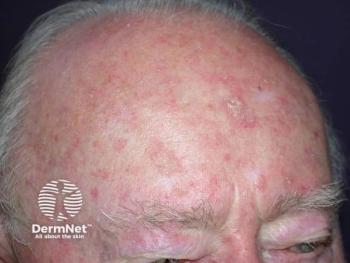
An 82-year-old man from Delaware with a known history of nonmelanoma skin cancer presented for Mohs micrographic surgery (MMS) to remove a newly diagnosed lesion on his right forehead. The patient successfully underwent the procedure and achieved histologically confirmed tumor clearance on the same day. He was likely relieved upon learning his margins were clear and that the tissue was well preserved.
Although this patient was well known—former US President Joseph R. Biden—his experience reflects both the therapeutic precision and peace of mind that Mohs surgery can offer. Yet his case also surfaced an increasingly urgent conversation for dermatologists, policymakers, and the public: How can access to this gold-standard treatment be expanded so that all patients, regardless of geography or income, can benefit from it?
When a high-visibility figure undergoes treatment for a health condition, public awareness often surges. In the United States, the diagnosis and treatment of skin cancer have historically gained media attention through these high-profile cases. President Biden’s Mohs surgery has sparked national interest in the treatment of skin cancer in this country.
As dermatology clinicians know, skin cancer is the most prevalent cancer worldwide, with more than 5 million cases treated annually in the United States.1 A major concern for clinicians and patients is the extensive disfigurement associated with skin cancers, such as basal cell carcinoma (BCC) and squamous cell carcinoma (SCC), if they are not detected and treated promptly. Thus, early, precise, and complete excision remains the cornerstone of management across these subtypes of skin cancers.
The recent public visibility of President Biden’s surgery represents more than a medical tale—it is an educational opportunity. It highlights both the achievements of dermatologic oncology and the continuing disparities that challenge equitable access to specialized care.
MMS originated in the 1930s when Frederic E. Mohs, MD, then a general surgery resident at the University of Wisconsin, introduced a technique that allowed visualization of the entire surgical margin in real time.2 His method used chemical fixation and staged excision to gradually remove skin tumors while mapping their microscopic spread.
By the 1970s, dermatologists had refined and standardized this procedure into a frozen-section technique that could be completed in 1 day. Programs in dermatology residency training began incorporating structured exposure to Mohs methods, which led to the foundation of the American College of Mohs Surgery (ACMS). This organization continues to uphold rigorous fellowship standards required for certification.2 Today, MMS integrates histopathologic evaluation and reconstruction in 1 setting. The procedure offers 2 key advantages: accurate, complete tumor removal and maximal preservation of uninvolved tissue.
The hallmark of Mohs surgery lies in its process of layer-by-layer excision and location mapping. A typical Mohs procedure follows these well-defined steps:
Unlike wide local excision, which samples only portions of surgical margins (“bread-loafing”), MMS evaluates 360 degrees of the peripheral and deep margins, providing complete visualization of residual tumor.3 This precision has translated into superior cure rates: 97% to 99.8% for primary BCC and 92% to 96 % for primary SCC.4,5
The benefits of MMS over conventional wide local excision are well documented across multiple domains. Complete intraoperative margin assessment significantly reduces recurrence risk. Studies demonstrate recurrence rates as low as 1% for primary BCC and 5% for recurrent tumors.6
Second, by removing only tissue containing tumor cells, Mohs surgery preserves healthy skin; this is valuable on the face, ears, hands, and genitalia, where functionality and cosmetic outcomes are critical. Third, because it is performed under local anesthesia, MMS avoids the risks of general anesthesia and reduces operating room costs.7 Fourth, there is immediate reconstruction following tumor clearance, which enhances cosmetic outcomes, reduces costs, and improves patient satisfaction.
Finally, Mohs is preferred for infiltrative, morpheaform, micronodular, and perineural-invading subtypes of BCC and SCC, as well as melanoma in situ and Merkel cell carcinoma in selected cases.8 Advancements in immunohistochemistry have further improved diagnostic precision and workflow efficiency. Immunostaining for antigens such as MART-1, SOX10, cytokeratin, and S-100 aids in detecting residual melanoma and high-risk SCC extensions not easily visible on hematoxylin and eosin stains.8
Despite its widespread acceptance among dermatologic surgeons, access to Mohs surgery remains disparate. Geographic disparities in the distribution of fellowship-trained Mohs surgeons have been consistently observed. Sharma et al quantified that rural regions across the US have one-third fewer Mohs providers per capita compared with urban centers.9
With skin cancer incidence disproportionately affecting outdoor workers, farmers, and older adults living in rural communities, these disparities pose a significant clinical and ethical challenge. Teledermatology initiatives have shown promise in expediting diagnoses, but definitive surgical treatments like MMS need localized infrastructure, equipment, and trained personnel to be truly equitable.10
Health policy directly shapes access to dermatologic oncology. Unfortunately, insurance reimbursement inconsistencies and facility-based barriers can limit MMS availability in community settings. Some public and private payers still favor wide excision or destructive modalities due to perceived short-term cost differences, despite long-term data showing lower recurrence and overall cost savings with MMS.11
Encouraging public and private insurers to adopt coverage parity based on evidence-based guidelines would enhance accessibility. The American Academy of Dermatology and the ACMS have both advocated for the recognition of Mohs as not only a high-value surgical technique but also a critical component of comprehensive cancer care.6
From a psychosocial perspective, patients with skin cancer often experience significant anxiety related to facial disfigurement and visible scarring. Several studies have linked MMS to improved quality-of-life outcomes and lower rates of postoperative anxiety compared with other surgical techniques.12
President Biden’s personal outcome illustrates this powerful aspect of care: rapid diagnosis, same-day cure confirmation, and recovery with minimal visible impact. For many patients, that psychological restoration is as meaningful as the physical cure itself.
Worldwide, dermatologic surgery capacity significantly trails disease burden. High-income nations dominate the global Mohs surgeon workforce, leaving low- and middle-income nations heavily reliant on nonspecialized excision techniques. Collaborative global health initiatives led by dermatologists can help bridge this divide through the donation of training modules, shared open-access resources, and visiting faculty programs.13
Equitable access begins with raising awareness at home. Rural US counties have repeatedly shown increased rates of late-diagnosed skin cancers coupled with limited Mohs capacity.9 Targeted policy efforts to subsidize fellowship rotations, loan forgiveness for rural dermatologic practice, and mobile surgical units could create tangible improvements.
Mohs surgery exemplifies a broader health care truth. This type of technical excellence must be paired with systemic accessibility. As environmental factors contribute to rising skin cancer incidence, prevention and treatment will require multifaceted strategies. Public education campaigns should not end with prevention messaging but also include treatment literacy—informing patients that options like Mohs exist and explaining when they are most beneficial. Dermatologists have a critical dual responsibility to deliver evidence-based surgical care and to advocate for equitable access. As the population ages, capacity planning will be essential to ensure demand for Mohs is met without compromising quality standards.
The visibility of high-profile figures like President Biden serves as a catalyst for public discourse surrounding cancer care. His successful Mohs surgery symbolizes what is possible when early detection, expert surgical technique, and timely intervention collide. For dermatologists, it is a reminder of ongoing ethical imperatives—to expand access, to mentor the next generation of MMS surgeons, and to continue advocating for equitable health care. The philosophy of Mohs’s original innovation remains relevant nearly a century later: remove all the cancer, spare normal tissue, and restore the patient. As dermatologic professionals, we must ensure that this gold standard remains within reach for every patient, not just those with privilege or proximity to major medical centers.
Nicole A. Negbenebor, MD, FAAD, is a Mohs micrographic surgery and cutaneous oncology clinical assistant professor and director of the Skin of Color Clinic in the Department of Dermatology at the University of Iowa in Iowa City.
References