Though convenient, SPF-infused cosmetics rarely deliver their labeled protection level in real-world use, underscoring the continued need for a dedicated broad-spectrum sunscreen as the foundation of any routine.
Nada Elbuluk, MD, MSc, and Nkem Ugonabo, MD, MPH, discuss safe aesthetic procedures for skin of color, emphasizing tailored techniques and the importance of understanding unique skin biology.
At the 8th Annual
The demographic landscape of the United States continues to shift, with skin-of-color populations projected to represent the majority by 2045.2 As demand for cosmetic procedures rises in parallel, Elbuluk and Ugonabounderscored that clinicians must understand how cutaneous structure, pigment biology, and aging patterns differ across diverse skin types in order to optimize both safety and outcomes.
Melanin-rich skin exhibits several histologic distinctions that influence procedural response. Melanosomes tend to be larger, more widely dispersed, and melanocytes are more labile, increasing susceptibility to post-inflammatory hyperpigmentation (PIH) from even minor inflammation. Sunscreen use and photoprotection are therefore essential before and after nearly all aesthetic interventions.
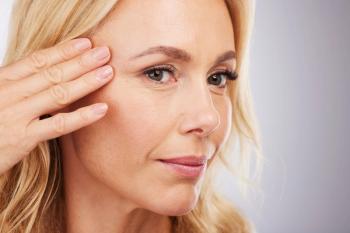
Aging patterns also differ. While all skin types demonstrate dyspigmentation, volume loss, and rhytids over time, patients with more epidermal melanin are particularly prone to pigmentary dyschromia. Conversely, deeper, more compact dermal collagen can make facial lines and wrinkles less prominent relative to lighter-skinned individuals. This distribution of concerns often shifts the aesthetic priority toward volume restoration and pigment correction.
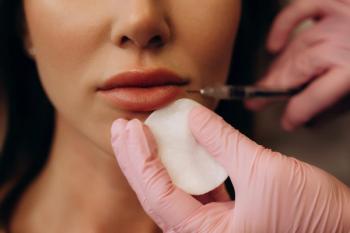
Facial aging in many ethnic women is characterized more by soft-tissue deflation than by etched rhytids, making volume restoration central to treatment. All filler types are safe on skin of color, Ugonabo noted, including hyaluronic acid (HA) fillers, calcium hydroxylapatite, and poly-L-lactic acid.
Technique modifications include minimizing trauma to reduce bruising and subsequent PIH, and avoiding overcorrection, as melanated skin may exhibit a more robust inflammatory or fibrotic response. Clinical examples highlight successful contouring of the jawline and correction of tear troughs using HA fillers, as well as submental fat reduction using deoxycholic acid combined with biostimulatory fillers for enhanced definition.
Chemical peels remain a versatile, cost-effective option and are particularly useful for acne, melasma, PIH, and texture irregularities. In skin of color, superficial peels—limited to the epidermis—are strongly preferred. These typically use alpha- and beta-hydroxy acids at higher in-office concentrations than over-the-counter formulations. Medium-depth peels may be used selectively in lighter phototypes within Fitzpatrick IV–VI, but deep peels are generally avoided due to the significant risk of prolonged dyspigmentation.
“I love chemical peels. They're one of my favorite in-office procedures to do. They are easy, they are quick, and they can address a lot of indications,” Elbululk said.
Treatment success depends heavily on patient selection, appropriate depth control, and strict pre- and post-procedure protocols. Pre-treatment often includes photoprotection, antiviral prophylaxis when indicated, and pigment-suppressing agents such as hydroquinone for those prone to PIH. Multiple sessions—commonly 3 to 5—are usually required. When performed by trained clinicians, adverse effects are mild and transient, whereas improper technique increases the risk for long-lasting pigmentation changes.
Laser treatment in skin of color, a category Ugonabo “thinks about all day, every day,” requires the greatest degree of parameter modification. Because epidermal melanin competes with laser chromophore targets, inappropriate wavelength or density selection can lead to burns, hypopigmentation, or PIH.
For resurfacing and pigment correction, non-ablative fractionated lasers remain the preferred modality, with careful attention to low treatment densities and gradual escalation of energy. Long-pulse Nd:YAG lasers are the standard for hair removal due to their deeper penetration and lower melanin absorption. Q-switched or picosecond lasers may be used for discrete pigmentary lesions. Adjunctive measures—including immediate post-treatment topical corticosteroids and hydroquinone “priming”—help reduce inflammatory rebound and PIH risk.
Clinical cases demonstrate significant improvement in acne-related hyperpigmentation and pseudofolliculitis barbae using combinations of non-ablative fractional lasers, laser hair removal, and topical therapy.
Energy-based tightening devices, including radiofrequency (RF), micro-needling RF, and high-intensity focused ultrasound (HIFU), have gained prominence due to their favorable safety profile in darker skin. Because these technologies target water or deeper structural planes rather than melanin, they carry lower risk of dyspigmentation.
RF induces controlled dermal heating to stimulate collagen and elastin, while HIFU can reach the superficial musculoaponeurotic system (SMAS) to produce lifting and contouring effects. Both modalities are useful for lower-face laxity, jawline definition, and fine lines. Microneedling RF adds benefit for acne scars and striae by combining dermal remodeling with fractional energy delivery.
“You can see improvements sometimes after just one session...but oftentimes, it takes really 2 to 6 months on average to see that improvement so you have to set those expectations for the patient,” Elbululk reminded.
Ugonabo and Elbululk concluded with this main message: a robust evidence base supports the safe use of injectables, peels, lasers, RF, and ultrasound in skin of color patients when performed with appropriate technique. Overall, understanding pigment biology, modifying device parameters, and emphasizing photoprotection are central to minimizing complications and achieving optimal aesthetic outcomes in this rapidly growing patient population.
References
1. Elbululk N, Ugonabo N. Aesthetic Procedures in Skin of Color. Presented during the 8th annual Skin of Color Society media day. November 18, 2025; Virtual.
2. Barzallo D, Ofori-Darko AA, Perez AM, DiSano K. Diversifying Skin Tone Representation in Medical School Dermatology Curriculum. Med Sci Educ. 2024;35(1):37-41. Published 2024 Oct 2. doi:10.1007/s40670-024-02159-w