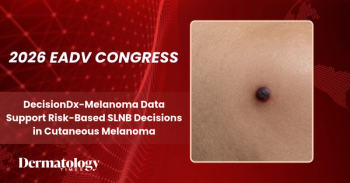
Prospective data suggest DecisionDx-Melanoma may help refine SLNB decisions and identify recurrence risk beyond conventional staging.

At the pre-AAD meeting, Regina Benjamin, MD, MBA, discussed the role of clinicians as leaders in addressing social determinants of health, emphasizing prevention, education, and culturally responsive care.
At the 22nd Annual
Benjamin framed her remarks through the lens of public health leadership, emphasizing that clinicians must act as both educators and advocates. She described the dual responsibility of the Surgeon General role as “delivering the best health information to the public…in a way that the public can understand” while also protecting population health at scale. Importantly, she extended that responsibility to all clinicians in attendance, noting the shared obligation to combat misinformation and promote evidence-based care.
A central theme of the keynote was the role of social determinants of health in driving disparities, particularly among underserved and skin of color populations. Benjamin emphasized that clinical care alone is insufficient, stating that “your zip code is a better predictor of your health…than genetics.” She cited evidence linking poverty, education level, and access to resources with health outcomes, reinforcing that dermatologic disease burden and outcomes cannot be separated from broader socioeconomic context. For dermatology clinicians, this has direct implications in conditions disproportionately affecting patients with skin of color, where delayed diagnosis, limited access, and structural barriers persist.
Benjamin illustrated these concepts through patient narratives that highlighted gaps in literacy, affordability, and trust. In one example, a patient’s inability to read medication instructions led to uncontrolled disease, emphasizing that “there was no prescription that I wasn’t going to give her that would help her as much as bringing health literacy to her.” In another, a patient delayed filling a prescription due to cost. When the patient cited not being able to afford the prescription, Benjamin’s clinic at the time covered the cost through donations. “I realized at that moment that cultural sensitivity has nothing to do with the color of your skin. It has to do with allowing people to maintain their community,” Benjamin said. These cases showed the need for culturally sensitive, context-aware care—particularly relevant in dermatology, where adherence, access to therapies, and patient education are critical to outcomes.
Prevention was another cornerstone of the address. Benjamin reiterated that “health doesn’t occur in the doctor’s office and hospitals alone,” but rather “where we live, where we learn, where we work.” She advocated for integrating preventive strategies into everyday clinical practice and community outreach, noting that prevention remains “the greatest opportunity to improve the health of the nation.” For clinicians, this aligns with early intervention in inflammatory skin disease, skin cancer prevention in diverse populations, and proactive management of chronic conditions.
Leadership, particularly in addressing inequities, was a recurring focus. Benjamin encouraged clinicians to adopt a “servant leadership” model and to actively mentor the next generation. She highlighted workforce disparities, noting the underrepresentation of minority physicians relative to the US population, and urged attendees to “reach back and make sure you bring [others] up with you.” She further emphasized that clinicians must serve as advocates, stating that patients facing systemic barriers “need you to be their voices.”
Benjamin concluded with a call to sustained, incremental impact. Referencing a well-known “starfish” parable, she reminded attendees that individual actions matter: “It makes a difference to this one.” For dermatology clinicians, particularly those caring for patients of skin of color, the message was clear—addressing disparities requires leadership, community engagement, patient-centered care, and a continued commitment to prevention and education at every level of practice.
Reference