A retrospective claims analysis of 2897 matched pairs found hazard ratios of 0.48 to 0.67 for new atopic disease with dupilumab vs systemic corticosteroids in children.
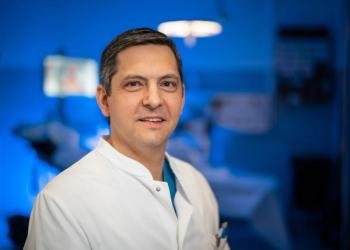
David Oberlin, MD, shares tips for integrating AAD insights and lessons into the clinic to improve patient care.
For dermatologists treating inflammatory skin conditions, the pace of therapeutic innovation has never been faster and staying current requires more than just attending sessions.
In an interview with Dermatology Times at the
From a Handful of Options to a Full Toolbox
Oberlin trained at Henry Ford Health System, completing his residency in 2019 with a focus on
"Back in 2019, we had a handful of treatments," Oberlin told Dermatology Times. "Now we have numerous treatments."
That shift reflects a broader industry investment in dermatology, he reflected. Pharmaceutical companies are exploring new molecular pathways and repurposing existing agents, and the results are reshaping how dermatologists manage conditions like alopecia areata and chronic urticaria, all of which is evidenced by the broad spectrum of sessions and posters at the meeting, he added. "It's nice to see these disease states like alopecia areata, like urticaria, that now we have a lot of treatment options for patients that maybe we didn't have before," he said.
The Real Work Starts After the Conference
For Oberlin, the AAD Annual Meeting is less a destination than a launching pad. He described leaving the conference with a phone full of notes and a clear sense of purpose.
"As much as I want to sleep, I know the second that I leave this conference, that's when the real work starts," he told Dermatology Times. "That's when I take the insights that I've developed by talking to colleagues, interfacing with industry, seeing old friends."
He views the conference as a community-level engine for clinical innovation and a place where dermatologists collectively rethink disease mechanisms and generate new ideas. "We come together, we generate new ideas, we talk about new mechanisms, we think about disease states in a different way," he said.
That intellectual energy translates directly to patient care. "That first patient that I see in the morning, when I'm going throughout my day, I hope that I can draw things from this conference, bring it back to my clinical practice, and have better outcomes for patients."
A Framework for Evaluating New Therapies
As a busy private practice clinician seeing high patient volumes weekly, Oberlin has developed a deliberate framework for adopting new treatments. He described himself as an early but cautious adopter.
"I like to know the risks and benefits before I'm starting my patients," he said. "I like to think about every patient as my own family member. And what would I be comfortable with my own family member starting?"
His clinical decision-making centers on 3 non-negotiable criteria. "The 3 major tenants in my clinic are safe, effective, and affordable," he told Dermatology Times. "We want to make sure that the treatments that we're offering to our patients fit with those 3 tenants."
When evaluating whether a new agent fits a specific patient, Oberlin focuses on use case for each patient. "It's better to have more tools in our toolbox, and you have to decide what is the right tool for your right patient," he explained.
A Niche for Oral Therapy
Among the therapies generating discussion at the meeting, Oberlin highlighted
For practicing dermatologists navigating an increasingly crowded therapeutic landscape, Oberlin's approach offers a practical model: absorb the data, apply a patient-centered filter, and show up Monday morning ready to act on it.
Read more updates and insights from the