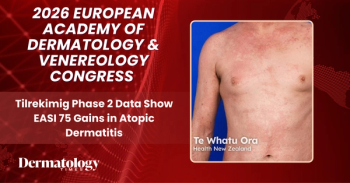
According to data presented at EADV, at week 16 of the phase 2 study, 47.8% to 62.5% of adults receiving tilrekimig achieved EASI 75 across doses, compared with 9.1% to 19.9% with placebo.
James Q. Del Rosso, DO, FAOCD, FAAD
Board-certified dermatologist practicing at Thomas Dermatology in Las Vegas, NV; research director and principal investigator of JDR Dermatology Research. Dr. Del Rosso is an internationally renowned educator and speaker with several publications in recognized dermatology journals. He is a past president of the American Acne & Rosacea Society, the American Society for Mohs Surgery, and the American Osteopathic College of Dermatology.
Linda Stein-Gold,MD
Director of dermatology clinical research at Henry Ford Health System in Detroit, MI, and division head of dermatology at Henry Ford Health System in West Bloomfield, MI. Dr. Stein-Gold is very active in clinical research on a variety of dermatologic conditions, including the treatment of chronic plaque-type psoriasis, actinic keratosis, atopic dermatitis, acne vulgaris, seborrheic dermatitis, and rosacea. She has published articles in major medical journals and is a frequent national and international lecturer.
Jeffrey S. Fromowitz, MD, FAAD
Medical Director of Dermatology of Boca, and a member of the teaching faculty at Florida Atlantic University. His areas of specialty include body contouring, laser treatments, tattoo removal, laser hair removal, skin cancer treatment, full body exams, psoriasis, eczema, rosacea, and acne.
Hilary E. Baldwin, MD
A dermatologist and medical director of the Acne Treatment & Research Center in Brooklyn, NY, and Morristown, NJ. She is also a clinical associate professor at Rutgers Robert Wood Johnson Medical Center in New Brunswick, NJ. Dr. Baldwin has lectured extensively both nationally and internationally and published prolifically in peer-reviewed journals. She also served as a founding board member and second president of the American Acne and Rosacea Society. Her areas of expertise include acne, rosacea, and keloid scars.
By: Dermatology Times Staff
March 27, 2019
Burt's Bees skin care products may be a effective as an adjunct to prescription therapy in the management of rosacea, according to data published in the February issue of Journal of Drugs in Dermatology which was reported at the American Academy of Dermatology Annual Meeting this month.
By: John Jesitus
March 21, 2019
Key developments among new and emerging treatments for acne and rosacea include a novel oral agent and a novel topical agent, as well as new formulations of existing products, says Diane S. Berson, M.D. in her presentation at AAD.
By: Ingrid Torjesen
May 8, 2017
Recent research suggests rosacea might be an outcome of systemic inflammation with evidence linking rosacea and cardiovascular disease, inflammatory bowel disease - and even some neurological diseases, such as particular parkinsonism, dementia and Alzheimer’s.
By: Lisette Hilton
February 8, 2017
Because rosacea is an inflammatory disease there is scientific rationale for a possible association between it and other inflammatory diseases. A recent study demonstrates that rosacea patients have a greater percentage of gastrointestinal disorders than do controls and should be evaluated further if they present with GI symptoms. In such cases a systematic approach to the treatment of both conditions may be warranted.
By: Lisette Hilton
January 31, 2017
A revised and updated set of criteria and treatment recommendations establishes a phenotype approach to diagnosing and classifying rosacea. This approach marks a transition from treating rosacea patients according to subtype. Global representation may identify research needed to determine whether rosacea is a global condition.