


News|Videos|October 6, 2026
Evaluating the Evidence for Emerging Oral Therapies in Psoriasis
Andrew Blauvelt, MD, MBA, discusses how to interpret head-to-head, indirect, and long-term efficacy data for emerging oral psoriasis therapies.
Advertisement



In this
The expanding psoriasis treatment landscape offers clinicians increasingly effective oral and injectable options, but determining how new therapies compare requires careful interpretation of clinical trial evidence. In this Dermatology Times Expert Perspectives video, Andrew Blauvelt, MD, MBA, dermatologist at Blauvelt Consulting in Annapolis, Maryland, and adjunct professor at the University of Maryland School of Medicine, discusses how clinicians can critically evaluate emerging data and translate efficacy findings into individualized treatment decisions.
Interpreting Head-to-Head Evidence
Blauvelt highlighted the value of head-to-head trials for understanding where emerging therapies may fit within an increasingly crowded treatment landscape. He discussed phase 3 findings for
In ICONIC-LEAD, 65% of patients receiving icotrokinra achieved an Investigator's Global Assessment (IGA) score of 0 or 1 at week 16 compared with 8% receiving placebo, while PASI 90 responses were achieved by 50% and 4%, respectively. In the ICONIC-ADVANCE 1 and 2 trials, approximately 68% to 70% of patients receiving icotrokinra achieved IGA 0/1 at week 16, with PASI 90 responses ranging from 55% to 57%. The studies also demonstrated
For Blauvelt, however, efficacy percentages need to be interpreted within the design of the study. The comparator selected for a trial helps determine the clinical question that the results can answer. An active-comparator trial can provide clinicians with more practical information than a placebo-controlled study alone, but the strength of the conclusion also depends on how effective that comparator is relative to other available therapies.
That distinction is increasingly important as newer oral therapies seek to narrow the historical efficacy gap between oral systemic agents and injectable biologics.
Putting Indirect Comparisons Into Context
Direct randomized comparisons between every psoriasis therapy are not feasible, making network meta-analyses and matching-adjusted indirect comparisons useful tools for estimating how treatments may perform relative to one another.
Blauvelt discussed emerging analyses comparing icotrokinra with injectable IL-23 inhibitors, as well as a matching-adjusted indirect comparison involving
Although indirect comparisons can help clinicians contextualize efficacy when direct evidence is unavailable, Blauvelt cautioned against treating them as interchangeable with randomized head-to-head trials. Differences in patient populations, study design, baseline disease characteristics, outcome definitions, and timing of assessments can complicate comparisons across separate clinical programs.
For clinicians, the value of these analyses lies less in creating a rigid ranking of therapies and more in understanding the approximate efficacy range in which an emerging treatment may fall.
The Comparator Matters
Blauvelt also emphasized that clinicians should pay attention to what a new therapy was compared against when interpreting claims of superiority.
This becomes particularly relevant when looking across different targeted oral development programs. The pivotal trials of
A successful comparison against an established oral therapy provides clinically meaningful information, but it does not necessarily answer how that agent would compare with a highly efficacious biologic or another emerging targeted oral treatment. Understanding the comparator therefore helps clinicians avoid drawing conclusions beyond what a particular trial was designed to establish.
Looking Beyond Week 16
Blauvelt encouraged clinicians to look beyond primary end points when evaluating psoriasis therapies. Week 16 is a common landmark in clinical trials, but it does not necessarily represent the maximum response a patient will achieve.
Longer-term ICONIC data demonstrate this distinction. Among patients who achieved IGA 0/1 at week 16, 87% maintained that response through week 52. Across the broader population, IGA 0/1 responses remained between 67% and 70% from weeks 24 through 52, while complete clearance continued to improve over time. In ICONIC-ADVANCE, PASI 100 responses increased from 41% to 49% in one study and from 33% to 48% in the other between weeks 24 and 52. Andrew Blauvelt Expert Perspect…
These longer-term findings can change the conversation clinicians have with patients. A patient who has experienced meaningful improvement after several months but has not yet achieved complete clearance may still have the potential for additional benefit with continued treatment.
Setting Expectations for Difficult-to-Treat Areas
The same principle becomes particularly relevant when evaluating psoriasis in high-impact or difficult-to-treat areas. Blauvelt discussed the importance of considering disease involving areas such as the scalp, face, palms and soles, nails, and genital region, where even relatively limited involvement can substantially affect quality of life.
Response in these areas may also develop differently from overall skin clearance. Nail psoriasis, in particular, requires patience because improvement depends partly on the time required for healthy nail growth.
The long-term data discussed in the episode illustrate why clinicians should avoid judging treatment success too early. For
These findings reinforce the importance of setting expectations before treatment begins, particularly for patients whose primary concern involves nails or other areas that may require longer treatment durations before the full effect becomes apparent.
Translating Trial Data Into Treatment Decisions
Ultimately, Blauvelt emphasized that clinical trial efficacy is only one component of treatment selection. Route of administration, safety, comorbid disease, patient preference, and access can all influence which therapy is most appropriate for an individual patient.
The growth of highly targeted oral therapies is particularly notable because it may give patients who prefer pills an opportunity to achieve levels of disease control that historically have been more closely associated with injectable therapies. At the same time, clinicians need to distinguish direct evidence from indirect comparisons and short-term end points from sustained long-term outcomes when discussing these options.
Rather than focusing on a single PASI or IGA percentage, Blauvelt's discussion underscores the importance of examining the totality of the evidence: how a study was designed, which comparator was used, how responses evolved over time, and whether the available data reflect the outcomes that matter most to the individual patient.
References
- Johnson & Johnson. Icotrokinra shows superiority to deucravacitinib in first reported head-to-head trials reinforcing promise of investigational targeted oral peptide for treatment of plaque psoriasis. Published September 17, 2025. Accessed October 6, 2026.
JNJ.com - Johnson & Johnson. ICOTYDE (icotrokinra) one-year results confirm lasting skin clearance and favorable safety profile in once-daily pill for plaque psoriasis. Published March 28, 2026. Accessed October 6, 2026.
Johnson & Johnson Investor Relations
Advertisement
Related to this article

Explore dermatology conferences and meetings taking place this October, including clinical updates, skin of color education, and pediatric dermatology research.

From next-generation oral therapies and long-term disease control to precision medicine, EADV 2026 highlighted a dermatology landscape increasingly focused on deeper, durable, and individualized outcomes.

The final day of EADV 2026 explored precision medicine, molecular profiling, atopic dermatitis research, real-world evidence, and emerging approaches to individualized dermatologic care.

New EADV 2026 data highlighted real-world outcomes in adults with chronic hand eczema and improvements in itch, pain, and quality of life among adolescents treated with delgocitinib cream.

Day 3 of EADV 2026 featured long-term psoriasis data, advances in hidradenitis suppurativa, evolving approaches to atopic dermatitis, and late-breaking research.

Seven presentations will highlight phase 3 maintenance and induction findings, 3-year phase 2 data, and preclinical research evaluating obefazimod in ulcerative colitis.
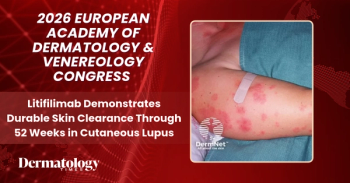
Updated phase 2 results from the AMETHYST study showed continued improvements in skin disease activity through 52 weeks, with more than one-quarter of patients achieving clear or almost clear skin.
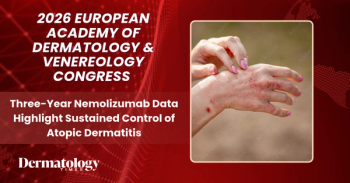
Christophe Piketty, MD, PhD, discussed 3-year findings from the ARCADIA long-term extension study and the implications of targeting IL-31 in atopic dermatitis.
Advertisement
Advertisement
Trending on Dermatology Times
1
EADV 2026 in Review: The Research and Therapeutic Advances That Defined the Congress
2
EADV 2026 Day 3: Long-Term Psoriasis Data and Emerging Therapeutic Targets Take Focus
3
Shared Data Baseline for Atopic Dermatitis From the NEA State of AD Report
4
Obefazimod Data Across Phase 3 and Long-Term Studies to Be Presented at UEG Week 2026
5