

Commentary|Videos|October 5, 2026
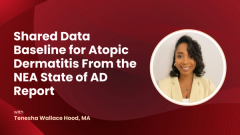
Shared Data Baseline for Atopic Dermatitis From the NEA State of AD Report
Tenesha Wallace Hood, MA, of the National Eczema Association (NEA), discusses diagnosed prevalence of AD and care access findings from the NEA's State of AD 2026 report.
Advertisement
Tenesha Wallace Hood, MA, director of healthcare provider engagement at the
Episodes in this series
Building a Shared Data Baseline for AD
Wallace Hood said earlier sources each told a different piece of the AD story. Surveys, claims studies, and smaller data sets offered value but did not allow comparison across age, insurance type, and geography at the same time.
"What we needed was one credible shared baseline," Wallace Hood said.
NEA collaborated with Milliman to commission a baseline at the national, state, and urban and rural levels. The goal was to understand diagnosed AD, where patients receive care, what treatment patterns look like, and how access to specialty care varies across the country.
Wallace Hood said the report is meant to give healthcare providers, public health professionals, and policymakers a shared data foundation to act on. Uses she described included equipping providers to diagnose and manage AD earlier, strengthening public health planning with local and current data, and reducing access disparities for communities hit hardest by AD.
Diagnosed Prevalence Versus Total Disease Burden
The report estimates diagnosed AD in the US at 2.3%, or approximately 6.9 million people. Wallace Hood called the distinction between diagnosed prevalence and everyone living with AD one of the most important in the report. The figure reflects people who have interacted with the healthcare system and received a diagnosis and code.
"Diagnosed prevalence is not the same as everyone living with AD, as we all know," Wallace Hood said.
Estimates from surveys have historically run much higher, she said. Several factors may sit behind the gap, including people with milder disease who may never seek care, individuals who face challenges in receiving a diagnosis, and other barriers to accessing care.
She said the gap reinforces a central reason for the initiative.
"AD continues to be underestimated as well as unappreciated for its impact," Wallace Hood said.
Interpreting Systemic Steroid Findings in Claims Data
Wallace Hood said she views the systemic steroid finding as a prompt for further reflection rather than a verdict on individual clinical care decisions.
"The claims data can tell us what prescriptions are filled, but it can't tell us all of the clinical circumstances behind those decisions," Wallace Hood said.
She named disease severity as one consideration. Systemic steroids may also be prescribed for other conditions commonly occurring alongside AD, such as asthma.
Wallace Hood said the findings raise a broader question of whether people with AD are able to access timely, guideline-recommended care. She said NEA can continue to play an important role through its education initiatives, resources, awareness efforts, and advocacy work.
Reference
1. Hansen D, Bazell C, Pelizzari P, McPherson R. The State of Atopic Dermatitis in the United States. National Eczema Association. 2026. Accessed October 5, 2026.
Advertisement
Related to this article
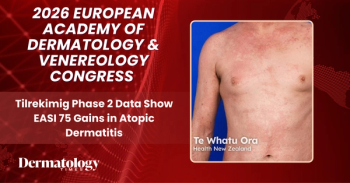
According to data presented at EADV, at week 16 of the phase 2 study, 47.8% to 62.5% of adults receiving tilrekimig achieved EASI 75 across doses, compared with 9.1% to 19.9% with placebo.
A new report from the National Eczema Association (NEA) found systemic corticosteroids were filled more often than dupilumab, and 13% of Americans live in counties without a dermatology or allergy/immunology practitioner.
Up to 91% of patients reached EASI-75 and up to 67% reached IGA 0/1 at week 152, with no new safety signals, according to Galderma's EADV 2026 data.
Presented as a late breaker at EADV 2026, mid-dose zumilokibart achieved EASI-75 in 65.9% of adults with atopic dermatitis vs 23.4% with placebo at week 16.
EADV 2026 data highlight dupilumab’s effects on growth, quality of life, disease control, and itch across multiple dermatologic diseases.

The FDA approved therapies for melanoma, dermatomyositis, superficial basal cell carcinoma, and adolescent alopecia areata, while TYK2 inhibitors and rare disease filings advanced toward 2027 decisions.

New indications for superficial basal cell carcinoma and adolescent alopecia areata expanded treatment options, while psoriasis and rare disease candidates advanced through FDA review.

From next-generation oral therapies and long-term disease control to precision medicine, EADV 2026 highlighted a dermatology landscape increasingly focused on deeper, durable, and individualized outcomes.
Advertisement
Advertisement
Trending on Dermatology Times
1
Icotrokinra Sustains Skin Clearance at High-Impact Psoriasis Sites Through 2 Years
2
EADV 2026 Day 4: Precision Medicine, Real-World Evidence, and the Future of Dermatologic Care
3
EADV 2026 Day 3: Long-Term Psoriasis Data and Emerging Therapeutic Targets Take Focus
4
EADV 2026 in Review: The Research and Therapeutic Advances That Defined the Congress
5