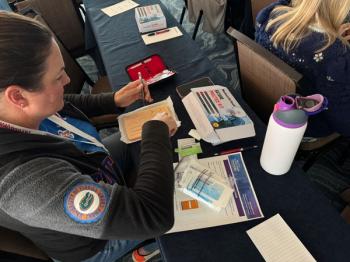
Maui Derm NP+PA Fall 2026 brought APPs together for updates spanning inflammatory disease, oncology, emerging therapies, and diagnostic challenges.
Neuroimmune modulation, including vagus nerve stimulation, is highlighted as a promising strategy for patients unresponsive to biologics.
In a recent conversation with Dermatology Times ahead of the
A central theme of the interview was the rapid growth of bioelectronic medicine. Kim noted that “a huge boom is coming in what we refer to as bioelectronic medicine,” emphasizing its potential to transform management of inflammatory and autoimmune diseases. He referenced the recent approval of a vagus-nerve–stimulating device for autoimmune conditions, stating that “patients who are refractory to biologic therapies improve when their vagus nerve is stimulated.” According to Kim, this approach leverages the body’s own neuroimmune circuitry to suppress inflammation, offering an alternative to traditional immunosuppressive drugs.
Kim contrasted this emerging strategy with the limitations of conventional therapies, which often function as binary “on-off switches.” Instead, he argued for a more physiologic, modulatory approach. By tapping into neural pathways governing immune responses, clinicians may be able not to shut down immunity but to finely adjust it. As he described it, the therapeutic goal is “to tune the immune system,” allowing patients to reach a state of balanced immune function and homeostasis. This reflects a broader shift toward treatments that support the body’s inherent regulatory mechanisms rather than overriding them.
The interview also addressed the challenges and opportunities in clinical trial design, particularly for dermatologic and symptom-driven diseases. Kim emphasized that many current methodologies rely heavily on frameworks developed for oncology or other conditions with clear biomarkers. He argued that applying these same structures to diseases like chronic itch, which lack objective endpoints, is inherently flawed. Using the analogy that “you can't use hammer for everything because not everything's a nail,” he called for more granular, disease-specific trial methodologies. Advances in molecular profiling and pathway-based diagnostics, he suggested, could significantly improve confidence in selecting appropriate disease targets and measuring therapeutic response.
Overall, Kim highlighted a future in which dermatologic care becomes increasingly personalized, technologically integrated, and biologically precise—driven by deeper understanding of the neuroimmune system and more sophisticated clinical evaluation tools.