This review of the latest dermatological studies includes insights on
Every week, we cut through the noise to bring clinicians the trial results, approvals, and emerging therapies that are actually moving the needle.
You’re busy. Between patients, prior authorizations, and everything else on your plate, keeping up with the literature is the first thing that slips. Dermatology Times NP/PA Connect is here to make sure it doesn’t. Each week, we pull the most clinically relevant news from across dermatology and bring it straight to your inbox — what’s new, what it means, and what’s worth watching. This week: a psoriasis biologic that may only need to be dosed twice a year, a potential second JAK inhibitor for alopecia areata, a phase 3 win for optimized oral minoxidil, and 2 pipeline stories that could reshape how we treat infants with eczema and patients with lichen planus. A lot moved this week.
Those efficacy numbers alone would generate attention. But the real story is the pharmacokinetics. A single 600 mg dose kept drug concentrations above effective trough levels for a full year, with sustained IL-23 pathway suppression throughout. The trial only required 2 doses — at weeks 0 and 4 — to produce those week 16 results. If phase 3 confirms the profile, ORKA-001 could become the first psoriasis biologic dosed once or twice a year.
“It is really exciting to see the phase 2a data from ORKA-001 showing remarkable, field-moving achievement of 63.5% PASI-100 in just 16 weeks,” said Christopher Bunick, MD, PhD, associate professor of dermatology at Yale School of Medicine, Dermatology Times’ editor in chief. “This level of efficacy, if repeated in phase 3 trials and combined with safety, could redefine our clinical algorithm for treating moderate to severe psoriasis and do it in fewer doses per year. A huge win for psoriasis patients.”
Safety was essentially indistinguishable from placebo — no serious adverse events in the ORKA-001 group, no injection site reactions, and an overall adverse event rate of 51% versus 57% for placebo. Longer-term data including week 28 efficacy and 52-week follow-up for a subset are expected in the second half of 2026. Phase 2b
▶ Why it matters: Once- or twice-yearly dosing at this efficacy level would be a genuine paradigm shift for adherence, access, and patient quality of life. Watch the phase 3 closely.
AbbVie has
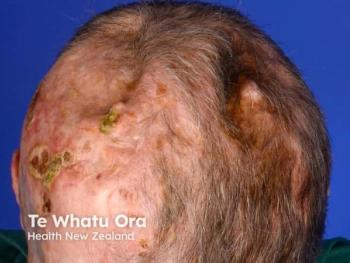
The efficacy data are notable. In the UP-AA trials, SALT ≥20 — representing at least 80% scalp coverage — was achieved by approximately 45% of patients on the 15 mg dose and 55% on the 30 mg dose at week 24, versus 1.5% to 3.4% on placebo. By week 52, those rates climbed to 55% to 64%. Complete scalp hair regrowth (SALT = 0) was achieved by approximately 21% of patients on the 30 mg dose at week 24, rising to 27% to 37% by week 52. AbbVie notes this is the first JAK inhibitor to meet a ranked secondary endpoint of complete scalp regrowth in a phase 3 program.
The enrolled population was severe: mean baseline SALT score of 84, with roughly half of patients at SALT 95 or above — near-total or total scalp hair loss. The safety profile through week 52 was consistent with upadacitinib’s known profile across its other approved indications, including the class boxed warning for serious infections, malignancy, cardiovascular events, and thrombosis.
▶ Why it matters: Baricitinib set the benchmark in 2022. Upadacitinib is now making a case for a higher efficacy ceiling — including complete regrowth as a realistic clinical target. The AA treatment conversation with patients is about to get more nuanced.
Veradermics has
The numbers are meaningful. Patients on once-daily dosing gained a mean of 30.3 hairs/cm² versus 7.3 in the placebo group. On the patient-reported measure, 79.3% of once-daily patients reported any hair improvement versus 35.6% on placebo, with nearly half achieving the higher threshold of “improved” or “much improved.” Investigators corroborated these findings, grading 72% of once-daily patients as improved. Statistically significant separation from placebo appeared as early as month 2.
The pharmacokinetic rationale is straightforward: conventional oral minoxidil peaks and clears within hours, potentially overwhelming the sulfotransferase enzyme that converts it to its active form at the hair follicle. VDPHL01’s extended-release system maintains steadier plasma levels, giving the follicle sustained exposure to drive that conversion more efficiently. No cardiac adverse events were observed, and discontinuation rates were lower in the active arms than in placebo.
“At Veradermics, we asked the question: Why is the best tool in our toolkit as dermatologists, a 40-year-old blood pressure medication that no one has aimed to optimize?” said Reid Waldman, MD, a dermatologist and chief executive officer of Veradermics, in a
A second phase 3 male trial (Study ‘304’) is expected to report in the second half of 2026. A female AGA trial (Study ‘306’) is currently enrolling. If approved, VDPHL01 would be the only FDA-approved oral non-hormonal AGA therapy for both men and women.
▶ Why it matters: Dermatologists have been using off-label oral minoxidil for years without optimized data behind it. A purpose-built formulation with phase 3 evidence and a cleaner cardiac profile would change the prescribing conversation entirely.
Arcutis has
The results hold up. By week 4, 34.4% of infants achieved vIGA-AD success (clear or almost clear skin with at least a 2-grade improvement), and 49% reached clear or almost clear overall. More than half achieved EASI-75 by week 4, with responses appearing as early as week 2. Among infants with scalp involvement, two-thirds achieved vIGA-scalp success. On the itch side — which matters enormously in this age group for both infants and exhausted caregivers — improvement was reported as early as 10 minutes in some patients, and nearly three-quarters achieved Worst Scratch Itch NRS success by week 4.
Safety was consistent with prior roflumilast pediatric data. The most common adverse events were diarrhea, nasopharyngitis, upper respiratory tract infection, and vomiting — no unexpected signals. The 0.05% formulation was specifically developed for younger children, with attention to immature skin barrier characteristics and tolerability on sensitive areas including the face and skin folds. Roflumilast was approved for AD in children ages 2 to 5 in October 2025; this sNDA would push that floor down to 3 months.
▶ Why it matters: Parents of infants with eczema are desperate for options that aren’t steroids. A nonsteroidal, once-daily topical with rapid itch relief in this age group — if approved — would be a meaningful addition to a nearly empty shelf.
Aclaris Therapeutics
In the same announcement, Aclaris named lichen planus as the lead indication for ATI-2138, a selective dual ITK/JAK3 inhibitor targeting pathogenic T-cell signaling. Lichen planus has no FDA-approved therapies despite significant symptom burden across cutaneous, mucosal, and scalp subtypes. A phase 2b basket study is planned for the second half of 2026, beginning with erosive mucosal and cutaneous LP before expanding to lichen planopilaris.
▶ Why it matters: ATI-052 is one to bookmark as the AD pipeline continues to expand beyond IL-4/IL-13 blockade alone. And for APPs managing lichen planus patients on patchwork off-label regimens, the first controlled phase 2b trial in the indication would be a long-overdue development.
References