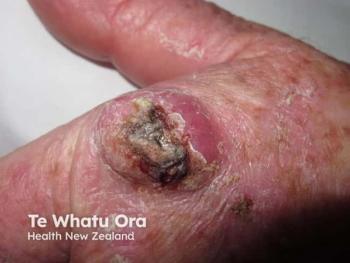
Cosibelimab-ipdl is now an NCCN Category 2A option for locally advanced CSCC in patients ineligible for curative surgery or radiation.
Recently developed biologic therapies developed for treating rheumatoid arthritis are not associated with an increased risk of cancer, according to investigators from the University of Texas MD Anderson Cancer Center.
Austin, Texas - Recently developed biologic therapies developed for treating rheumatoid arthritis are not associated with an increased risk of cancer, according to investigators from the
The researchers evaluated the
The authors found no statistically significant risk for malignancies among patients taking BRMs when compared to patients using other treatments. Of the patients in the study, 211 developed a malignancy during the trial. The incidence rate for any malignancy during the first year of therapy was very low in the BRM plus methotrexate group (0.77 percent; 95 percent confident interval [CI], 0.65-0.92 percent), the BRM monotherapy group (0.64 percent; 95 percent CI, 0.42-0.95 percent), and the controls (0.66 percent; 95 percent CI, 0.52-0.84 percent). Anakinra plus methotrexate showed lower odds compared with methotrexate alone (Peto odds ratio, 0.11; 95 percent CI, 0.03-0.45 percent), according to the abstract.
“These results are reassuring for patients considering biologic therapies for their disease,” Maria E. Suarez-Almazor, M.D., professor in the department of general internal medicine, said in a news release. “Patients are understandably concerned when treatments are linked to cancer risk. With this knowledge, clinicians can effectively demonstrate that the benefits of BRMs far outweigh the risk.”
BRMs are currently used as a secondary treatment for rheumatoid arthritis, due in part to the conflicting data on cancer correlation.
The study was published online Sept. 5 in the