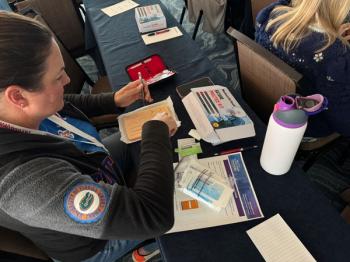
Faculty from the Cutaneous Oncology Workshop answer practical questions spanning skin cancer prevention, diagnosis, treatment, and follow-up.
At 52 weeks, the data presented at Fall Clinical showed that 64.8% and 63.3% of adolescents on baricitinib 4 mg achieved significant eyebrow and eyelash regrowth, respectively.
New 52-week data from Eli Lilly and Company and Incyte’s BRAVE-AA-PEDS phase 3 trial indicate that once-daily oral baricitinib (Olumiant), a selective Janus kinase (JAK) 1/2 inhibitor, produced clinically meaningful hair regrowth in adolescents with severe alopecia areata (AA). The results, presented at the
Alopecia areata, a chronic autoimmune disease leading to nonscarring hair loss, often has onset during childhood or adolescence.2 According to Nicole Friedland, president and CEO of the National Alopecia Areata Foundation, “For nearly half of the people with severe alopecia areata, the disease starts before adulthood and can progress quickly, significantly impacting patients’ lives.” The need for evidence-based systemic treatment options in pediatric AA remains critical, as most prior research has focused on adults.
BRAVE-AA-PEDS (
At baseline, the adolescent cohort demonstrated advanced disease severity, with mean scalp hair loss of 89% and 63.8% classified as very severe (SALT 95–100). Approximately two-thirds of participants had minimal or absent eyebrow (65%) and eyelash (57%) hair at enrollment, underscoring the cohort’s clinical burden.
At 1 year, researchers found that 54.1% of patients receiving baricitinib 4 mg achieved ≥80% scalp hair coverage (SALT ≤20), compared to 31% in the 2 mg group. Near-complete scalp regrowth (≥90% coverage; SALT ≤10) occurred in 41.2% of the 4 mg group and 26.2% of the 2 mg group. Notably, eyebrow and eyelash regrowth were observed in 64.8% and 63.3% of patients treated with 4 mg, respectively.
Among those with severe disease at baseline (SALT 50–94), 71% of the 4 mg group achieved the primary endpoint of successful hair regrowth. A post-hoc analysis of adolescents with disease duration under 2 years revealed even higher response rates: 80% for baricitinib 4 mg and 64.3% for 2 mg at 1 year.
These findings reinforce earlier 36-week data presented at the 2025 AAD annual meeting, suggesting continued efficacy beyond the initial treatment period. As Brittany Craiglow, MD, adjunct associate professor of dermatology at Yale School of Medicine, stated in a news release, “These promising results for adolescents reinforce what we see in clinical practice with adults, which is that starting treatment with baricitinib early can lead to higher rates of scalp hair regrowth.”
The safety profile observed over 52 weeks was consistent with prior studies in adults and adolescents treated with baricitinib for AA and other indications. The most common treatment-emergent adverse events were acne, upper respiratory tract infections, and influenza. No deaths, major cardiovascular events, opportunistic infections, or venous thromboembolic events were reported.
Long-term adult data from BRAVE-AA1 and BRAVE-AA2, also presented at the same conference, demonstrated sustained efficacy over 4 years, with 86.5% (4 mg) and 84.7% (2 mg) maintaining scalp regrowth at approximately 5 years, and no new safety signals emerging.
Baricitinib, already approved by the US FDA in 2022 for adults with severe AA, remains the most extensively studied JAK inhibitor for this condition. The adolescent data from BRAVE-AA-PEDS support its potential as a first-line systemic option in younger populations.
Eli Lilly has announced plans to submit these results to global regulators for a label expansion and to initiate US enrollment for a third pediatric cohort (ages 6 to <12 years) within the next year. According to Anabela Cardoso, senior vice president of Lilly Immunology Medical Affairs, “We look forward to submitting these data to global regulators in the coming months. If approved, baricitinib could offer an important new option that raises treatment expectations for adolescents living with the profound burden of this disease.”
While baricitinib’s efficacy in pediatric AA appears robust, clinicians should remain mindful of the need for long-term safety monitoring, particularly given the chronic nature of the condition and the evolving understanding of JAK inhibition in developing immune systems. Future publications and regulatory reviews will likely provide further clarity regarding optimal dosing, duration, and safety in the pediatric population.