

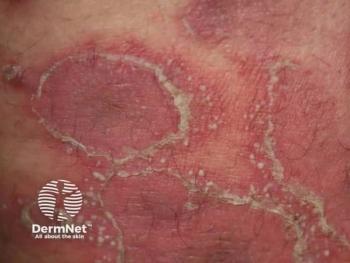
A poster presented at the 2024 Elevate-Derm West Conference outlines the pharmacokinetic profiles of spesolimab via intravenous and subcutaneous administration.
A poster presented at the 2024 Elevate-Derm West Conference outlines the pharmacokinetic profiles of spesolimab via intravenous and subcutaneous administration.
Catch up on coverage from the first day of the 2024 Elevate-Derm West Conference in Scottsdale, Arizona.

Mark Gimbel, MD, and Whitney High, MD, presented complex cases that underscore the critical need for comprehensive approaches in diagnosing melanocytic lesions.

Roflumilast foam 0.3% significantly improved psoriasis severity, symptoms, and quality of life in patients with moderate to severe scalp and body psoriasis.
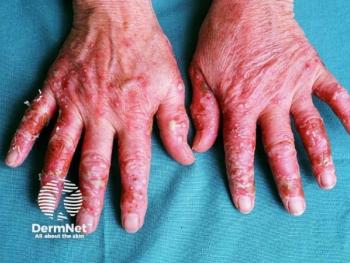
Apremilast led to a 75% improvement in PPPASI-75 in a significant portion of patients by week 16, with these improvements maintained through week 52.

Cheever shared with Dermatology Times her excitement for educational opportunities, networking, and presentations from experts in the specialty.

Share with us the topics you want to learn more about at Elevate-Derm West.
The conference aimed at providing dermatology NPs and PAs with the latest in the specialty begins today in Scottsdale, Arizona.

We want to know: Will you be attending the conference in Scottsdale later this week?

Christopher Bunick, MD, PhD, highlights rademikibart's next-generation efficacy, showing stronger IL-4Rα binding affinity in atopic dermatitis and asthma.

Dermatology Times asked our readers to share what conferences they are looking forward to in the fourth quarter of 2024.
Catch up on coverage from the 2024 Fall Clinical Dermatology Conference in Las Vegas, Nevada.

At Fall Clinical 2024, Christopher Bunick, MD, PhD, presented findings on the prevalence of systemic corticosteroid use among patients with atopic dermatitis and highlighted how those treated with upadacitinib achieved and sustained optimal skin clearance and itch relief long-term.

Catch up on coverage from the final day of the 2024 Fall Clinical Dermatology Conference in Las Vegas, Nevada.

Discover top innovations, insights, and clinical pearls from Fall Clinical in Las Vegas, where dermatology’s biggest breakthroughs took center stage.
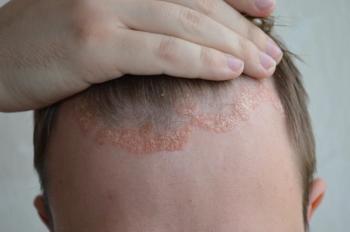
Deucravacitinib demonstrated significant efficacy and safety in treating moderate to severe scalp psoriasis, as shown in the PSORIATYK SCALP trial presented at Fall Clinical.

At Fall Clinical 2024, Ablon shared her top device-based interventions, from wound care to radiofrequency rejuvenation, revealing clinical pearls for enhanced aesthetic outcomes.

At Fall Clinical 2024, Christopher Bunick, MD, PhD, discussed systemic therapy options and the importance of comprehensive treatment targets in managing atopic dermatitis, emphasizing AHEAD recommendations and LEVEL UP data.

At Fall Clinical 2024, Graber spotlighted precise acne-targeting lasers, new combination creams, and a promising rosacea pill awaiting FDA approval.
Song shared top clinical tips at Fall Clinical, covering alopecia areata, refractory dermatoses, and novel non-steroidal topicals.
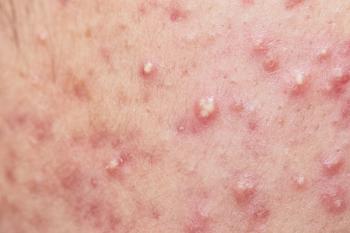
The recent meta-analysis revealed comparable efficacy in treating acne vulgaris and was presented at Fall Clinical 2024.
Catch up on coverage from the third day of the 2024 Fall Clinical Dermatology Conference in Las Vegas, Nevada.
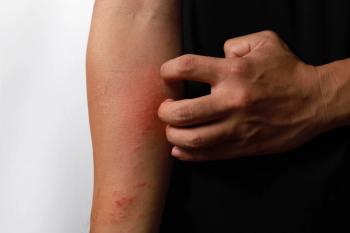
A poster presentation from Fall Clinical 2024 detailed the effect of rocatinlimab on SCORAD scores across baseline characteristic subgroups in adults with moderate to severe atopic dermatitis.

During an interview with Dermatology Times, Chovatiya outlined his Fall Clinical 2024 presentations on chronic hand eczema and early career controversies.

Aaron Farberg, MD, explores advancements in melanoma and cSCC prognostic tools, the role of gene expression profiling in inflammatory diseases, and initiatives aimed at supporting early-career dermatologists at Fall Clinical 2024.
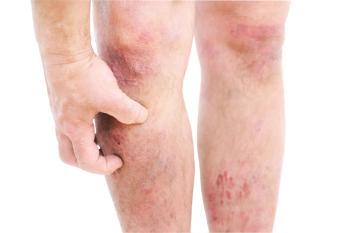
The phase 3b study shows Ebglyss reduced eczema severity and itch in challenging areas, with 60% of prior dupilumab patients meeting key improvement by week 24.

Joel Gelfand, MD, discusses insights on complex psoriasis cases, comorbidity management, and the evolving role of phototherapy at Fall Clinical 2024.
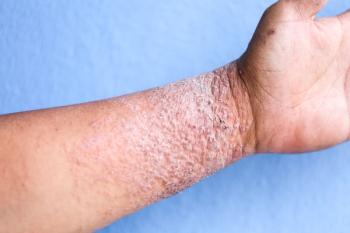
Adbry achieved EASI-75 in 92.9% and IGA 0/1 in 66.7% of AD patients, with a strong safety profile.
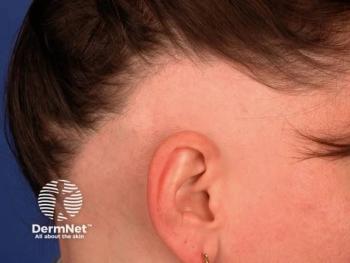
Sun Pharma presented long-term data on Leqselvi 8 mg tablets, showing significant scalp hair regrowth in severe alopecia areata patients.

Catch up on coverage from the second day of the 2024 Fall Clinical Dermatology Conference in Las Vegas, Nevada.