


Gene expression pro file (GEP) testing outcomes have positively impacted the management decision-making process for cutaneous squamous cell carcinoma (cSCC), according to a recent study.
Gene expression pro file (GEP) testing outcomes have positively impacted the management decision-making process for cutaneous squamous cell carcinoma (cSCC), according to a recent study.

Susan C. Taylor, M.D., shares distinguishing characteristics of differential diagnoses to keep in mind when examining skin of color patients for rosacea.

It's thought that rosacea affects about 10% of the population, but this estimation may not be completely accurate as the condition is often underdiagnosed – especially in individuals with darker skin types.
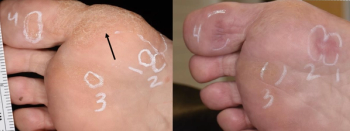
Positive results from a study investigating non-thermal Nano-Pulse Stimulation as a treatment for cutaneous non-genital warts have led to a larger multicenter study that is looking to optimize treatment parameters and hopefully replicate the early evidence of its efficacy and safety.
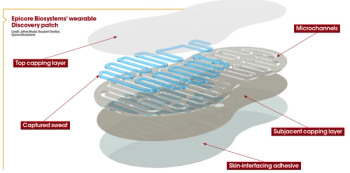
A wearable patch may soon be able to assess in flammatory biomarkers found in the sweat and interstitial fluid in individuals with atopic dermatitis to ultimately provide real-time information about their skin health.

Platelet-rich plasma (PRP) shows promise as an adjunctive treatment for atrophic acne scarring, but experts say more research is needed.

The atopic dermatitis treatment dupilumab could offer a therapeutic option for keloids, according to a case report published in the Journal of European Academy of Dermatology and Venereology.

A cohort study reveals the dose-response association between cumulative number of sessions and cutaneous squamous cell carcinoma (cSCC) risk in women was the same regardless of duration of use or age at indoor tanning initiation.

Nano-Pulse Stimulation has shown efficacy in clearing benign cutaneous lesions, and may also have the potential to treat malignancies, says this expert.

Carol Soutor, M.D., writes about efficacy and safety of mind-body therapies for the treatment of various skin conditions.

Dermatology Times spoke with Andrew Alexis, M.D., about his more than 15-year impact to the care of patients with skin of color.
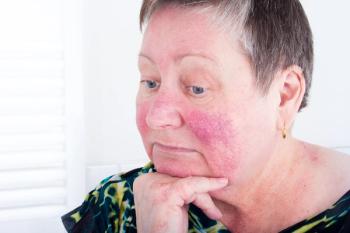
Hovione recently published results of a phase 2b study showed a topical gel formulation of 1% and 3% minocycline proved to be an effective and safe treatment for papulopustular rosacea.
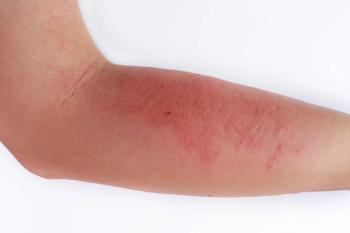
A novel cocktail of topically applied botanicals has recently proven useful in the treatment and management of mild-to-moderate atopic dermatitis in children, offering hope for this patient population.
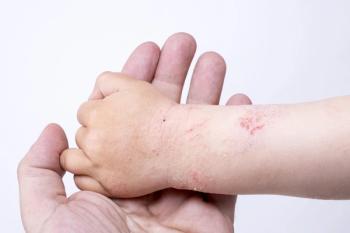
Biopsies are the gold standard approach for obtaining skin samples to test for biomarkers in atopic dermatitis, but tape strips may offer a far less invasive alternative for young children with the disease, research suggests.

Treating all acne early with a topical retinoid and an antibiotic can help patients avoid scarring and its psychosocial consequences, experts say. The aggressive approach also may help stave off medicolegal concerns, they add.
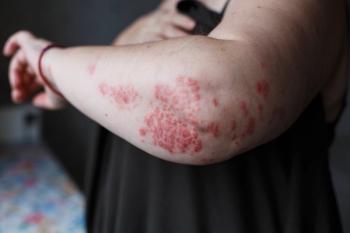
Researchers recently undertook an epidemiologic study to investigate the prevalence of palmoplantar pustulosis (PPP) and co-existing plaque psoriasis. Read what they discovered in this article.

Researchers performed a systematic review of available reports on the therapeutic benefit of interleukin (IL)-17/T-helper 17 (Th17) axis inhibitors in patients with generalized pustular psoriasis (GPP). Read what they discovered in this article.
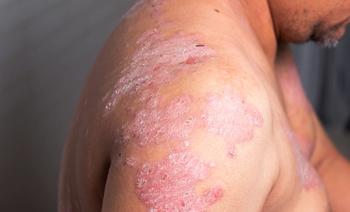
A recent, extreme case of psoriasis demonstrates how socioeconomic factors can lead to inadequate disease control. The solution? A personalized treatment plan, says the study authors.