

Pediatric Dermatology
Latest News
Advertisement
Latest Videos



Advertisement
More News
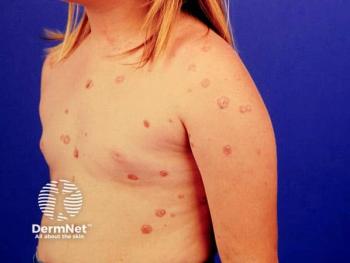
Parents advocate for children with chronic skin conditions, highlighting school challenges and the need for better support in pediatric dermatology.

Shanna Miranti, MPAS, PA-C, discusses the impact of sleep loss in pediatric atopic dermatitis and the potential of emerging therapies in young patients, such as ruxolitinib cream, to improve outcomes.
In a discussion on pediatric AD management, Shanna Miranti, MPAS, PA-C, emphasized the enduring role of topical treatments for residual itch and flares, and highlighted the importance of rapid-acting agents such as ruxolitinib cream.

Coates addresses social determinants of health in pediatric dermatology, emphasizing their impact on treatment and patient outcomes.
Shanna Miranti, MPAS, PA-C, describes her clinical approach for managing moderate to severe pediatric atopic dermatitis and how she selects between the 3 available non-steroidal topicals.

The pediatric dermatology community mourns the loss of Dr Robert Sidbury, a beloved leader and mentor, celebrated for his compassion and groundbreaking contributions.

Eichenfield discussed the ever-evolving armamentarium, and how to navigate changes in the field.

Traditional mouse models for EBS are limited, prompting Simpson's lab to create more accurate human-based tissue models.

At Elevate-Derm Summer, Jim Treat, MD, outlined diagnostic limitations of imaging and the importance of recognizing capillary malformation patterns linked to other diseases.

Swanson discussed new and upcoming therapeutics, and how she approaches treatment options with caregivers.

Schachner was the 2025 recipient of the AAP Alvin H. Jacobs award at the 50th annual SPD meeting.
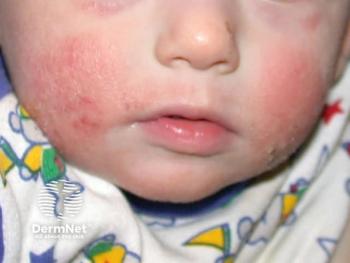
Explore the INTEGUMENT-INFANT study, assessing roflumilast cream's safety and efficacy for infants with atopic dermatitis in a groundbreaking trial.

Discover insights from SPD 2025 on pediatric obesity treatment, emphasizing multidisciplinary care and innovative therapies.

Christopher Bunick, MD, PhD, highlights how dupilumab transforms atopic dermatitis treatment in children, improving health outcomes and quality of life beyond skin symptoms.

Pediatric dermatologist Mercedes E. Gonzalez, MD, discusses roflumilast's promise as a safe, nonsteroidal treatment for atopic dermatitis in infants.
Mercedes Gonzalez, MD, discusses the promising INTEGUMENT-INFANT trial, exploring a new non-steroidal treatment for infants with atopic dermatitis.

Discover insights from Peter Lio, MD, on precision medicine in pediatric atopic dermatitis and the promising role of ruxolitinib at the RAD 2025 Conference.

At RAD 2025, pediatric dermatologist Lisa Swanson, MD, and allergist Anne Marie Singh, MD, led a dual session aimed at demystifying the connection between food allergy and atopic dermatitis.

Discover groundbreaking insights from the RAD 2025 conference on roflumilast's potential to transform treatment for infant atopic dermatitis.
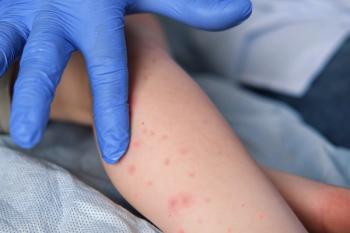
Arcutis Biotherapeutics showcases promising long-term results of Zoryve for atopic dermatitis in young children at RAD 2025, emphasizing safety and efficacy.

Peter Lio, MD, discusses innovative treatments for pediatric atopic dermatitis, including microbiome therapies and botanical options.

A new study reveals ongoing burden of moderate to severe atopic dermatitis in youth, with flares, comorbidities, and quality of life impacts.

Sophisticated colloidal oat emollients show promise in effectively managing pediatric atopic dermatitis, enhancing skin hydration and reducing flare-ups in infants.

The novel formulation was compared to a petrolatum-based diaper and was found to be just as effective for irritation and redness.
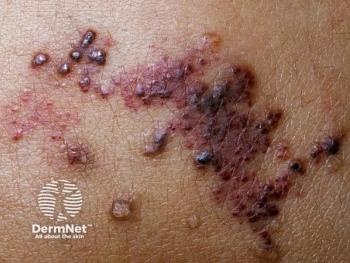
The presentation, led by Amy Paller, MS, MD, highlighted the upcoming phase 3 SELVA study for microcystic lymphatic malformations.
Advertisement
Advertisement
Trending on Dermatology Times
1
Nearly 95% of Viral Korean Skincare TikTok Videos Contain Misleading Claims
2
EADV 2026 Day 1: Late-Breaking Data, Emerging Therapies, and New Directions in Dermatology
3
Tulisokibart Meets Primary Endpoint in Phase 2b Hidradenitis Suppurativa Trial
4
EADV 2026 Day 2: Long-Term AD Data, GLP-1 Nail Findings, and Emerging Treatments Take Center Stage
5