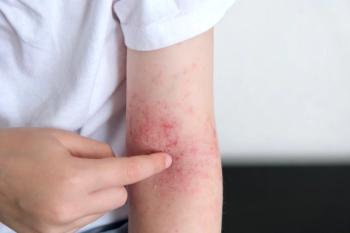
A retrospective claims analysis of 2897 matched pairs found hazard ratios of 0.48 to 0.67 for new atopic disease with dupilumab vs systemic corticosteroids in children.
Smidt and Hunt offer insights on navigating pediatric dermatology decision-making, emphasizing learning from clinical scenarios and fostering a culture of feedback and improvement.
Aimee Smidt, MD, is a professor of dermatology and pediatrics at the
At the
They spoke with Dermatology Times to discuss reflections on clinical decision-making, emphasizing learning from mistakes and leveraging colleague feedback for improved patient care.
Reflecting on the session's highlights, Smidt emphasized the importance of learning from clinical scenarios where decisions may not have yielded optimal outcomes. "Today's session was very helpful in regard to sharing different clinical scenarios where medical decision making something went wrong, and to be able to be vulnerable enough to share that with our esteemed colleagues and that decisions can go wrong for various reasons," she said.
Hunt echoed this sentiment, citing examples where biases or distractions influenced decision-making processes. "Keep that open mind," she added.
Both speakers emphasized the value of feedback and self-reflection in refining medical practices. Smidt stressed that it is normal to encounter challenges in decision-making, but what matters most is how one analyzes and learns from these experiences to enhance patient safety.
Hunt added, "You can surround yourself with excellent colleagues that can help sort of counterbalance some of those biases and help point them out to you."