

Atopic Dermatitis
Latest News

Advertisement
Latest Videos






Advertisement
More News
Adding caffeine to topical skin treatments would be a simple way to reduce inflammation in patients with atopic dermatitis and psoriasis, suggests a review presented at the Psoriasis: From Gene to Clinic International Congress, which took place in London this week.
In this slideshow, we summarize the phenotypes associated with childhood atopic dermatitis as addressed recently in JAMA Pediatrics.
Until recently, atopic dermatitis treatments were primarily limited to topical corticosteroids and systemic immunosuppressants. Now, two new therapies have reached clinical practice. Nineteen more are in development.
Dupilumab given concomitantly with topical corticosteroids significantly improved signs and symptoms of atopic dermatitis (AD) in adults refractory to or intolerant of cyclosporine A, a study shows.
The International Eczema Council (IEC) is recommending that the routine use of systemic corticosteroids for atopic dermatitis be discouraged and instead, it should be reserved for special circumstances.
A round-up of the latest products hitting the dermatology market including treatment for eczema and wounds, plus care for rejuvenating procedures.
Treatment for atopic dermatitis isn’t always straightforward. In this article, a physician outlines treatment approaches.
In this article, we take a look at the development of new treatments for atopic dermatitis.
“Because atopic dermatitis is episodic, its incidence, prevalence, persistence, remission, flare and long-term control require careful definition,” researchers write.
New recommendations from the International Eczema Council aim to address a question that has gone largely unanswered: When should dermatologists and others prescribe systemic therapy to treat atopic dermatitis?
Early trial results show a significant reduction of itch with the oral NK-1 antagonist serlopitant
Dupilumab plus topical corticosteroids safe and effective after failure of cyclosporine in moderate-to-severe atopic dermatitis
Atopic dermatitis patients have a phobia of topical corticosteroids that is so strong, it’s been described as a “phenomenon.”
A pilot study shows that Manuka honey may have some healing properties in atopic dermatitis.
Children under two years old with signs of atopic dermatitis have an increased risk of developing asthma and food allergies, researchers report in JAMA Pediatrics. And, young children with both early onset atopic dermatitis and a food allergy, have a “very high risk” of developing asthma or allergic rhinitis.
Patch testing for allergic contact dermatitis in the pediatric population is performed at a higher rate than previously reported, but still grossly underreported, according to a study of the Pediatric Contact Dermatitis Registry.
In this slideshow, we highlight four atopic dermatitis phenotypes in children as described in JAMA Pediatrics.
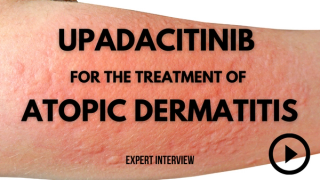
EADV study shows that this JAK inhibitor is a promising drug candidate in moderate-to-severe AD.
There are two pathways that lead to atopic dermatitis. Their origins differ, but they both impair the immune system and skin barrier in AD.
Ingredients used in topical products used to relieve atopic dermatitis in children might put those patients at higher risk for contact dermatitis.
NIH investigators find that Staphylococcus epidermidis is predominant in less severe cases, while Staphylococcus aureus is associated with patients who have more severe disease.
Nitric oxide-releasing cream that targets IL-17 moving toward clinical trials.
An experimental drug designed to control itching in people with moderate-to-severe AD shows promise in early trial.
A new study shows that mutations in the gene CARD11 are associated with severe atopic disease.
In early research, subcutaneous nemolizumab significantly reduced pruritus in moderate-to-severe atopic dermatitis adult patients.
Advertisement
Advertisement
Trending on Dermatology Times
1
FDA Approves Baricitinib for Adolescents With Severe Alopecia Areata
2
Dr. Charrow Highlights Earlier Biologic Use and Deroofing in Hidradenitis Suppurativa
3
From Mechanism to Management: Navigating Male Pattern Hair Loss and New Topical Therapies
4
Tremfya Meets Primary, Major Secondary Endpoints in Phase 4 STAR Study of Axial PsA
5