







Atopic Dermatitis
Latest News
Advertisement
Latest Videos







Advertisement
More News

Connect Biopharma announced positive long-term data from its China pivotal trial.
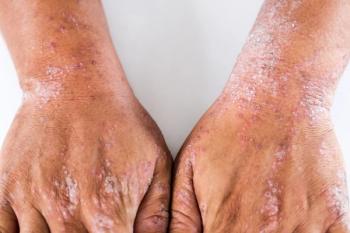
Patients with AD and a comorbid allergic condition achieved the same efficacy endpoints as patients without allergic conditions in a study.

From the November cover: Raj Chovatiya, MD, PhD, and Lawrence Eichenfield, MD, shared their insights and key treatment pearls into atopic dermatitis management for adults and children.

Jared Gollob, MD, Chief Medical Officer of Kymera Therapeutics, spoke with Dermatology Times to discuss these trial results.

Germany will be the first country where lebrikizumab will be available for prescription, with a subsequent rollout across European countries throughout 2024.

What are some of the challenges and triumphs in using biologics for atopic dermatitis? Abby L. Allen, RN, NP, shares insights at the American College of Allergy, Asthma and Immunology 2023 Annual Scientific Meeting.

Research at the American College of Allergy, Asthma and Immunology (ACAAI) 2023 Annual Scientific Meeting discusses the impact of an educational program on improving care.

Ruchi Gupta, MD, MPH, shares tips for supporting a successful transition to college for patients with atopic dermatitis.

A new study presented at this year’s American College of Allergy, Asthma and Immunology Annual Scientific Meeting highlights the need for mental health support in patients with atopic dermatitis.

The guidelines update AAD’s 2014 recommendations for the management of AD with phototherapy and systemic therapies.

Dr Omar Noor delves into the complexities of boxed warnings tied to JAK inhibitors, contrasting their presence in systemic forms with the absence in the oral version of topical ruxolitinib, and discusses the potential impact on dialogues with both patients and fellow healthcare providers. He further underscores the pivotal role of long-standing safety data in building provider confidence in a treatment.
Omar Noor, MD, FAAD, discusses the critical role of patient education and transparent communication in the context of treating individuals with atopic dermatitis. He emphasizes the significance of cultivating trust in patient-provider relationships, explores the potential necessity of shifting the treatment paradigm, and addresses the implications of treatment interruptions or transitions in the long-term management of this condition, all while considering the crucial aspect of access to care.

Study authors urge clinicians to screen adult patients with AD for cognitive dysfunction.

In this episode, discover and learn how to address the unique challenges faced by college students diagnosed with atopic dermatitis—especially as they navigate new lifestyles and medication management.

Polyphenols, found in certain foods, have antioxidant and anti-inflammatory properties may help modulate immune responses, offering potential adjunctive therapy for atopic dermatitis, psoriasis, and chronic urticaria.

Delgocitinib is first-in-class pan-Janus kinase inhibitor.

The results from this 5-year open-label extension trial affirm the safety of dupilumab in adults with moderate to severe AD.

Almost 80% of patients in an extension study maintained clear or almost clear skin, and 90% of patients saw continued improvements in itch.

An expert in dermatology presents the case of a 58-year-old male who has struggled with long-standing atopic dermatitis. The presentation delves into the considerations between topical and systemic treatments and sheds light on the intricacies of managing patients with comorbidities, extensive treatment histories, and the challenges posed by prior authorizations.
Ted Lain, MD & MBA, FAAD, provides an overview of a roundtable discussion centered around a challenging case of a 28-year-old female experiencing recurrent flaring atopic dermatitis. He shares insights from a panel of dermatologists regarding their recommended treatment approach, emphasizing the incorporation of a novel topical treatment to achieve enduring disease remission.

Investigators said that additional, larger studies are needed to assess the safety of live attenuated vaccine administration for pediatric AD patients being treated with dupilumab.

The most common conditions or concerns patients reported having that may influence their selection of a JAK inhibitor included an increased risk of MACE and an age above 65 years.

Little is known about the ways primary care physicians should treat or manage atopic dermatitis in their patients, according to the review.

Lisa Sanglay, FNP, and Lauren Miller, PA-C, interviewed a patient at IDS 2023 who used to have debilitating atopic dermatitis before seeing Sanglay for help and who prescribed upadacitinib.

Skin clearance, itch relief, and reduced severity of atopic dermatitis were sustained with monthly maintenance dosing.
Advertisement
Advertisement
Trending on Dermatology Times
1
FDA Approves Baricitinib for Adolescents With Severe Alopecia Areata
2
From Mechanism to Management: Navigating Male Pattern Hair Loss and New Topical Therapies
3
Dr. Charrow Highlights Earlier Biologic Use and Deroofing in Hidradenitis Suppurativa
4
Tremfya Meets Primary, Major Secondary Endpoints in Phase 4 STAR Study of Axial PsA
5