Shannon Trotter, DO, moderated a Dermatology Times Case-Based Roundtable event on how pharmacokinetics, adverse event timing, and trial response criteria should shape hedgehog pathway inhibitor selection in advanced BCC.
Tiffany Mayo, MD, recently moderated a Dermatology Times Case-Based Roundtable event to discuss topical innovation, systemic options, and patient-centered factors when treating atopic dermatitis.
A recent
Case 1: Chronic, Uncontrolled AD
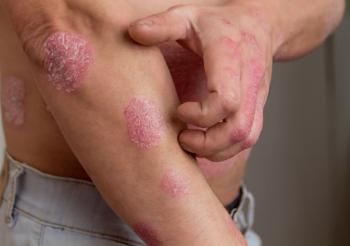
The first case described a 32-year-old man with longstanding, poorly controlled AD, visible excoriations, and significant pruritus that was disrupting both sleep and daily functioning. Despite approximately 10% body surface area (BSA) involvement, multiple topical treatments had failed.
“I think we all agreed that the 10% BSA estimate might have been low,” Mayo said. “Just judging from the photo and the extent of his symptoms, it seemed like this patient was well beyond the point where topical therapy alone would suffice.”
Mayo noted that attendees were intrigued by the itch reduction data comparing ruxolitinib to triamcinolone, with many being surprised by its performance. Although new topical agents such as ruxolitinib (Opzelura; Incyte), tapinarof (Vtama; Organon), and roflumilast (Zoryve; Arcutis Biotherapeutics) were discussed, the consensus leaned toward systemic therapy given the chronicity and severity. Clinicians also commented on the challenges of back involvement for applying topicals. “The 20% BSA limitation and box warning were not issues for the audience,” Mayo added. “Most noted having patients use ruxolitinib as needed after clearing.”
“When it first came out, the 20% limit was limiting. But now that it’s been out longer, it doesn’t scare me as much,” one clinician noted.
“Because there is absorption data up to 20%…if they are 20% or less, the black box warning is not something they likely need to worry about—but I still discuss it because they’re going to Google it,” Mayo added.
Case 2: Head and Neck AD in Skin of Color
The second case involved a 16-year-old girl with head and neck AD—a scenario raising both clinical and psychosocial concerns. Mayo emphasized that facial AD in skin of color patients prompted discussion not only of therapy, but also skin care products, patch testing, and hyperpigmentation risk.
“Concern about hyperpigmentation on the face was shared by all participants,” Mayo said. “The face is a location where we need non-steroidals, but many agreed that the current options often burn or sting.” Some attendees noted similar stinging with roflumilast, though many reported good experiences with topical tapinarof, and none had observed follicular events.
Systemic options, including dupilumab (Dupixent; Sanofi and Regeneron), tralokinumab (Adbry; LEO Pharma), and lebrikizumab (Eblgyss; Eli Lilly), were considered, but cost, insurance, and injection hesitancy were potential barriers. An allergist participant also underscored how challenging facial AD can be to treat, reinforcing the need for multidisciplinary collaboration.
Case 3: Pediatric AD With Sleep Disturbance
The third case featured a 9-year-old boy with worsening AD since age 3, primarily affecting flexural folds, accompanied by persistent scratching at night. “This really came down to quality of life,” Mayo said. “The sleep disturbance, the constant scratching—it affects the whole family.”
Audience members generally favored starting with topicals in this age range, and many felt comfortable using newer non-steroidal options in children as young as 2 years old, especially tapiarof or ruxolitinib. Shared decision-making with parents was emphasized.
“I would also start with tapinarof and say, ‘This is going to be what's approved. Let's try this. If that doesn't work, we can talk about escalating to other options. These options are not going to be approved for this age group, so we need to discuss that more if we get to that point. Let's try this first,” one clinician noted. “Also, I want to mention, I really love excimer laser for these little spots, especially in the little ones, because it doesn't hurt. I do the excimer on them, and I let them help me. Sometimes I'll ask, ‘Do you want to step on the pedal?’ and they’re excited about it. I like that in conjunction if I can't get anything else for them.”
Mayo reviewed TruE-AD3 trial data for ruxolitinib, showing meaningful investigator’s global assessment (IGA) treatment success rates with ruxolitinib cream 1.5% in children aged 2 to 6 years (60.6%) and 7 to 11 years (52.3%).1
Just yesterday, the
Community Learning
Reflecting on the event, Mayo stressed the power of peer-to-peer exchange. “The conversation was the most valuable component of the roundtable,” she said. “Though many had used the new topical agents, each was interested in hearing others’ experience, and every comment added to overall comfort with the therapies.” She also observed that while clinicians were open to newer topicals, many remained cautious about systemic agents in pediatric patients.
Key Takeaway
Mayo’s roundtable reinforced that while therapeutic options for AD are rapidly expanding, clinicians continue to navigate gaps in pediatric care, facial disease management, and systemic adoption. With ongoing innovation in non-steroidal topicals and growing real-world experience, collaborative dialogue remains central to advancing patient outcomes.
References