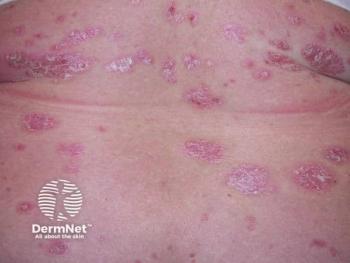
At week 112, at least 72% of patients on icotrokinra held PASI 90 and at least 44% held PASI 100, with no new safety signals reported.
Symptomatic dermographism has its first on-label treatment. Here’s what APPs should know about recognition, treatment, and remibrutinib.
The approval of
A patient reports developing itchy, raised welts wherever their skin is scratched, rubbed, or exposed to pressure. The lesions may disappear relatively quickly, but the cycle happens repeatedly—sometimes from something as routine as clothing rubbing against the skin.
For advanced practice providers (
The recent FDA approval of remibrutinib (Rhapsido) has also changed the treatment conversation. The oral
So, what should NPs and PAs know as this option enters clinical practice?
Dermographism is characterized by the development of linear wheals following mechanical stimulation of the skin. However, the presence of dermographism alone does not necessarily mean a patient has symptomatic disease requiring treatment.
Patients with symptomatic dermographism experience accompanying symptoms such as pruritus and recurrent whealing following triggers including scratching, rubbing, or pressure.
For APPs evaluating patients with suspected urticaria, asking what happens immediately after the skin is scratched or rubbed, and how frequently those reactions interfere with everyday activities, can help distinguish the patient's experience and disease burden.
However, some patients remain symptomatic despite antihistamine therapy.
That treatment gap is particularly relevant following the approval of remibrutinib, which is indicated for adults with symptomatic dermographism who remain symptomatic despite H1 antihistamine treatment.
For APPs, persistent symptoms despite appropriate antihistamine use may now prompt a different conversation about treatment escalation.
Remibrutinib is an oral, highly selective BTK inhibitor designed to inhibit BTK-mediated signaling involved in mast cell activation and histamine release.
Its approval for symptomatic dermographism was supported by
Rather than broadly suppressing the immune system, BTK inhibition targets signaling involved in the processes contributing to wheal and itch development.
Understanding that mechanism can help APPs explain to patients why the treatment differs from the antihistamines they may already have tried.
For patients who have lived with recurrent itching and whealing triggered by ordinary contact with their skin, symptomatic dermographism can affect clothing choices, physical activity, sleep, and other aspects of everyday life.
That makes symptom assessment an important part of follow-up.
APPs can ask patients not only whether wheals are still occurring, but how frequently symptoms develop, which triggers patients have begun avoiding, how disruptive the itching is, and whether the condition is affecting daily activities.
The availability of the first treatment specifically approved for symptomatic dermographism adds another option when those symptoms persist despite antihistamine therapy.
The approval of remibrutinib represents more than the addition of another urticaria therapy. It creates a new treatment pathway specifically for adults with symptomatic dermographism whose symptoms persist despite H1 antihistamines.
For NPs and PAs, that makes recognizing the condition, assessing its real-world burden, and identifying patients who remain symptomatic on antihistamine therapy increasingly important.
As targeted therapies expand across dermatology, APPs will continue to play a central role in translating new treatment options into practical, individualized care.
References