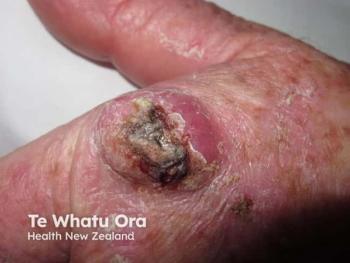
Cosibelimab-ipdl is now an NCCN Category 2A option for locally advanced CSCC in patients ineligible for curative surgery or radiation.
New research could clarify the long-held “soil and seed” organ-specific metastasis theory that different cancerous tumor types spread only to specific, preferred organs.
New York - New research could clarify the long-held “soil and seed” organ-specific metastasis theory that different cancerous tumor types spread only to specific, preferred organs.
A study led by researchers at Weill Cornell Medical College and Memorial Sloan-Kettering Cancer Center
The findings, published online by
The researchers say these cancer exosomes have various effects, such as triggering inflammation, promoting leaky blood vessels and “educating” bone-marrow progenitor cells to participate in the coming metastatic activity. The fact that the exosomes circulate in the blood - making them readily measurable and accessible - could be advantageous to cancer diagnoses, prognoses and treatment.
The researchers discovered two ways to reduce exosomal-induced metastasis. One was to target the protein Rab27a, responsible for production of exosomes. Another was to proactively educate bone-marrow-derived cells using exosomes from melanoma cells, which rarely metastasize.
In a Weill Cornell Medical College news release, study co-senior author David C. Lyden, M.D., said, “The exosome profile could be useful in a number of ways - to help detect cancer early, to predict the aggressiveness of a patient’s tumor and response to chemotherapy or other treatments, and to understand the risk of cancer recurrence or spread before traditional methods would be able to.”