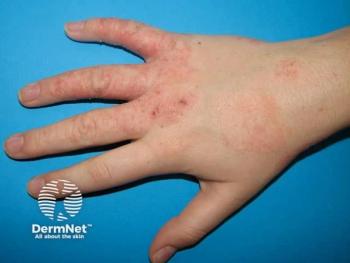
Dermatitis-related adverse events vary widely across atopic dermatitis systemic trials, driven by disease fluctuation and reporting differences, informing patient counseling and flare definitions.
Nearly 68% of AD patients and 78% of psoriasis patients on topical-only regimens expressed a desire for systemic therapy, reflecting widespread skepticism about topicals as a long-term strategy.
Patients with atopic dermatitis (AD) express significantly higher trust in both skin care and topical therapies than patients with psoriasis (PSO), though trust levels are only moderate overall and tend to erode as symptom burden and quality of life (QoL) impairment increase. Those are among the key findings of a
The study, led by Svenja Royeck, MD, of University Hospital Münster, enrolled 115 patients with AD (median age 45 years) and 138 with PSO (median age 55 years) between November 2022 and October 2023. Trust in skincare and topical therapies was assessed using a 6-point Likert scale, where lower scores indicated higher trust. Clinical severity was evaluated with the Eczema Area and Severity Index (EASI) for AD and the Psoriasis Area and Severity Index (PASI) for PSO, and patient-reported outcomes included pruritus intensity, pain intensity, and the Dermatology Life Quality Index (DLQI).
Across both conditions, median trust in skin care and topical therapies fell in the moderate range. But AD patients rated trust in skincare meaningfully higher than PSO patients (mean 2.76 vs. 3.21 on the 6-point scale; p < 0.005), and the same pattern held for trust in topical therapies (mean 2.68 vs. 3.07; p < 0.05).
The authors suggest this disparity reflects differences in disease history and patient education between the 2 conditions. AD typically begins in early childhood, meaning patients and their caregivers often develop ingrained skincare routines from an early age—a foundation that PSO patients, whose disease usually manifests in adulthood, tend to lack. Structured educational programs for AD also appear more prevalent than those for PSO, and these programs have been shown to improve not only patient knowledge and adherence but also disease severity outcomes.
Notably, trust levels did not differ significantly between patients receiving topical therapy alone and those on systemic treatment—a finding that held within both disease groups. Among patients using only topical therapies, 67.9% of those with AD and 77.8% of those with PSO expressed a desire for systemic treatment, suggesting widespread skepticism about topical management as a sufficient long-term strategy.
In AD, higher pruritus intensity correlated significantly with lower trust in skin care (Spearman's ρ = 0.40; p < 0.001), as did greater pain intensity (ρ = 0.23; p < 0.05) and greater QoL impairment (ρ = 0.31; p < 0.001). Trust in topical therapy also correlated with QoL impairment in AD patients (ρ = 0.24; p < 0.01).
In PSO, no significant correlations were identified between trust and any of the measured clinical or patient-reported variables—including PASI scores, pruritus, pain, or DLQI. The authors interpret this as consistent with the idea that PSO patients may primarily attribute symptom control to systemic therapies rather than topical measures, making symptom burden less of a driver of topical trust.
Among PSO patients, comorbidities did show some association with trust. Those with gastroenterological conditions, including liver disease, reported lower trust in skin care (p = 0.034), and patients with a history of malignancies reported lower trust in topical therapies (p = 0.020). The investigators note that multimorbid patients navigating complex treatment regimens may deprioritize dermatologic topical measures, viewing them as less central to their overall care.
The findings highlight a potential adherence gap with real clinical consequences. Over 80% of patients with dermatitis diseases and PSO have been reported to show low adherence to topical therapies in prior research, and the present data suggest that low trust—particularly in patients with higher symptom burdens and poorer QoL—may be a contributing factor.2
The authors call for individualized patient education and shared decision-making around topical measures, with clinicians actively exploring patients' prior experiences and setting realistic expectations. They also underscore that skincare and topical therapy should be framed as integral components of long-term disease control—not optional add-ons—and that structured educational programs should be more consistently incorporated into PSO management.
The study has several limitations worth noting for clinical context. Its cross-sectional design precludes causal conclusions, and recruitment at specialized university clinics limits generalizability to community or primary care settings. Disease severity in the cohort was predominantly mild, meaning the findings may not fully reflect the trust dynamics in patients with more severe or refractory disease. The authors also note that differences in physician counseling practices between AD and PSO centers were not systematically captured but likely influenced both skincare use frequency and trust levels.
References