

Opinion|Videos|October 20, 2026
Starting JAK Inhibitors for Alopecia Areata: Safety Counseling and Choosing an Agent
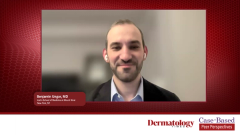
Author(s)Benjamin Ungar, MD
Access, safety counseling, and speed of response shape the choice of a JAK inhibitor. Dr. Ungar explains how the alopecia areata safety record frames risk-benefit conversations with patients.
Advertisement
Episodes in this series
This episode, "Starting JAK Inhibitors for Alopecia Areata: Safety Counseling and Choosing an Agent," features Dr. Ungar describing his clinical experience and the practical steps of starting therapy.
Dr. Ungar describes his experience with these therapies as tremendously positive. Responses vary between patients, but he has seen the treatments transform lives, with some patients regrowing everything from large scalp areas to total body hair loss, including eyebrows and eyelashes. Patients often describe feeling dramatically better about their lives.
He then outlines challenges at initiation. The first is practical: access often requires prior authorizations and appeals, and manufacturers frequently offer bridge programs. For counseling, his starting point is acknowledging that alopecia areata is worth treating, because patients arrive having experienced its negative impact. Benefits provide the context in which risks should be weighed, and most patients are motivated to accept risk in order to respond.
Risks should still be reviewed using the safety data across all these agents, including placebo-controlled periods, extension studies, and real-world experience spanning thousands of patients. Dr. Ungar explains that none of the risks in the boxed warning, which did not originate from alopecia areata studies, have been shown to increase with JAK inhibitors in this disease. Individual risk factors such as age and cardiovascular disease still need to be considered, but the benefits generally outweigh the risks.
On agent selection, Dr. Ungar considers all three options very good, and a payer-preferred choice that ensures access matters more than the specific drug. Speed is paramount for the Case 1 patient, whose six-month window is short. Without comparing trials directly, he notes that deuruxolitinib reached statistical significance for regrowth at the earliest time point, so all else being equal he would start with it.
Up next, in "Case 2: Assessing Severity and Rapid Progression in Alopecia Areata," a 29-year-old woman's progression and social withdrawal test how severity is defined.
Advertisement
Related to this article
The joint AAD-HSF guideline issues 37 recommendations, including strong support for adalimumab, bimekizumab, infliximab, and secukinumab.
Two-year oral IL-23 data, GLP-1 biomarker findings, and a nonsurgical option for superficial basal cell carcinoma headline the sessions covered in Las Vegas.
Dermatology’s growing focus on skin longevity demands clear definitions, validated outcomes, and rigorous evidence beyond anti-aging claims.

A retrospective claims analysis of 2897 matched pairs found hazard ratios of 0.48 to 0.67 for new atopic disease with dupilumab vs systemic corticosteroids in children.
Disc Medicine reports the phase 3 APOLLO trial met all primary and secondary end points, with whole-blood PPIX reduced 41.4% vs placebo and an NDA resubmission planned by end of 2026.

Castor oil has become a popular social media remedy for thicker, longer hair, but evidence supporting its ability to stimulate hair growth remains limited.
The FDA clearance allows Edesa to expand an ongoing placebo-controlled study of the CXCL10 antibody EB06 to US sites, with topline data expected in the fourth quarter of 2027.

The novel oral helicase-primase inhibitor demonstrated significantly higher rates of complete lesion healing compared with investigator’s choice treatment in the phase 3 PRIOH-1 trial.
Advertisement
Advertisement
Trending on Dermatology Times
1
Dupilumab Associated With Lower Atopic March Risk in Pediatric Atopic Dermatitis
2
Bitopertin Meets All End Points in Phase 3 APOLLO Trial for EPP
3
GLP-1 Candidacy and Prescribing Considerations in Psoriasis
4
Anti-Inflammatory Effects of GLP-1 Medications in Psoriasis and Obesity
5