

Opinion|Videos|October 13, 2026
Case 1: Assessing Psychosocial Burden and Realistic Goals in a Patient with Alopecia Areata
Author(s)Benjamin Ungar, MD
A patient with 45 percent hair loss and a wedding in six months illustrates why psychosocial burden can reclassify disease severity and why expectation setting must begin before treatment does.
Advertisement
"Case 1: Assessing Psychosocial Burden and Realistic Goals in a Patient with Alopecia Areata" follows a young man with patchy scalp loss and an approaching wedding as Dr. Ungar works through classification and counseling.
Dr. Ungar reads Case 1, a 33-year-old man with 45 percent scalp hair loss, including a coin-sized vertex patch, who has relapsed twice after partial regrowth over 14 months. He has no eyebrow, eyelash, or nail involvement and normal thyroid function. He is getting married in six months and has seen minimal improvement after four months of topical corticosteroids.
Dr. Ungar sees severe disease despite the 45 percent figure, which falls short of the trial definition. The psychosocial distress, possible rapid progression, and desire for fast regrowth all point toward systemic therapy. Because the approved options for severe disease are all JAK inhibitors, he would gather history on safety risk factors, though this patient appears healthy and low risk.
On classification, Dr. Ungar uses the alopecia areata scale. Scalp loss of 0 to 20 percent is mild, 20 to 50 percent is moderate, and 50 percent or more is severe. Eyebrow or eyelash involvement, rapid progression, lack of treatment response, or psychosocial burden upgrades a patient by one category. This man starts as moderate and is upgraded to severe.
Counseling must begin early, he stresses. Regrowth takes months rather than weeks, so a six-month deadline is short, even though some treatments could deliver regrowth in that window without any guarantee. Dr. Ungar also notes that the burden grows the longer regrowth takes and that a deadline adds another layer of stress. Even after full regrowth, many patients worry about future hair loss, so clinicians should plan for short-term, medium-term, and long-term psychosocial needs.
Our next episode, "JAK Inhibitors for Alopecia Areata: Selectivity and Pivotal Trial Efficacy," turns to how the three approved agents work and how their pivotal trials compare.
Advertisement
Related to this article

An analysis of 633 skincare brands found gaps in evidence, safety information, and claim support, raising questions about what patients can verify online.

Can “Botox in a bottle” really rival injectable neuromodulators? We examine the evidence behind topical peptide serums and Argireline.

Dermatology clinicians at a Case-Based Roundtable in Austin, Texas, discussed real-world strategies for sequencing topical therapy, phototherapy, and ruxolitinib cream across pediatric and adult vitiligo cases.

Christophe Piketty discusses 3-year ARCADIA data demonstrating sustained efficacy and long-term safety of nemolizumab in atopic dermatitis.

Two claims analyses of hidradenitis suppurativa showed similar symptom prevalence in males and females and lower dermatologist access among rural patients than urban patients.

Day 3 of Fall Clinical 2026 featured roflumilast data in genital psoriasis, long-term JAK inhibitor safety in atopic dermatitis, and expert insights on setting expectations in HS, treating advanced cSCC, and screening aesthetic patients.

In a retrospective study of 393 patients, 51.9% had at least 1 abnormal LFT during follow-up, but only 1.1% had elevations above 3 times the upper limit of normal.
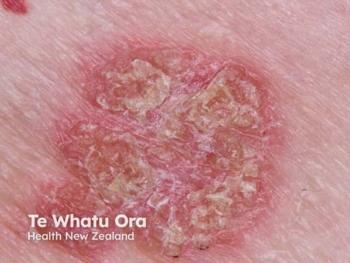
Patients with plaque psoriasis treated with roflumilast cream or foam reported greater improvements in sexual function and relationships vs vehicle, including those with genital involvement at baseline.
Advertisement
Advertisement
Trending on Dermatology Times
1
Hidradenitis Suppurativa Claims Data: Sex Parity and Rural Care Gaps
2
Regenerative Approaches in Skin and Hair Care and Hair Loss Research
3
JAK Inhibitor Safety in Atopic Dermatitis: Long-Term Epidemiology Data
4
No Observed Skin Lesion Flares After Switching to Upadacitinib in Atopic Dermatitis
5