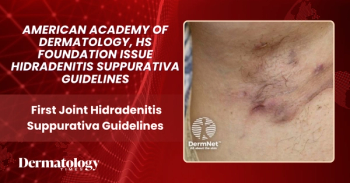
The joint AAD-HSF guideline issues 37 recommendations, including strong support for adalimumab, bimekizumab, infliximab, and secukinumab.

April Armstrong, MD, MPH, reframes psoriasis as a systemic inflammatory disease and highlights a shift toward earlier systemic treatment, with emerging oral therapies like TYK2 inhibitors offering improved efficacy and safety.
In this Dermatology Times
Armstrong outlines contemporary criteria for identifying patients appropriate for systemic therapy, drawing on International Psoriasis Council recommendations. These include patients with ≥10% body surface area involvement, those with disease affecting high-impact sites such as the face, scalp, palms, soles, or genitals, and individuals with inadequate response to topical therapies. This framework suggests a shift toward earlier and more proactive systemic intervention.
The discussion also explores the rapidly evolving oral treatment landscape. Established agents such as apremilast and deucravacitinib have provided important alternatives to traditional systemic therapies with improved tolerability profiles. Building on this foundation, emerging next-generation oral therapies—including advanced TYK2 inhibitors and oral peptide-based approaches—are poised to narrow the historical efficacy gap between oral agents and biologics.
Armstrong further contextualizes these advances within psoriasis pathogenesis, highlighting the central role of TYK2 in mediating IL-23 signaling and downstream IL-17 activation. The observation that individuals with TYK2 deficiency do not develop psoriasis reinforces its validity as a therapeutic target. Collectively, these developments signal a transformative period in psoriasis management, where oral therapies may increasingly offer both high efficacy and favorable safety profiles.
Watch the next episode