


Opinion|Videos|August 27, 2025
Navigating Insurance Barriers and Treatment Choices in Acne Care
Author(s)Christopher G. Bunick, MD, PhD
An expert discusses how insurance limitations hinder access to newer, more effective acne treatments, emphasizing the need for long-term cost-benefit recognition, while also highlighting the ongoing role of oral antibiotics and the importance of personalized care—especially for adult women with distinct acne profiles.
Advertisement
Episodes in this series
Access to newer acne therapies continues to be limited by insurance coverage issues. Many of the latest treatments, including innovative oral and topical agents, face reimbursement hurdles because payers often prefer cheaper generic alternatives. This reluctance undermines the value of advancements in drug formulation, delivery systems, and safety profiles. Despite improved outcomes and patient benefits associated with newer therapies, insurers tend to prioritize cost over innovation. Advocates argue that in the long run, investing in more effective, better-tolerated treatments could reduce overall health care costs by preventing complications, relapses, and long-term use of older, less-efficient therapies.
Another example of this disconnect between innovation and access is seen with isotretinoin formulations. While all versions aim to treat severe acne, some newer brands offer superior absorption profiles that do not depend on dietary fat intake, potentially improving treatment consistency and lowering relapse rates. These advantages often go unrecognized by payers, which leads to challenges in prescribing the most clinically effective versions. Demonstrating long-term cost-effectiveness of these therapies through research may help shift insurance policies, but for now, clinicians must navigate these restrictions to get the best outcomes for their patients.
Despite the challenges, oral antibiotics continue to play a central role in acne management, especially for moderate to severe cases. While treatment options include topicals, hormonal agents, isotretinoin, and some procedural interventions, antibiotics remain widely used due to their efficacy, affordability, and practicality. One area of growing concern is adult female acne, which appears to differ in pathophysiology from adolescent cases. Adult women seek care more frequently than adult men, highlighting the need for tailored treatment strategies. Emerging research into acne endotypes—distinct biological subtypes—may further refine treatment approaches and help personalize therapy based on patient-specific characteristics, especially in underserved populations such as adult women.
Advertisement
Related to this article

A retrospective claims analysis of 2897 matched pairs found hazard ratios of 0.48 to 0.67 for new atopic disease with dupilumab vs systemic corticosteroids in children.
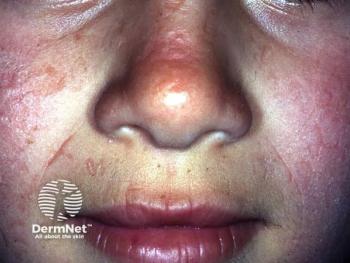
Disc Medicine reports the phase 3 APOLLO trial met all primary and secondary end points, with whole-blood PPIX reduced 41.4% vs placebo and an NDA resubmission planned by end of 2026.

Castor oil has become a popular social media remedy for thicker, longer hair, but evidence supporting its ability to stimulate hair growth remains limited.
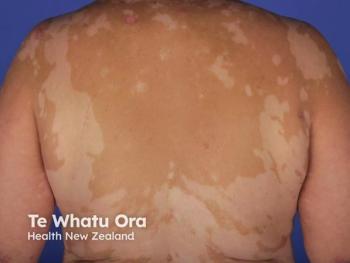
The FDA clearance allows Edesa to expand an ongoing placebo-controlled study of the CXCL10 antibody EB06 to US sites, with topline data expected in the fourth quarter of 2027.

The novel oral helicase-primase inhibitor demonstrated significantly higher rates of complete lesion healing compared with investigator’s choice treatment in the phase 3 PRIOH-1 trial.
Prospective data suggest DecisionDx-Melanoma may help refine SLNB decisions and identify recurrence risk beyond conventional staging.

Falk G. Bechara, MD, discusses long-term tunnel control, structural damage, and the evolving role of biologics and surgery in HS care.
Galderma has agreed to acquire ZO Skin Health for $1.5 billion, adding the physician-dispensed skincare brand to a portfolio that already includes Cetaphil and Alastin.
Advertisement
Advertisement
Trending on Dermatology Times
1
Social Media Mythbusters: Can Castor Oil Really Grow Hair?
2
Bitopertin Meets All End Points in Phase 3 APOLLO Trial for EPP
3
EADV 2026 Atopic Dermatitis Highlights: Tilrekimig, RAC2 Inhibition, and Level Up Data
4
FDA Approves Pritelivir for Refractory Mucocutaneous HSV in Immunocompromised Adults
5